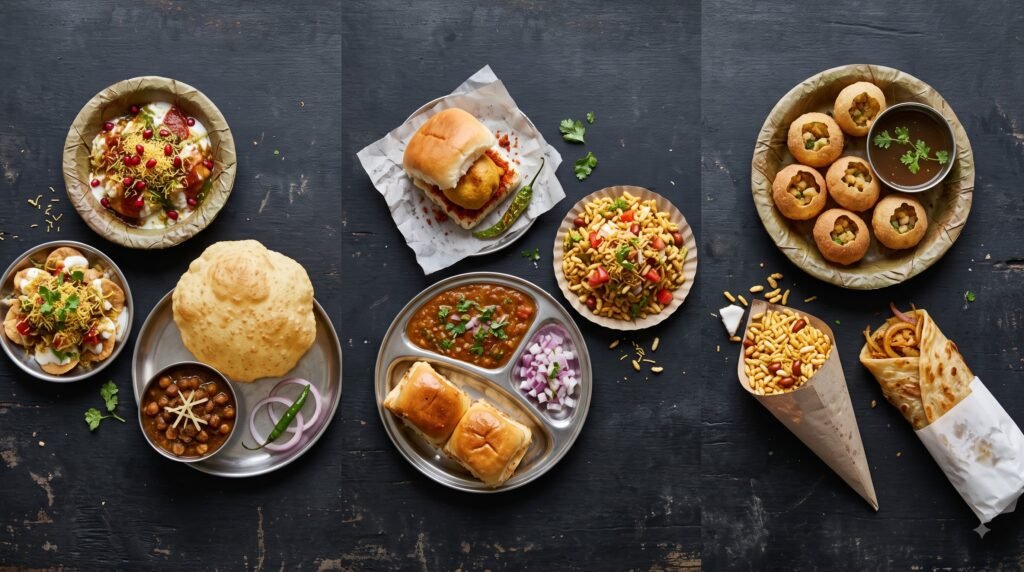
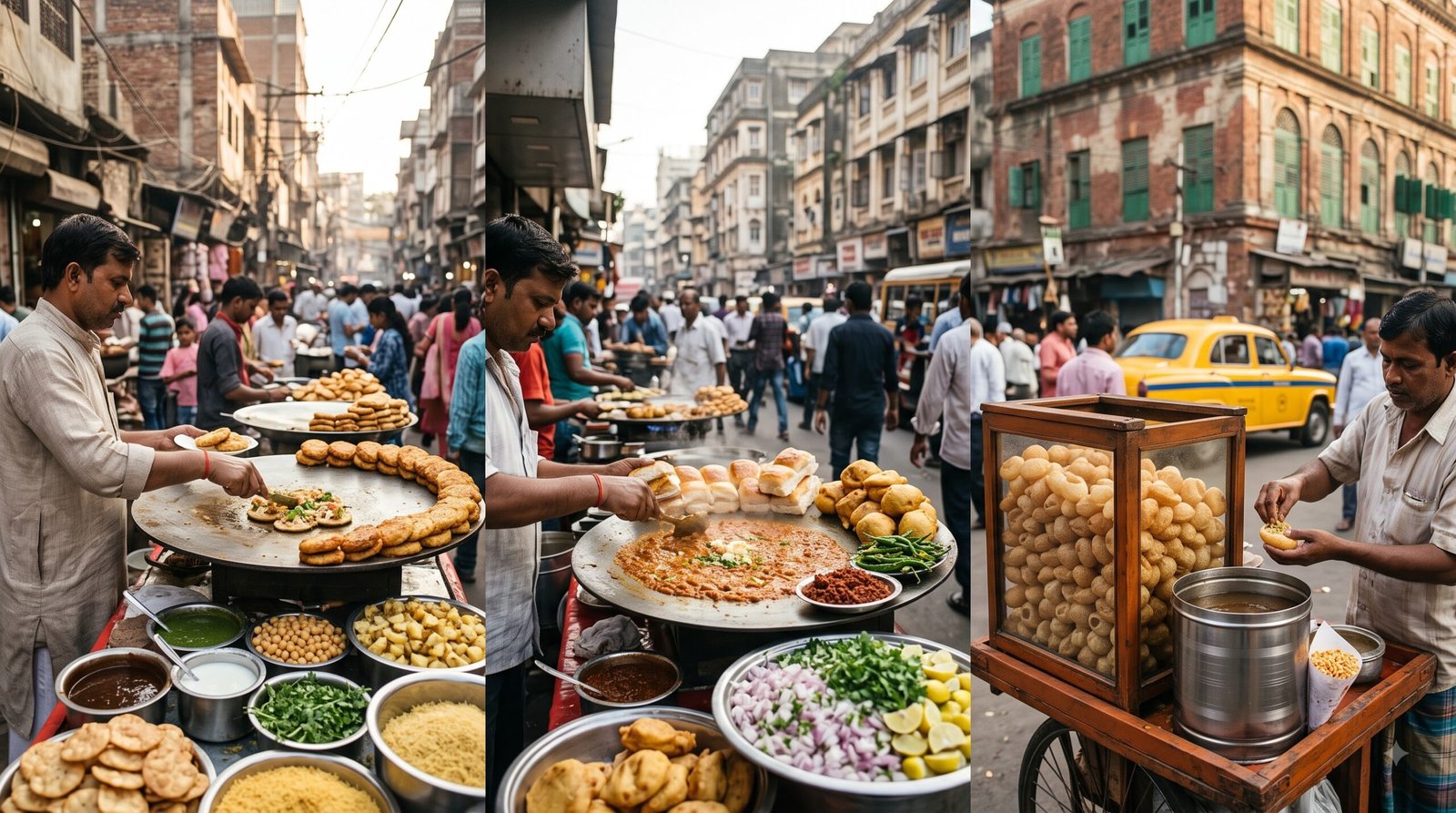
Delhi’s street food is fried, tangy and built around chaat and flatbreads. Mumbai’s is quick, buttery and designed to be eaten on the move. Kolkata’s leans on mustard oil, puffed rice and snacks that are small, sharp and strangely addictive.
Most visitors lump all of it together as “Indian street food.” Locals don’t. Ask someone from Kolkata to defend a vada pav and you’ll get a polite smile. Ask a Delhiite about phuchka and they’ll tell you why golgappa is better. The rivalry is half the fun.
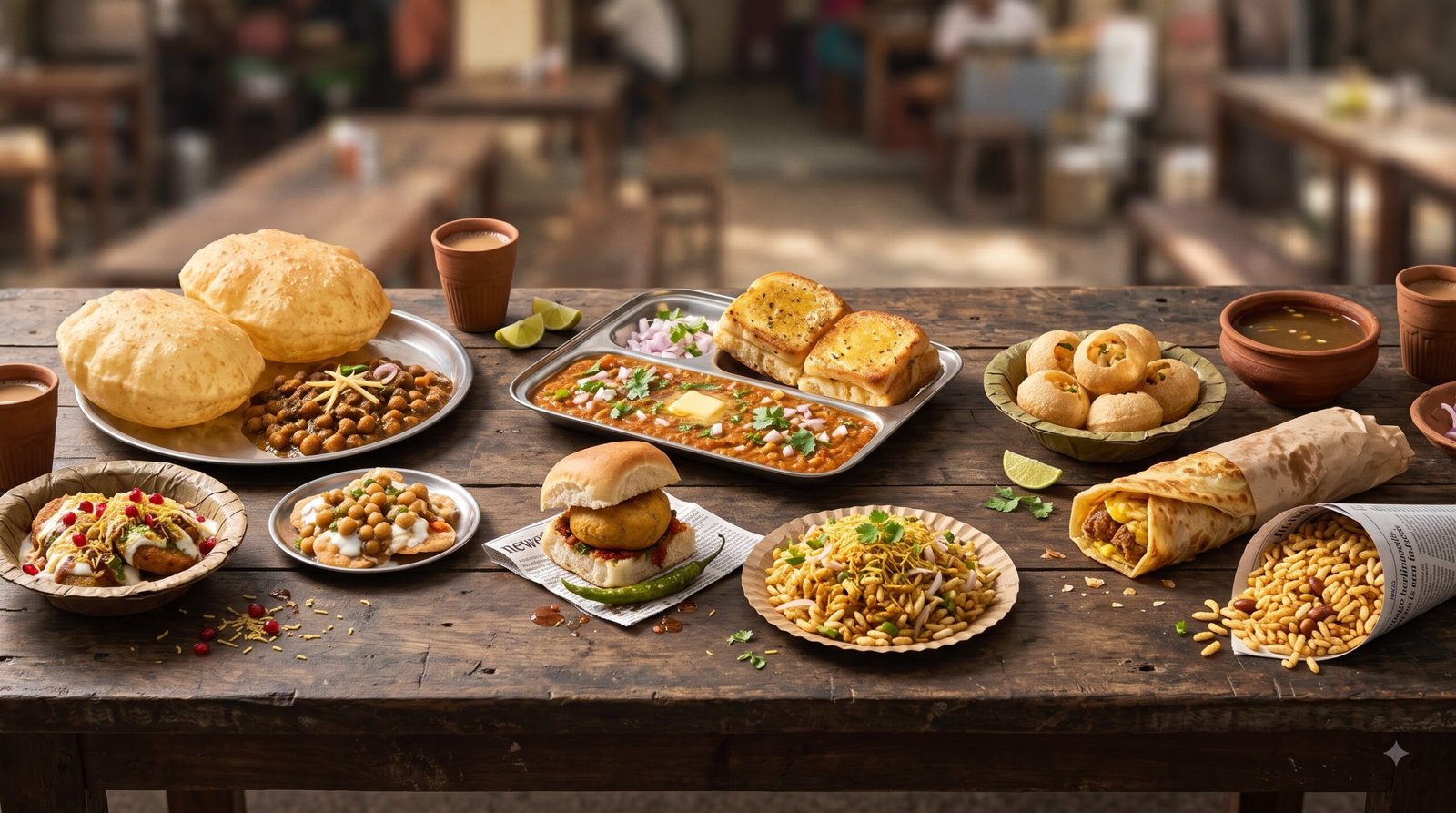
How is Delhi street food different from Mumbai and Kolkata?
The simplest way to think about it is this. Each city’s street food grew out of who was eating it and when.
- Delhi food grew around old Mughal kitchens, Punjabi migrants and market traders. It’s heavy on yogurt, tamarind, fried dough, ghee and slow cooked gravies.
- Mumbai food grew around mill workers and commuters. It’s fast, filling, cheap and often built around soft bread (pav) and potato.
- Kolkata food grew around tea stalls, office crowds, Bengali sweets and Chinese migrants. Mustard oil, green chilli, lime and puffed rice show up everywhere.
| Feature | Delhi | Mumbai | Kolkata |
|---|---|---|---|
| Signature snacks | Chaat, golgappa, aloo tikki, chole bhature, parathas | Vada pav, pav bhaji, bhel puri | Phuchka, kathi roll, jhalmuri, fish fry |
| Dominant flavour | Tangy, spiced, creamy | Buttery, garlicky, sweet and spicy | Sharp, mustardy, lime and chilli |
| Key ingredients | Yogurt, tamarind, chana, ghee | Potato, pav bread, butter, dry garlic chutney | Mustard oil, puffed rice, tamarind water, egg |
| Eating style | Sit on a stool, eat slowly, order a second plate | Eat standing, often in minutes | Eat at the corner stall, usually from leaf or paper |
| Best for a first timer | Aloo tikki, dahi bhalla, parathas | Vada pav, pav bhaji | Kathi roll, jhalmuri |
What to eat in Delhi street food
Delhi is a city of chaat. That one word covers a whole family of snacks that balance crisp, creamy, sweet, sour and spicy in a single plate. Aloo tikki with chole, dahi bhalla, papdi chaat and golgappa are the usual starting points in Old Delhi.
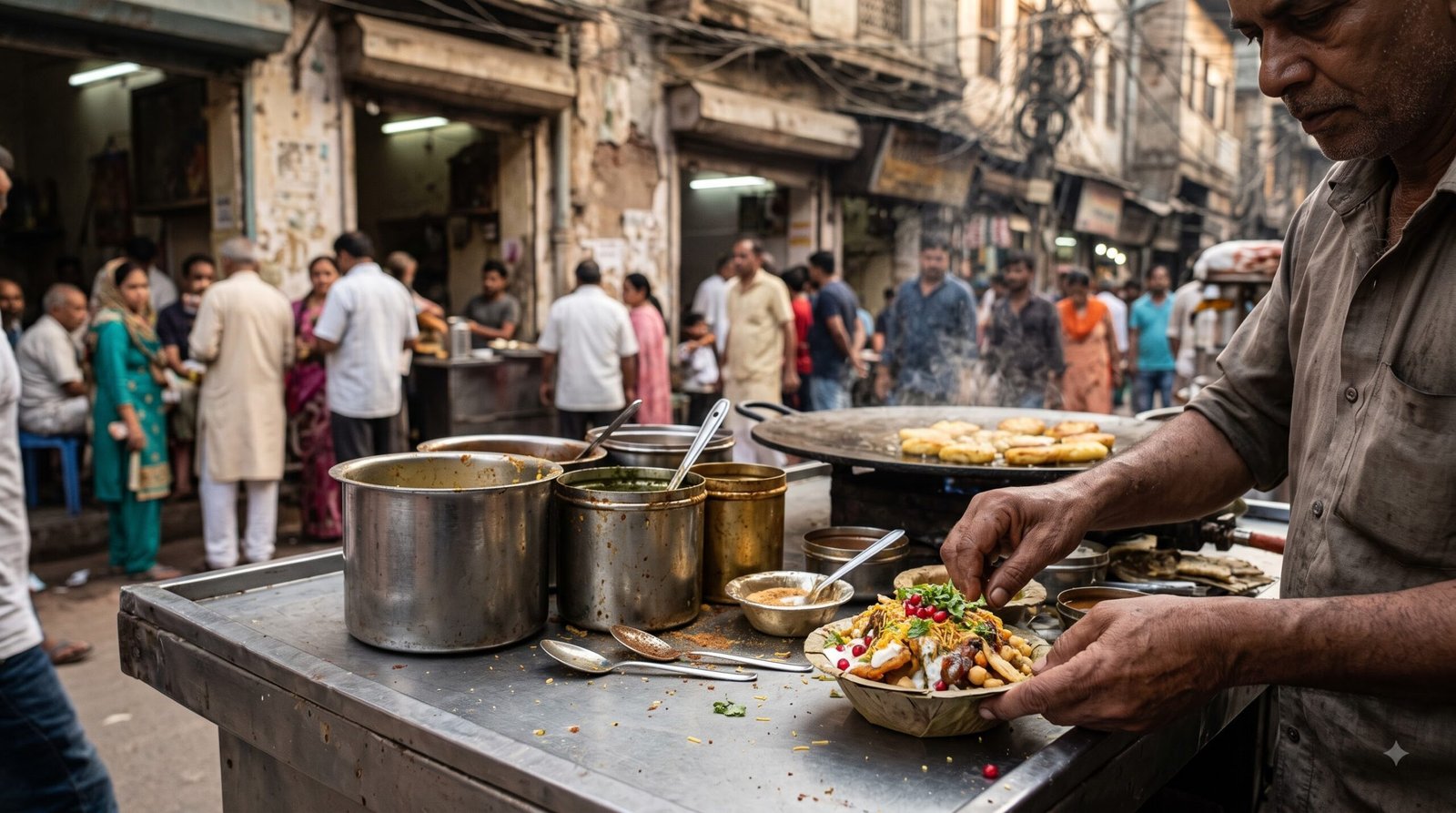
Then there are the heavier things. Stuffed parathas, chole bhature, kachori with potato gravy, and in colder months, nihari and haleem. Old Delhi has all of this packed into a few lanes, which is exactly why walking it with someone who knows the vendors makes such a difference.
If you want to see Delhi food beyond the famous lanes, look at the Delhi street food tour beyond Old Delhi. For a calmer version of Old Delhi eating, there’s also the luxury Old Delhi street food tasting in a local home.
What to eat in Mumbai street food
Mumbai street food is built for speed. The city moves fast, and its snacks match it. The classic order is vada pav first, pav bhaji second and bhel puri when you want something lighter.
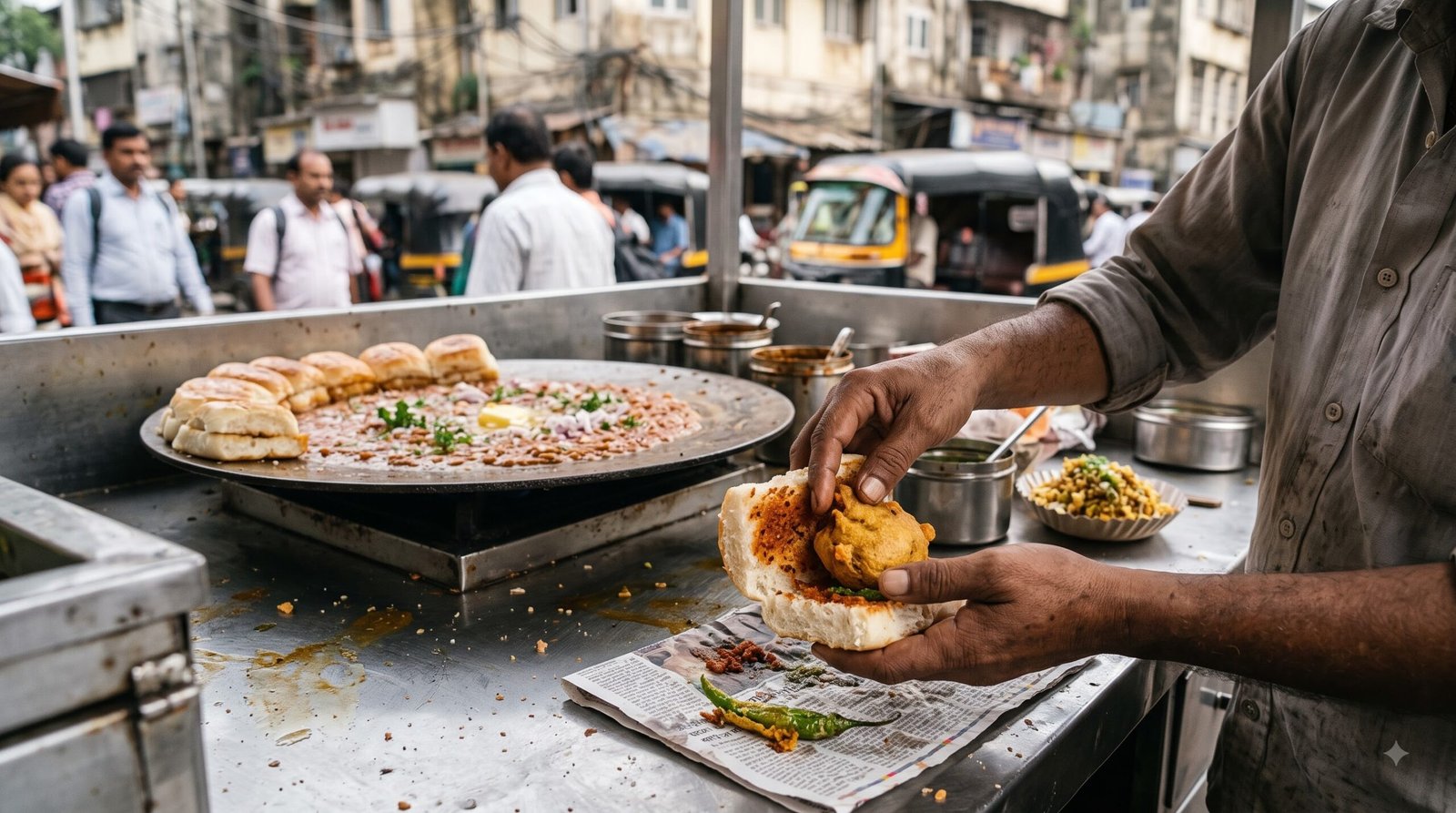
A vada pav is a spiced potato fritter in a gram flour batter, tucked into a soft bun with chutneys. Local guides describe it as relatively mild, with dry garlic chutney, tamarind date and green chilli on the side. Prices are low, roughly INR 15 to 40 per piece at many stalls, though it varies by area.
Pav bhaji is the richer one. Mashed vegetables cooked on a big flat tava with a lot of butter, served with toasted buns, raw onion and lime. Bhel puri is the opposite: puffed rice, sev, chutneys and onion, made to order. If a vendor has pre mixed bhel sitting in a bowl, skip it. It goes soft within minutes.
What to eat in Kolkata street food
Kolkata is where street food gets quieter and more precise. A lot of it is small. You eat standing, you eat quickly, and you usually want one more.
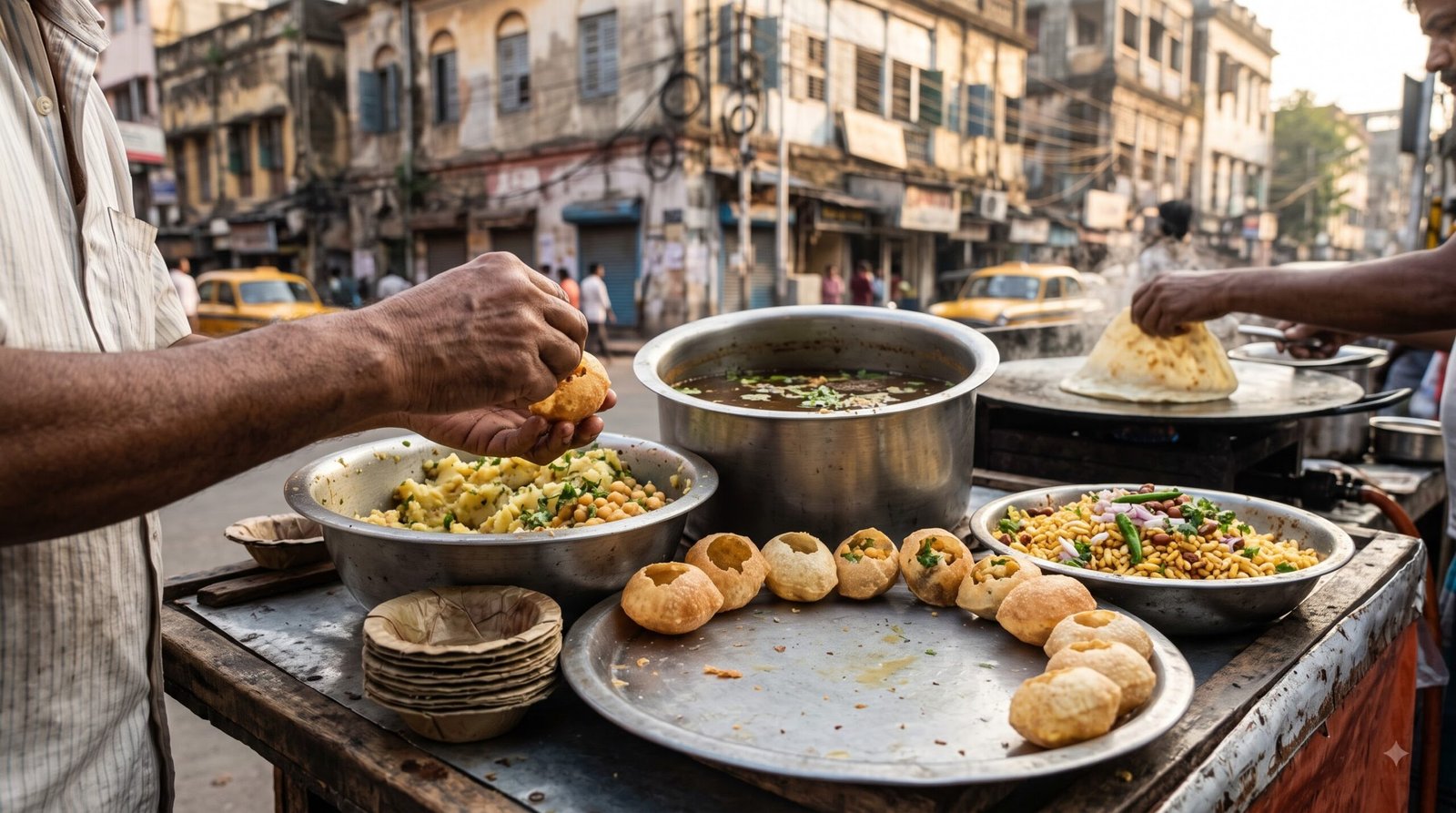
- Phuchka: Kolkata’s version of golgappa. The shell is a little larger, the filling is mashed potato and chickpeas, and the water is sharp with tamarind and green chilli.
- Kathi roll: Egg, chicken, mutton or vegetables rolled in a flaky paratha. Many people treat it as the city’s best known food export.
- Jhalmuri: Puffed rice tossed with mustard oil, onion, chilli, peanuts and spices. It’s a very Kolkata evening snack.
- Fish fry, telebhaja and chops: Fried snacks you’ll find at corner stalls and tea shops.
Mustard oil is the easy way to tell Kolkata from the other two. It has a sharp, nose tingling bite that surprises first timers. Some people love it immediately. Others need a few bites.
Which city has the spiciest street food?
Probably none of them in the way visitors fear. The difference is in the type of heat.
- Delhi’s heat comes from chilli powder, chaat masala and tangy chutneys.
- Mumbai’s comes from green chilli, garlic and masala butter.
- Kolkata’s comes from raw green chilli and mustard oil, which feels sharper at the front of the nose than on the tongue.
In all three cities, you can ask vendors to go easy on the chilli. Say “kam teekha” (less spicy) and most will adjust.
Is Indian street food safe for tourists?
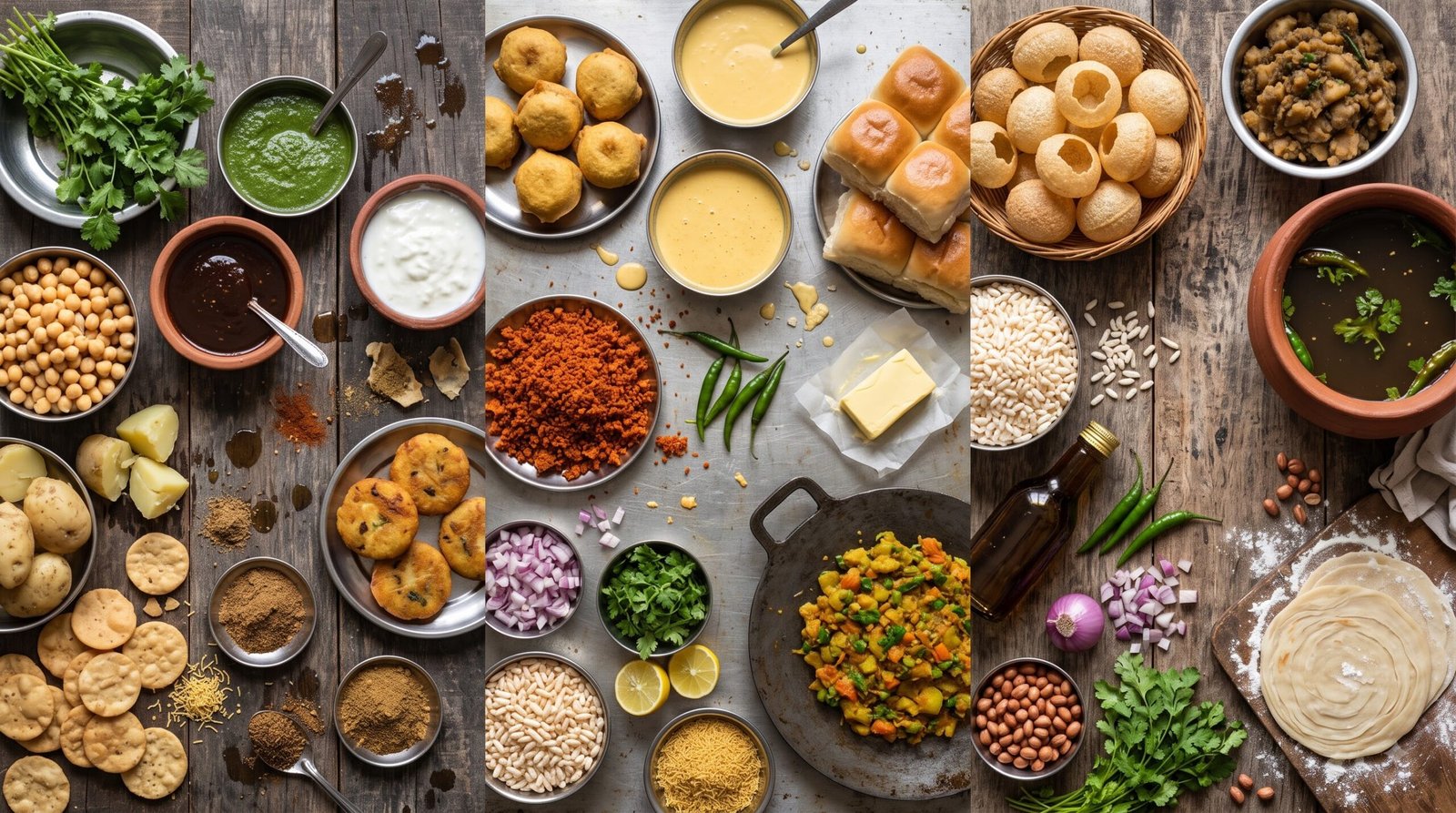
Generally yes, if you choose carefully. Most stomach trouble comes from changing too much too quickly, not from one bad vendor. Your first day should be gentle.
- Pick busy stalls with fast turnover.
- Choose food cooked fresh in front of you and served hot.
- Start with fried or cooked items before raw chaat.
- Drink sealed bottled water, and skip ice from unknown sources.
- Eat small portions from several stalls instead of one huge meal.
- Carry hand sanitiser, tissues and a small water bottle.
Pani puri and golgappa are the ones that worry people most, because the water matters. A guided tour takes the guesswork out of this, since a good guide knows which vendors use filtered water and which ones to skip.
Which city should you visit first for street food?
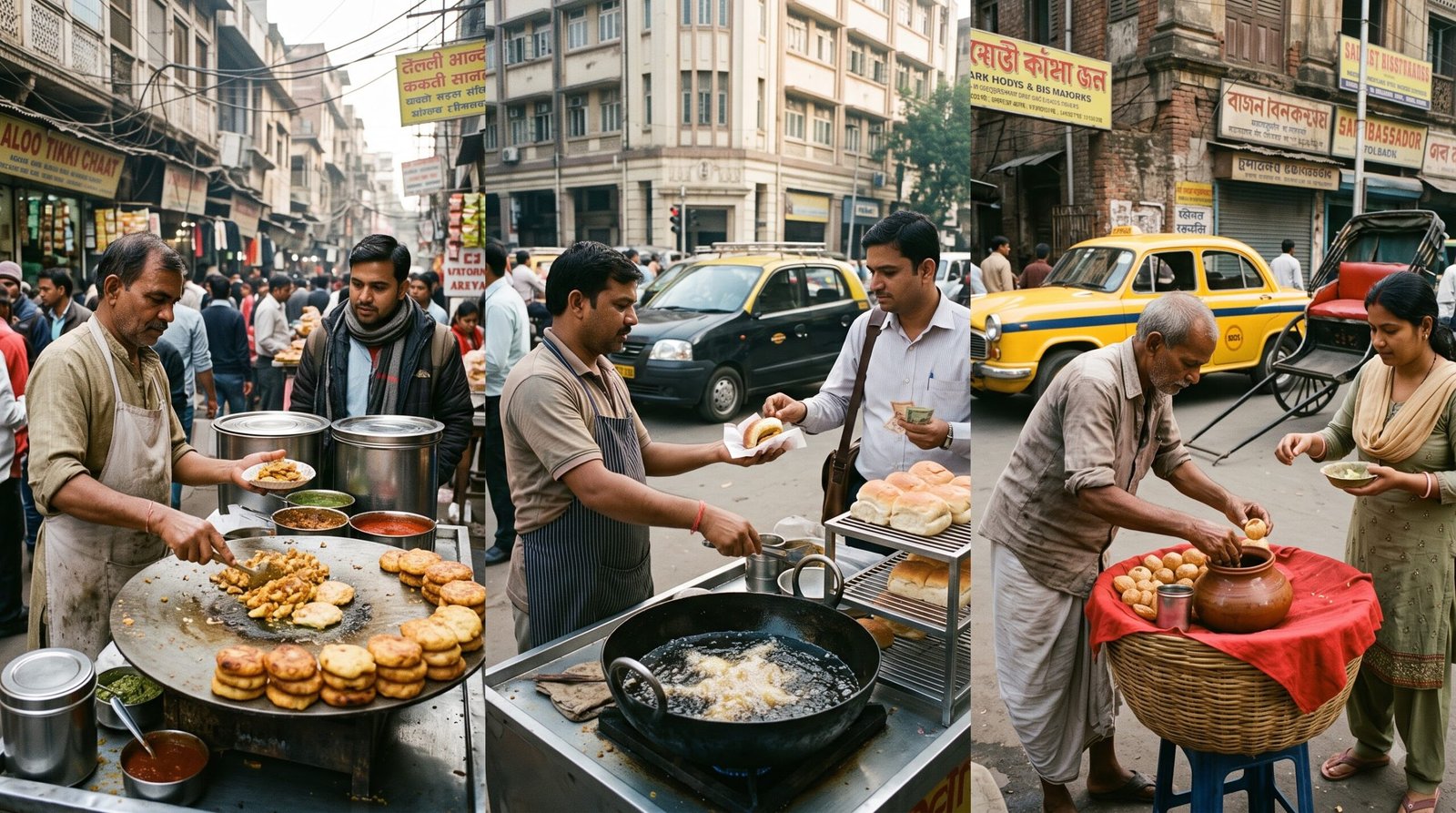
It depends on what you want.
- Delhi if you want the widest range in one place, from breakfast parathas to evening chaat to kebabs, plus easy access to the Taj Mahal and Jaipur.
- Mumbai if you like fast, casual eating and coastal city energy.
- Kolkata if you enjoy sharper flavours, sweets and a slower, more local food culture.
Delhi is also the easiest starting point for most international itineraries. If you’re building a trip around it, the Delhi to Taj Mahal day trip, the same day Jaipur tour from New Delhi and the 7 day Golden Triangle with Ranthambore tiger safari all pair well with a food evening in Old Delhi.
Learn to cook it at home
Eating street food is one thing. Understanding why it tastes the way it does is another. A few hours in a home kitchen changes how you taste everything afterward.
In Delhi, you can join the Indian cooking class where you learn six dishes, or try the chai master class in an Indian family home. Chai is the thing that holds every street corner together, so it’s a good place to start.
If you’d like recipes to take home, my cookbook Art of Indian Cooking: 65 Recipes of Spices, Stories & Soul covers the spice logic behind many of these flavours. And if you’re still planning, my travel memoir Don’t Just Visit India. Feel It. helps you understand India before you arrive.
Eat Delhi with someone who knows it
Skip the guesswork on where to eat, what to order and what to avoid. Join a small group food experience in Delhi.
Explore Delhi Street Food Tour Book a Cooking ClassFrequently Asked Questions
What is the main difference between Delhi, Mumbai and Kolkata street food?
Delhi focuses on chaat, fried snacks and Punjabi and Mughal influenced dishes. Mumbai focuses on quick, buttery foods like vada pav and pav bhaji. Kolkata uses mustard oil, puffed rice and tangy snacks like phuchka and kathi rolls.
Which Indian city has the best street food?
There’s no single answer. Delhi has the most variety, Mumbai is the most convenient and Kolkata is the most distinctive. It depends on your taste.
Is phuchka the same as pani puri or golgappa?
They’re related but not identical. The names change by region, and so do the fillings and the water. Kolkata’s phuchka usually has a mashed potato filling and a tangier tamarind water.
Is Delhi street food safe for first time visitors?
Yes, if you choose busy stalls, eat hot food first and drink bottled water. A guided food walk is the easiest way to start.
What should I eat first in Mumbai?
Start with vada pav, then pav bhaji, then bhel puri. That order builds up your spice tolerance.
How much does street food cost in India?
Most snacks cost between INR 20 and 150 per plate depending on city, dish and area. Mumbai vada pav often falls around INR 15 to 40.