
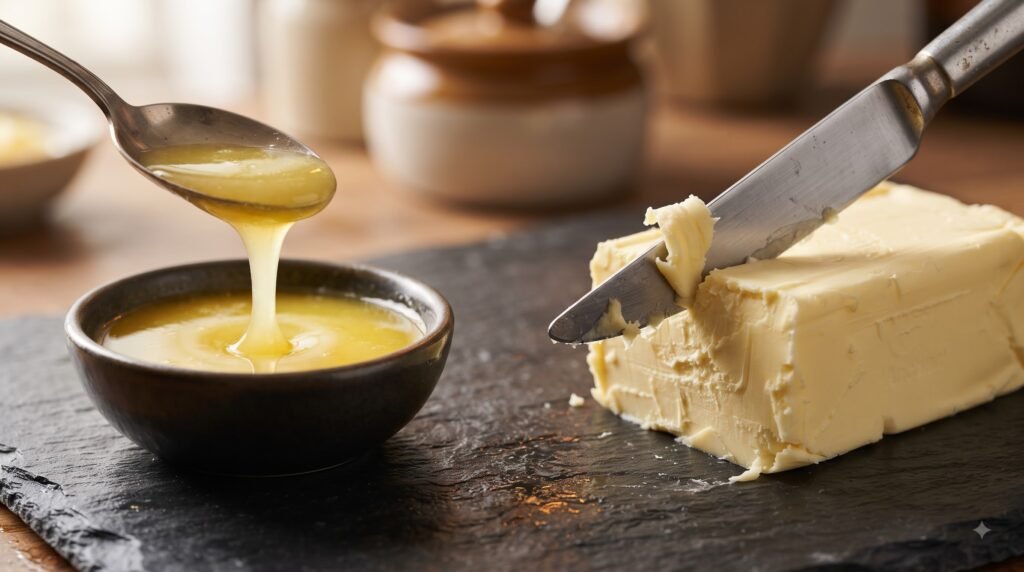
Ghee is butter that has been cooked further. The water is boiled off, the milk solids are browned and strained out, and what’s left is clear, golden, nutty fat. That one extra step changes how it tastes, how it behaves in a hot pan, and how long it lasts in your kitchen.
If you’re visiting India, you’ll meet ghee within a day. It’s on the dal, in the paratha, over the rice, inside the halwa. Many travelers ask us the same thing: “Isn’t this just butter?” Not quite. Here’s what actually separates them.
What is ghee, exactly?
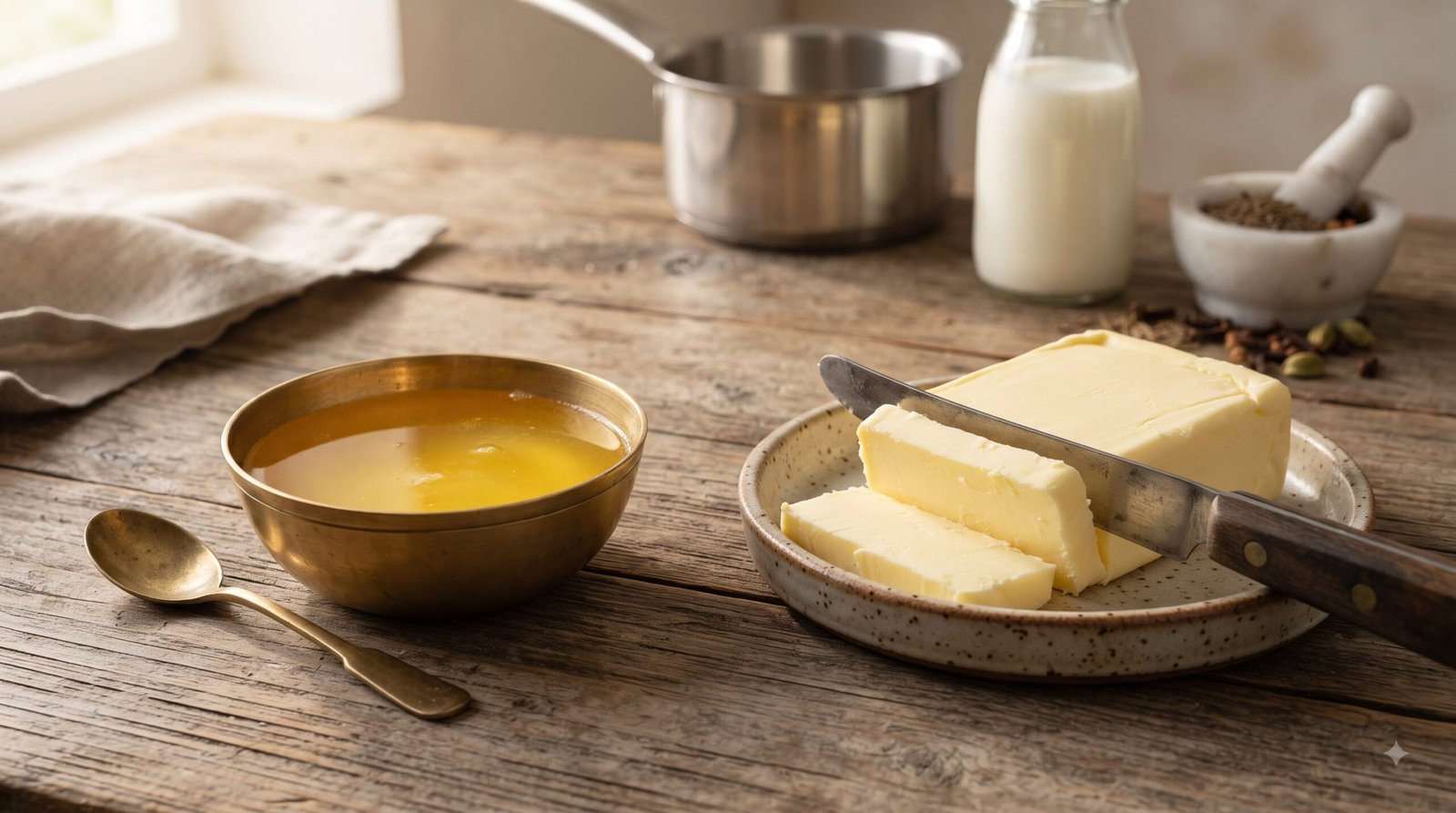
Ghee is a form of clarified butter that comes from the Indian subcontinent. It’s traditionally made from cow or buffalo milk, and it’s central to everyday cooking as well as Hindu rituals and offerings.
The key word is “clarified”. Butter is roughly 80 percent fat, with the rest made up of water and milk solids. Ghee is about 99.5 percent fat. Everything else has been cooked out or strained away.
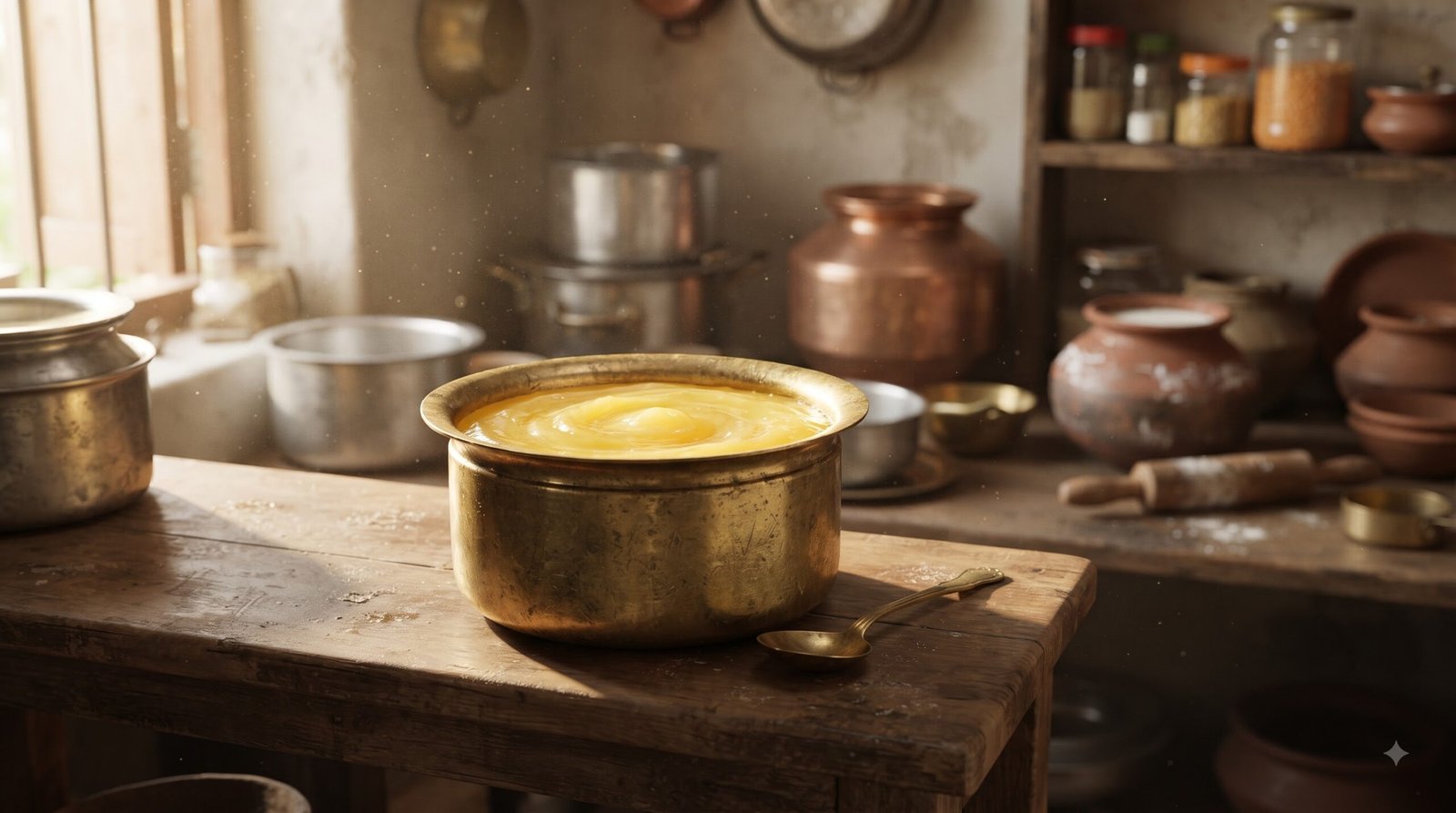
How is Indian ghee made at home?
The old method in Indian homes doesn’t start with butter at all. It starts with milk.
- Milk is boiled, cooled, and set into dahi (curd) with a spoonful of yesterday’s curd.
- The curd is churned, traditionally with a wooden madhani, until makkhan (white butter) separates from the buttermilk.
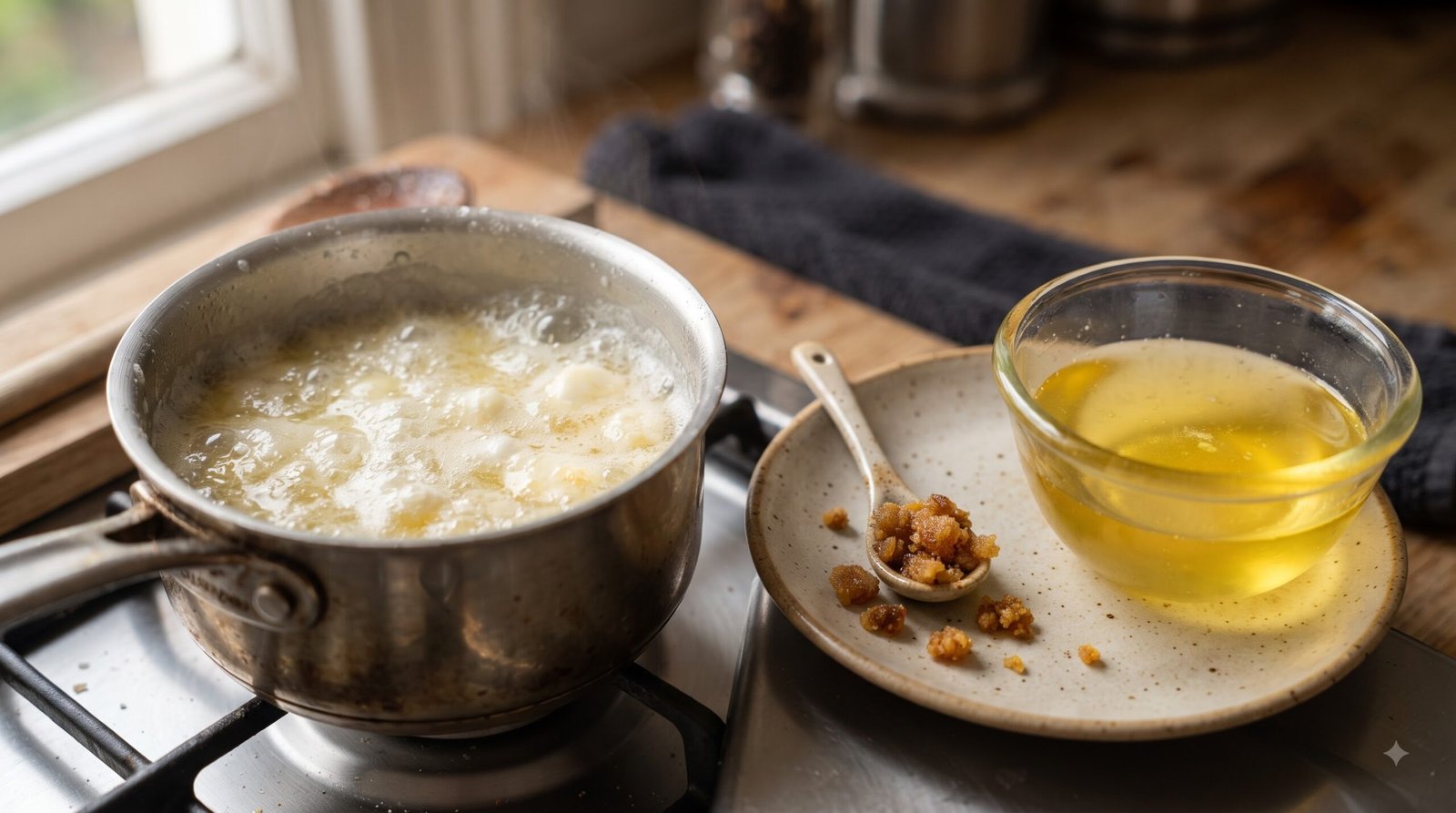
- The makkhan is heated slowly in a heavy pan. Water evaporates, the milk solids settle and turn light brown, and the kitchen starts to smell nutty.
- The clear fat is strained through muslin and poured into a jar.
Many families also collect malai (the cream that rises on boiled milk) for days, then churn that. Either way, the final heating is gentle. Dairy references put the finish at around 110 to 120°C. Cook it too fast and you get a burnt taste instead of a toasty one.
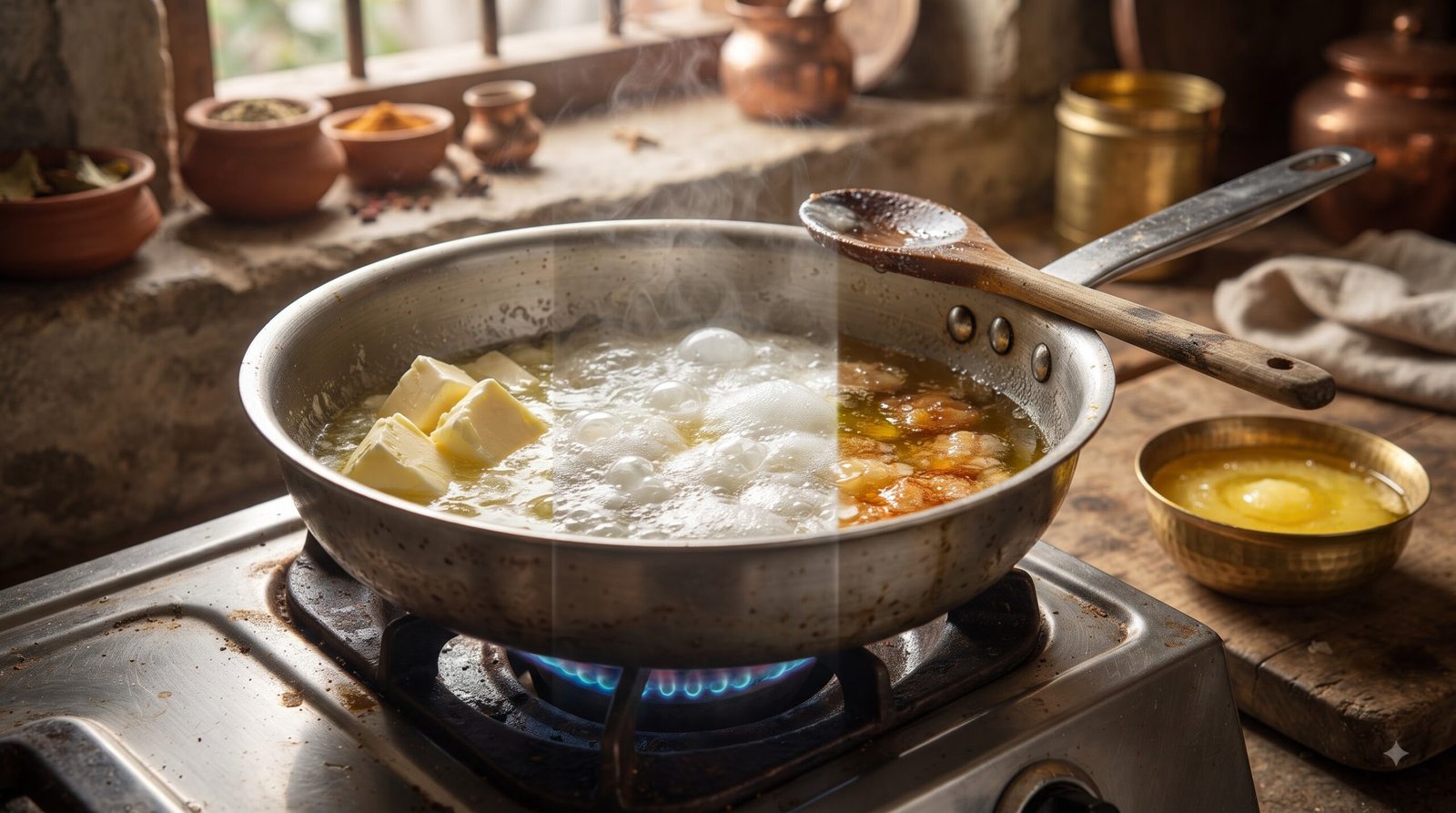
Good to know: Ghee and plain clarified butter are close cousins, not twins. Ghee is usually cooked a little longer so the milk solids brown properly. That’s where the nutty, almost caramel smell comes from. Western clarified butter is often stopped earlier and tastes cleaner and milder.
Ghee vs butter: what’s actually different?
| Point | Butter | Ghee |
|---|---|---|
| Fat content | About 80% | About 99.5% |
| Water and milk solids | Present | Almost none |
| Smoke point | Roughly 150 to 175°C | Roughly 230 to 250°C |
| Flavour | Creamy, soft, slightly sweet | Nutty, toasty, deeper |
| Fridge needed? | Yes | Usually not, if kept clean and dry |
| Best for | Baking, finishing sauces, toast | Tadka, frying, parathas, sweets |
Why does ghee handle heat better?
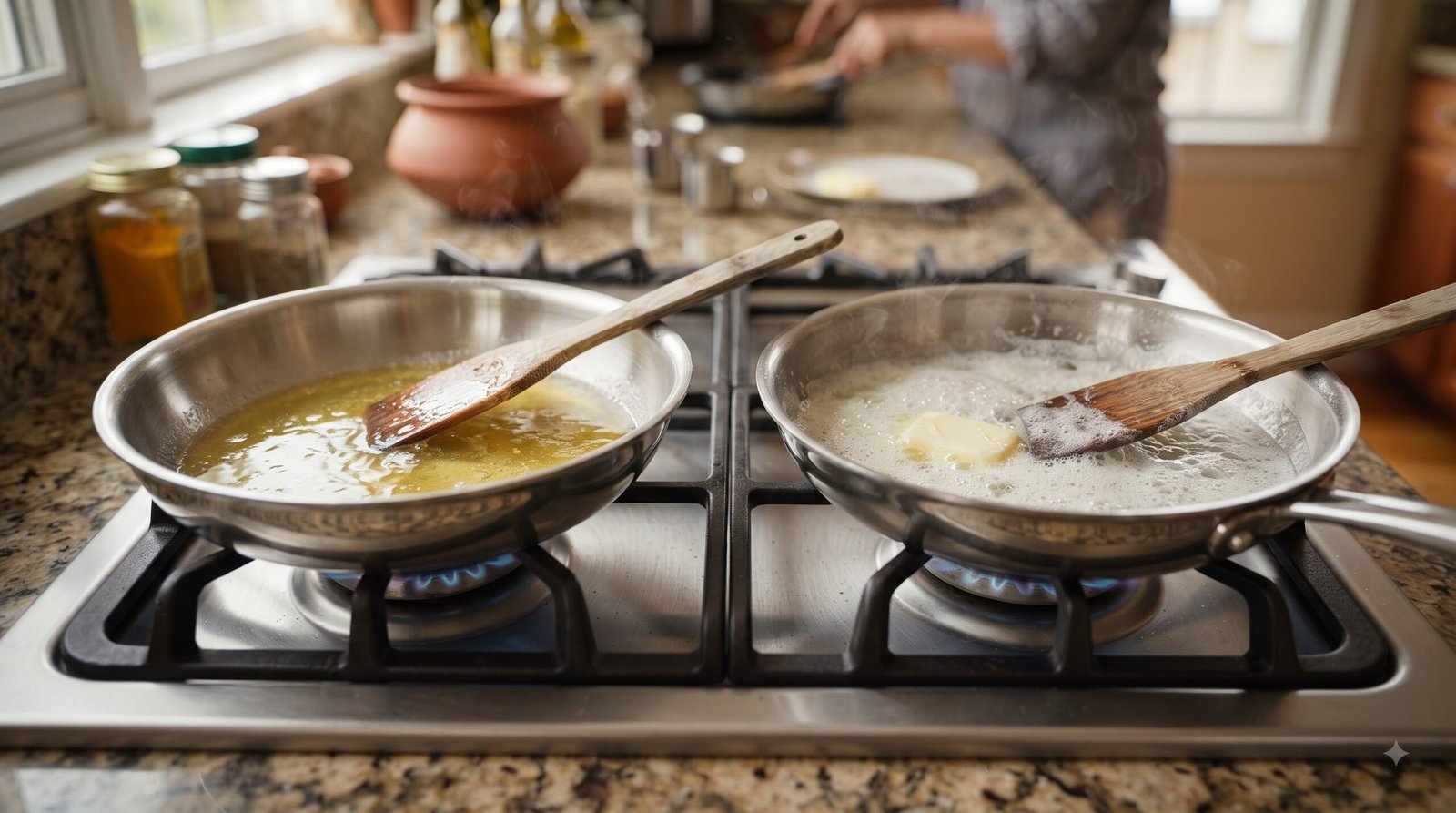
Milk solids burn. Butter contains proteins and a little lactose, and those scorch long before the fat itself gives up. That’s why butter browns and spits in a hot pan, and why it can turn bitter fast.
Ghee has had those solids removed. Its smoke point is commonly quoted at about 250°C (485°F), against about 175°C (350°F) for butter. Any fat will smoke if you overheat it, but ghee gives you far more room.
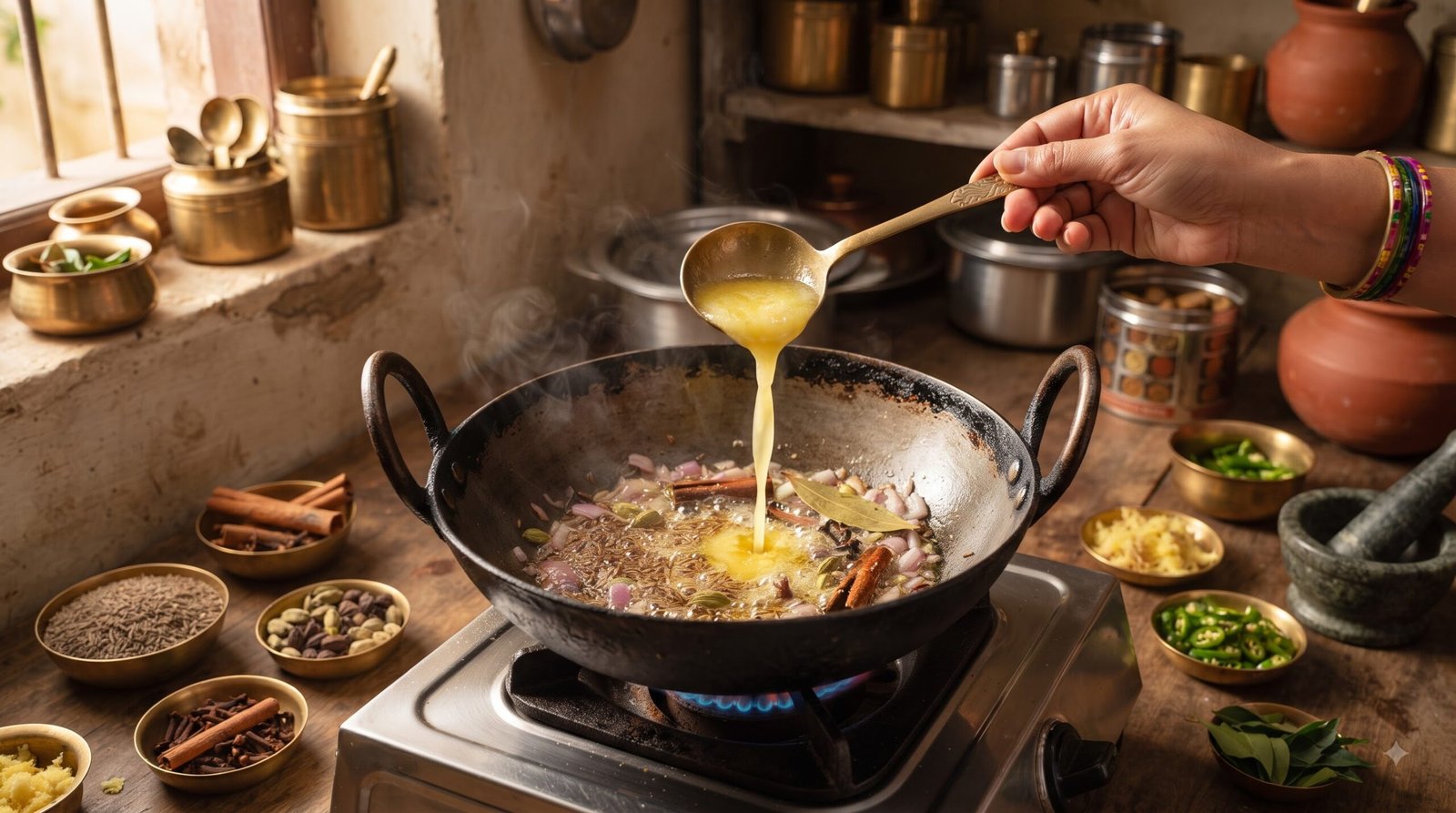
This matters in Indian cooking more than most people expect. A tadka, where whole spices crackle in hot fat before it’s poured over dal, needs strong heat for a few seconds. Butter would blacken. Ghee sizzles and carries the cumin flavour right through the dish.
Does ghee taste different from butter?
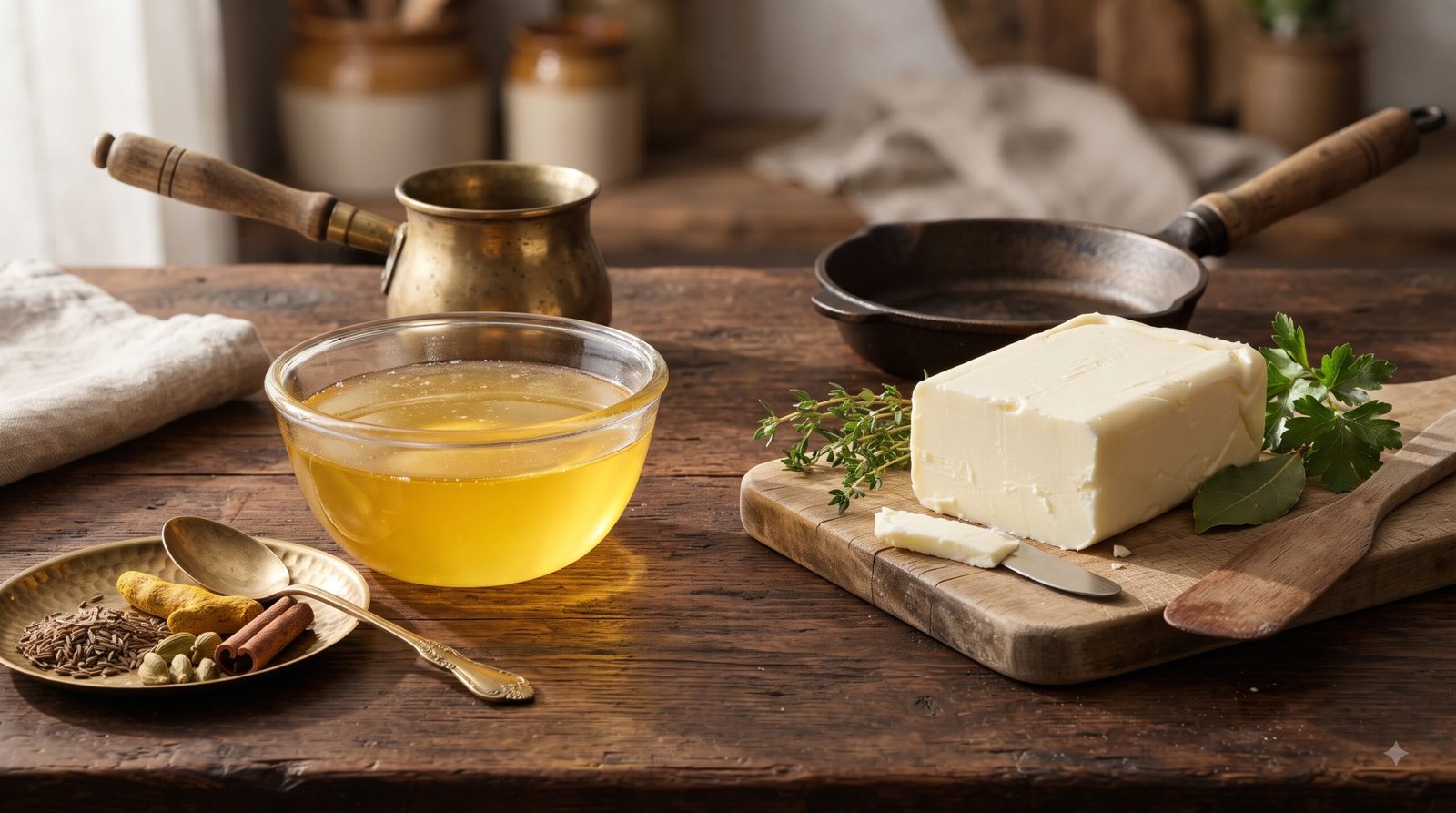
Yes, and it’s noticeable the moment you taste them plain. Butter is soft and creamy. Ghee is rounder, nuttier, a bit like toasted milk. Good homemade ghee has a smell that fills the room when it’s spooned warm over rice.
Quality varies a lot. Ghee made from curd tends to have a deeper, slightly tangy edge. Ghee made straight from cream butter is cleaner and milder. Neither is wrong. It’s about what you grew up eating.
Is ghee healthier than butter?
This is where the internet gets loud, so let’s keep it calm.
Ghee is lower in lactose and casein than butter because the milk solids are removed. Some people who struggle with dairy find it easier to tolerate. It isn’t dairy free, though, so anyone with a true milk allergy should be careful and check with a doctor.
On nutrition, the gap is small. Cleveland Clinic dietitians describe the fat and vitamin content of the two as almost the same. Both are high in saturated fat. Ghee is also more concentrated, so a spoonful carries a few more calories than the same spoonful of butter.
Practical view: Treat ghee as a flavour fat, not a health food. A teaspoon on hot dal or a roti is how most Indian families use it. That’s a sensible amount for most people.
When should you use ghee, and when butter?
Reach for ghee when
- You’re making tadka or tempering spices.
- You’re frying or shallow frying at higher heat.
- You’re cooking parathas, puris or sweets like halwa.
- You want a nutty finish over rice or khichdi.
Reach for butter when
- You’re baking cakes, cookies or bread.
- You want a creamy sauce or soft scrambled eggs.
- You’re making pav bhaji or butter chicken, where the buttery taste is the point.
How to buy and store ghee in India
Walk into any Delhi grocery store and you’ll see shelves of it. Cow ghee, buffalo ghee, “desi” ghee, A2 ghee. It can feel like a lot.
- Check the label for a single ingredient: milk fat. Nothing else should be there.
- Cow ghee is paler and softer. Buffalo ghee is whiter and richer.
- Very cheap, odourless ghee is often a sign of lower quality.
- Store it in a clean, dry jar and always use a dry spoon. Water is what spoils it.
If you want to take some home, buy a sealed jar and pack it in checked luggage. Check your airline’s liquid rules first, since ghee can melt in warm weather.
Taste the difference in Delhi
Reading about ghee helps. Smelling it hot in a pan helps more. On our Indian cooking class with six dishes, you’ll see exactly where ghee goes and where butter does, and why. Our chai master class in an Indian family home is a gentler way to sit in a real kitchen and ask questions.
If you’d rather eat your way through it, the Delhi street food tour beyond Old Delhi and the luxury Old Delhi street food tasting in a local home put ghee on your plate in parathas, sweets and more. Heading out of the city? The Delhi to Taj Mahal day trip, the same day Jaipur tour and the 7 day Golden Triangle with Ranthambore all give you regional versions of the same fat, cooked slightly differently each time.
Frequently asked questions
What is the main difference between ghee and butter?
Butter contains water and milk solids. Ghee is butter cooked until the water evaporates and the solids are strained out, leaving nearly pure fat with a nutty flavour and a higher smoke point.
Is ghee just clarified butter?
Close, but not identical. Ghee is a type of clarified butter, usually cooked longer so the milk solids brown, which gives it a deeper, toasted taste.
Is ghee healthier than butter?
Not by a big margin. Ghee has less lactose and casein, which may suit some people with dairy sensitivity. Both are high in saturated fat, so moderation matters.
Can lactose intolerant people eat ghee?
Many can, because most lactose is removed. It’s still a dairy product, so people with a milk allergy should avoid it unless a doctor says otherwise.
Can I substitute butter for ghee in Indian recipes?
For low heat dishes, yes. For tadka, frying and parathas, butter may burn. If you must use it, keep the heat lower or mix in a little oil.
Does ghee need to be refrigerated?
Usually not. Keep it in a clean, airtight jar away from moisture and direct heat, and always use a dry spoon.
Why is Indian food cooked in ghee?
It handles high heat, carries spice flavour well, keeps without refrigeration, and has deep cultural and religious roots in Indian homes.
Cook with ghee in a real Delhi kitchen
Learn when to use ghee, how to temper spices, and how a proper Indian meal comes together. Small groups, home kitchens, no rush.
Book the Cooking Class Explore Street Food Tours