
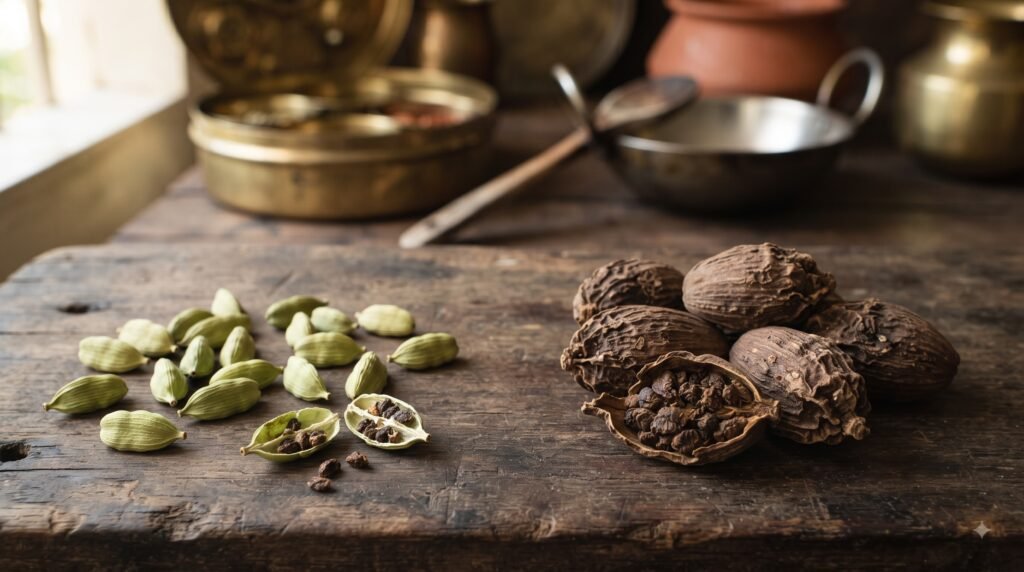
Green cardamom (elaichi) is sweet, floral and bright. Black cardamom (badi elaichi) is smoky, resinous and bold. They come from different plants, they taste nothing alike, and Indian cooks don’t swap one for the other.
Many visitors find this out in a spice shop in Old Delhi. They ask for cardamom, get handed a bag of small green pods, and then spot a pile of wrinkled dark brown ones the size of a thumb joint. “Is that also cardamom?” Yes, and no. Here’s what’s going on.
What’s the difference between green and black cardamom?
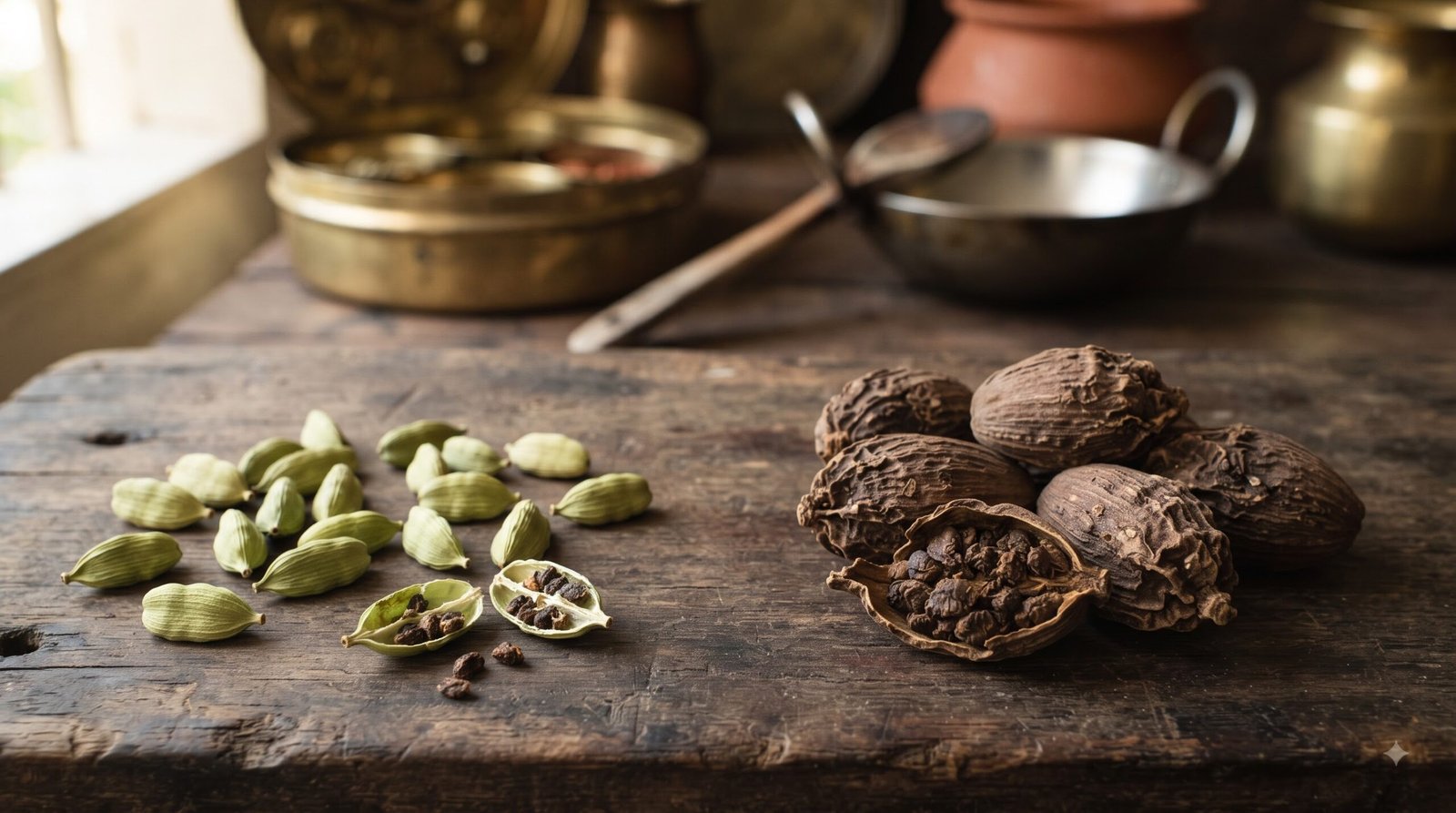
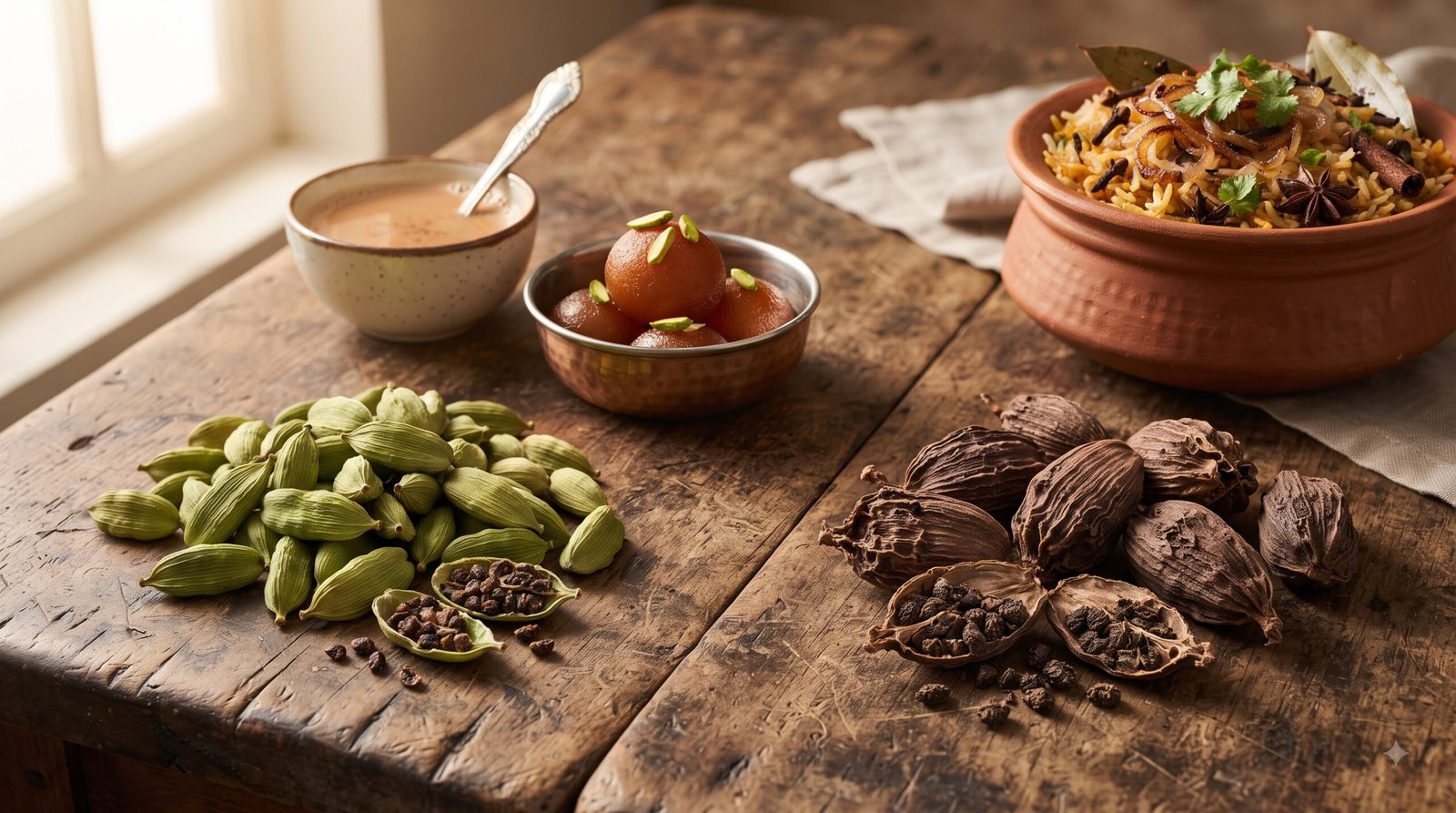
They belong to the same wider ginger family, but they’re different species. Green cardamom is Elettaria cardamomum, grown mainly in the Western Ghats of Kerala, Karnataka and Tamil Nadu. Black cardamom is Amomum subulatum, often called large cardamom, and most of India’s supply comes from Sikkim and the nearby eastern Himalayas.
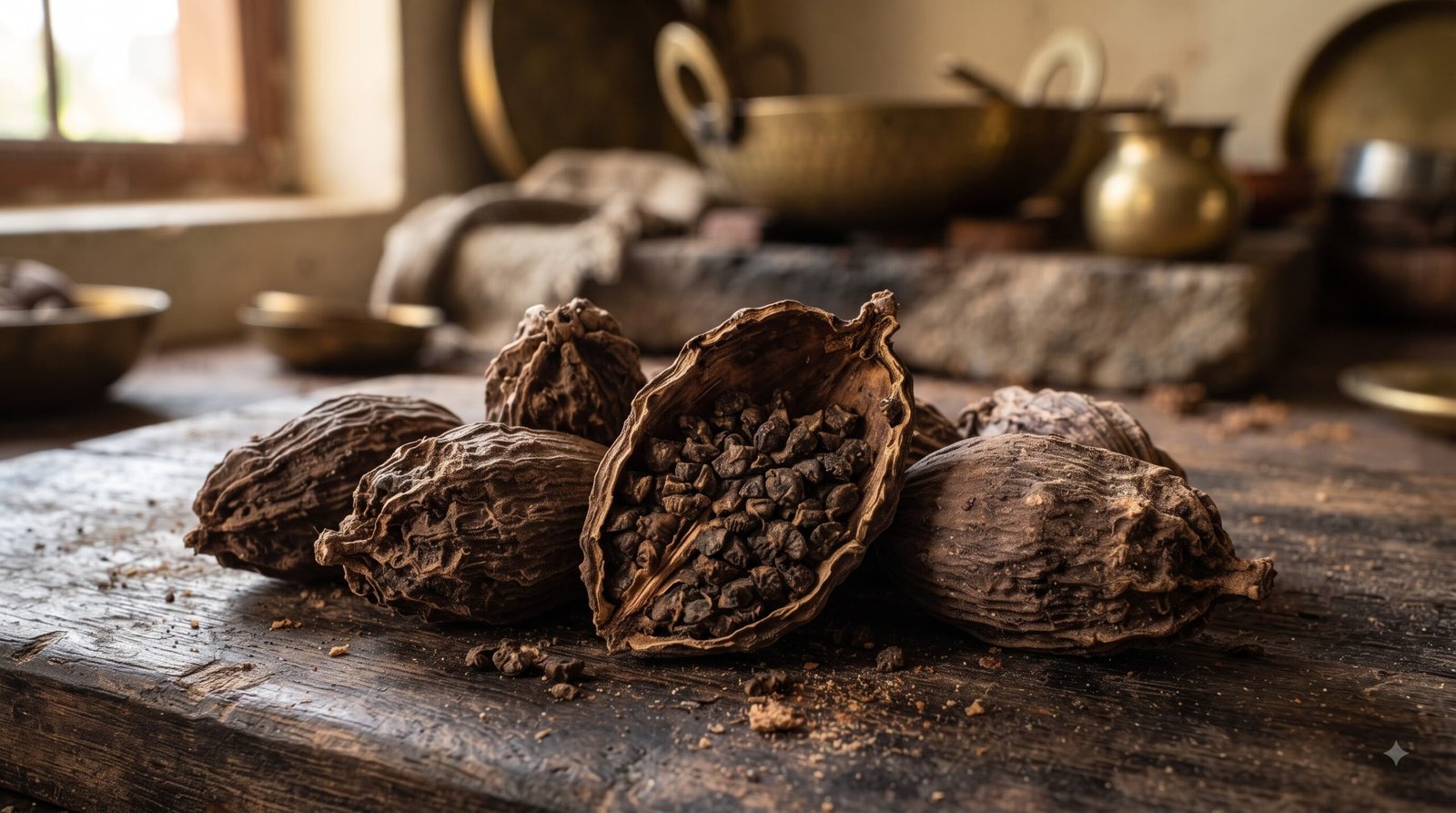
The processing matters as much as the plant. Green pods are picked before they fully mature and dried gently, so they stay pale green and fragrant. Black pods are dried over open fires, and that’s where the smoke comes from. You can smell it the moment you open a packet.
| Feature | Green cardamom (elaichi) | Black cardamom (badi elaichi) |
|---|---|---|
| Look | Small, pale green, smooth pod | Large, dark brown, wrinkled pod |
| Flavour | Sweet, floral, citrusy, a little cooling | Smoky, earthy, camphor like, intense |
| Grown in | Kerala, Karnataka, Tamil Nadu | Sikkim, Darjeeling hills, eastern Himalayas |
| Used in | Chai, kheer, halwa, biryani, sweets | Dal, meat curries, garam masala, slow cooked dishes |
| Sweet dishes? | Yes, very often | Almost never |
How does green cardamom taste, and where is it used?
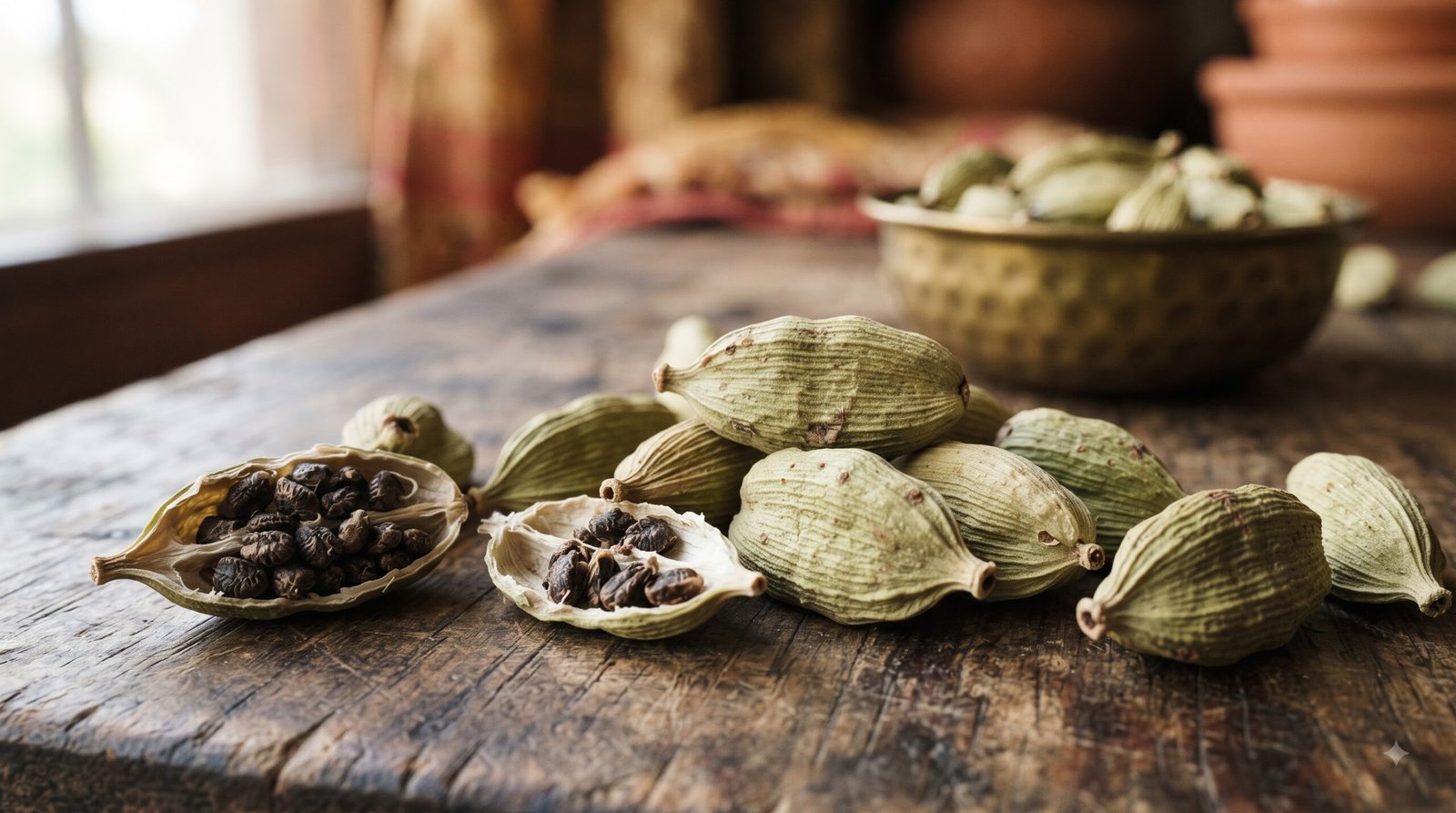
Green cardamom is the one most people mean when they say “cardamom.” If a recipe doesn’t specify, it means green. The flavour is sweet and perfumed with a faint lemony, almost eucalyptus freshness.
In Indian kitchens it turns up everywhere. Milk based desserts like kheer and phirni depend on it. So do halwa, laddoos and most mithai. It goes into biryani and pulao as well, where one or two pods lift the rice without announcing themselves.
Cardamom in masala chai
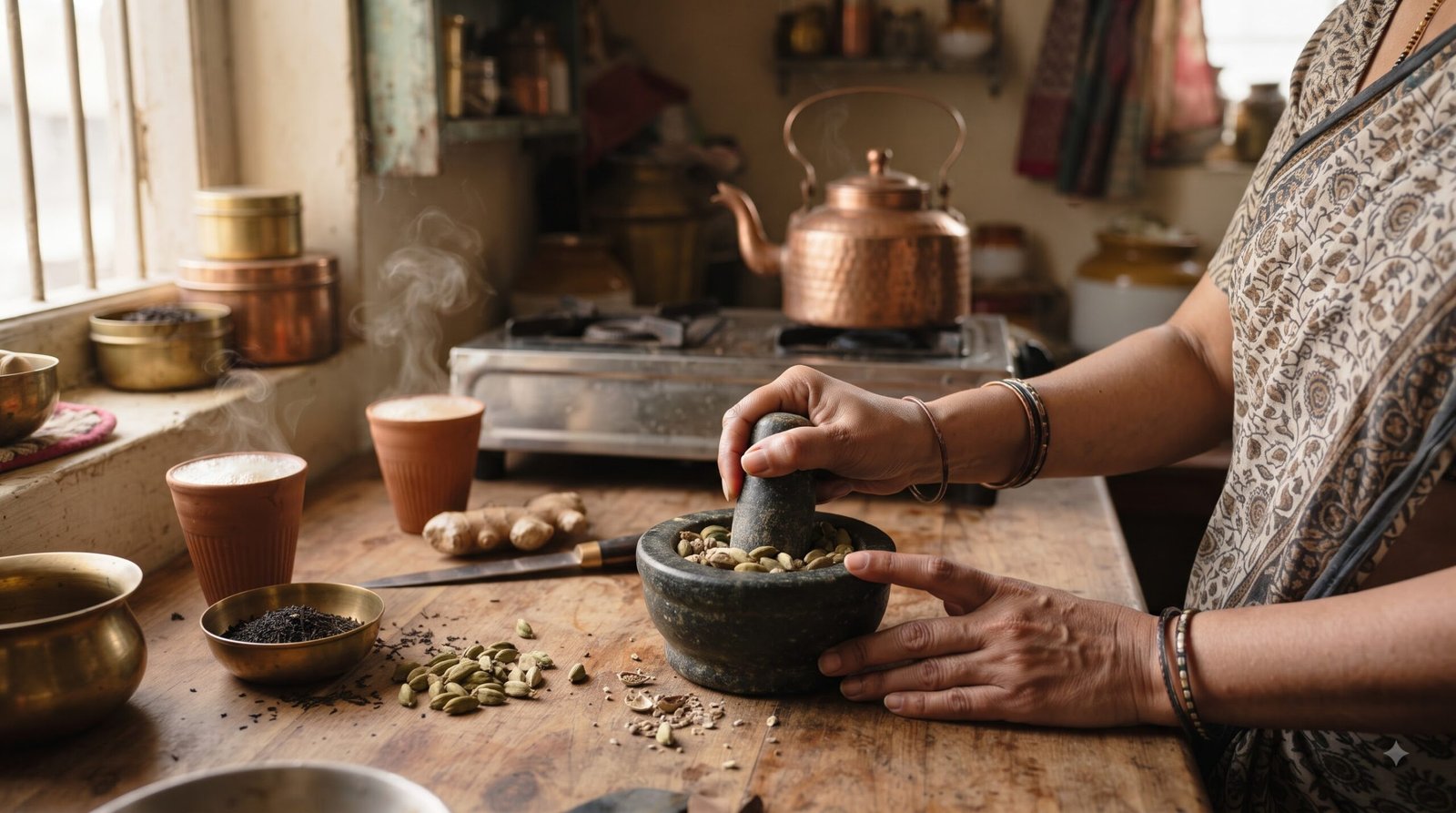
This is the use most travelers meet first. In a home kitchen, the pods are crushed just before the tea goes into the pan, usually with ginger. Crushing opens the pod so the tiny black seeds release their oil into the milk.
Don’t use pre ground powder if you can avoid it. It loses its fragrance quickly, and the tea ends up tasting flat.
How does black cardamom taste, and where is it used?
Black cardamom is a savoury spice. The smoke hits first, then something resinous and a bit like camphor. It’s not delicate, and it isn’t meant to be.
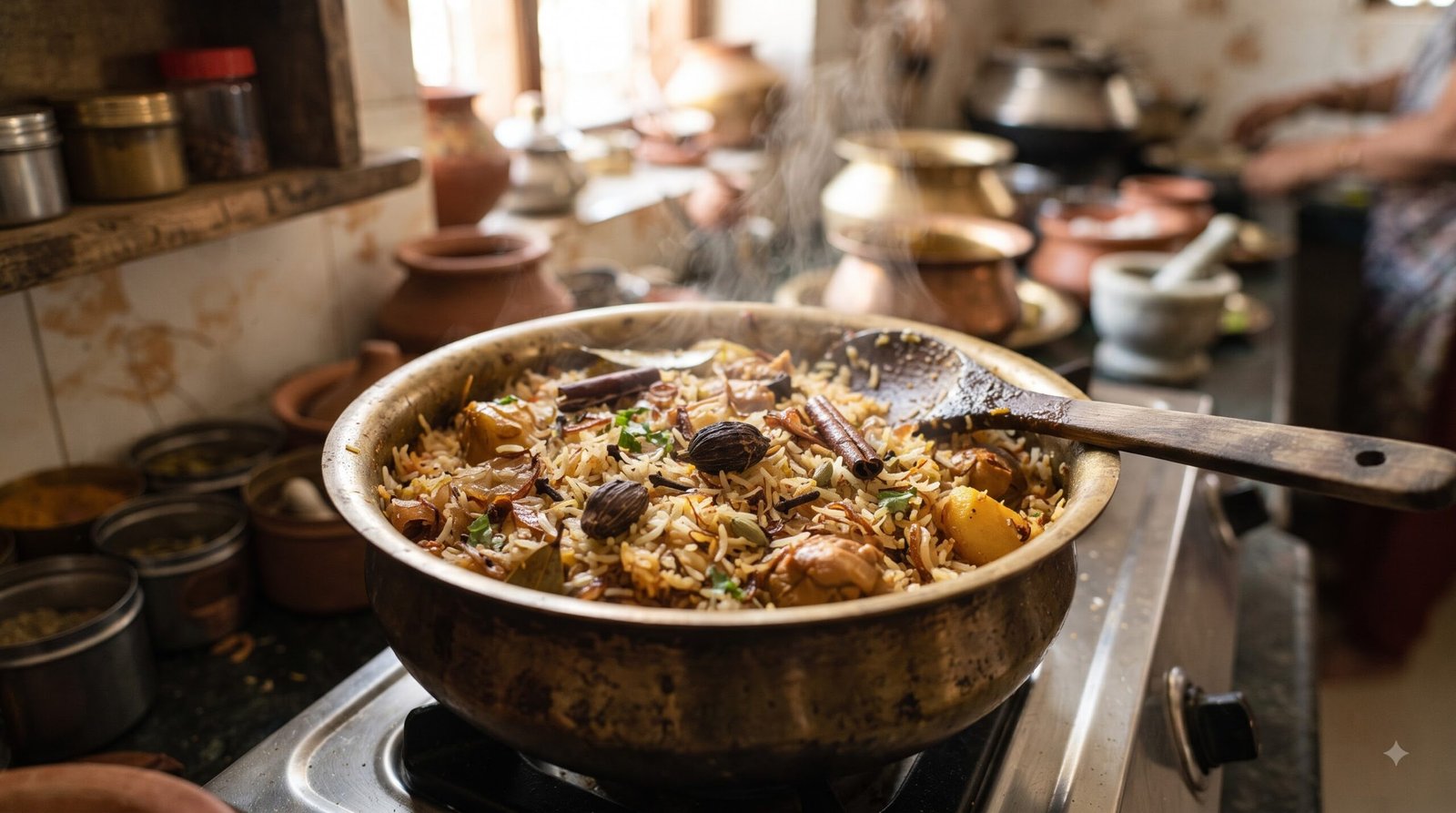
North Indian cooks use it in garam masala, in rich meat curries, in slow cooked dals and in some biryanis. It’s usually dropped in whole during tempering, the hot oil stage at the start of cooking, and fished out before serving. A single pod can carry a whole pot.
If you bite into one by accident, you’ll remember it. Most people leave the whole spices on the side of the plate, and nobody will think twice.
Can you substitute black cardamom for green?
Not really. Swap black into a kheer and it will taste like a campfire. Swap green into a hearty dal and you’ll lose the depth the recipe was built around.
If you only have one, use it in the dish where it belongs and skip the other, rather than forcing a substitute. A few quick rules:
- Sweet dish, chai or dessert: green only.
- Meat curry, dal or heavy gravy: black is the natural choice, with green as a supporting note if you like.
- Biryani or pulao: green is the safe default, and black is used by cooks who want a deeper, smokier rice.
- Recipe says just “cardamom”: green.
Why do Indians eat cardamom after a meal?
You’ll often see a small dish of fennel seeds and a few green cardamom seeds at the end of a meal, or in a mouth freshener called mukhwas. Cardamom is traditionally believed to help digestion and freshen the breath. Many families chew a pod after a heavy dinner without thinking about it.
Treat that as tradition and kitchen habit rather than medical advice. It’s pleasant, and that’s reason enough.
How to buy and store cardamom in India
Buy whole pods, not powder. Green pods should be plump, deeply coloured and strongly fragrant. Dull, pale or papery pods are old. Black pods should smell clearly smoky and feel dry, not damp.
Store both in an airtight jar away from light and heat. Whole pods last far longer than ground seeds. Grind small amounts when you need them, in a mortar or a spice grinder.
Prices differ a lot. Green cardamom is among the more expensive spices, and grades vary by pod size and freshness, so ask to smell before you buy. In Old Delhi’s spice market, shopkeepers will usually let you.
See cardamom used the way Indian families use it
Reading about it helps. Smelling the pods, crushing them yourself and tasting what they do to milk, rice or dal helps far more. These experiences from Explore Real India put cardamom to work:
Chai Master Class Cooking Class: 6 Dishes
Prefer to eat your way through the city? Try our Delhi street food tour beyond Old Delhi or the Old Delhi street food tasting in a local home. Planning sightseeing too? Look at the Delhi to Taj Mahal day trip, the same day Jaipur tour, or the 7 day Golden Triangle with Ranthambore tiger safari.
Frequently asked questions
Is black cardamom the same as green cardamom?
No. They are different plants with different flavours. Green cardamom is sweet and floral, while black cardamom is smoky and strong.
What is badi elaichi in English?
Badi elaichi means black cardamom, also called large or brown cardamom. Elaichi on its own usually means green cardamom.
Which cardamom is used in chai?
Green cardamom. Crush a pod or two and add it to the pan with the tea leaves and ginger.
Which cardamom is used in biryani?
Most recipes use green cardamom. Some, especially richer meat versions, add one black pod for a smokier base.
Can I use black cardamom in desserts?
It’s not recommended. The smoky flavour clashes with sweet, milky dishes. Stick to green.
Where does Indian cardamom come from?
Green cardamom is grown mainly in Kerala, Karnataka and Tamil Nadu. Black cardamom comes mostly from Sikkim and the eastern Himalayas.
How many pods should I use?
For two cups of chai, one or two crushed green pods is plenty. For a pot of dal or curry serving four, one black pod is usually enough.