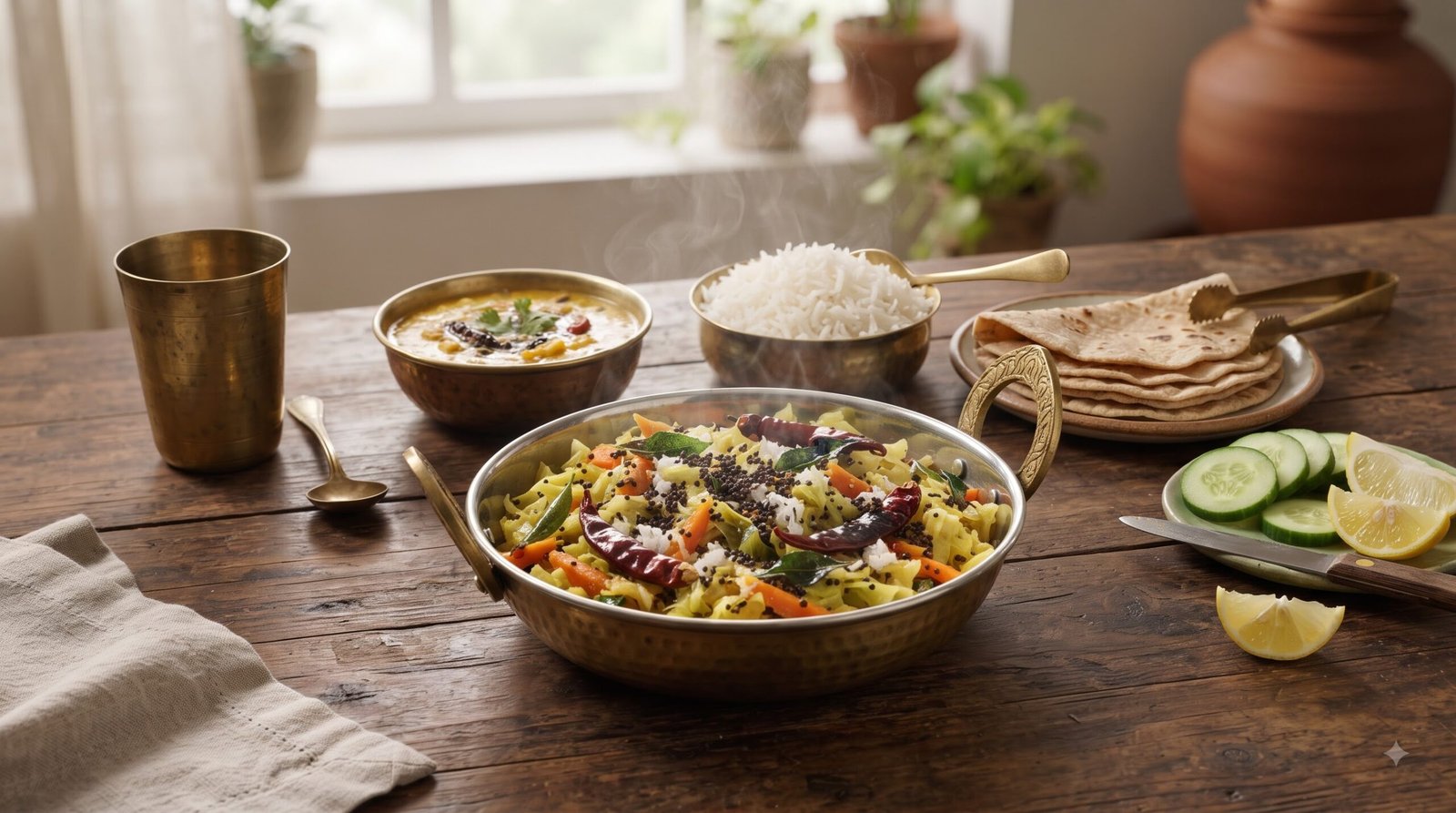
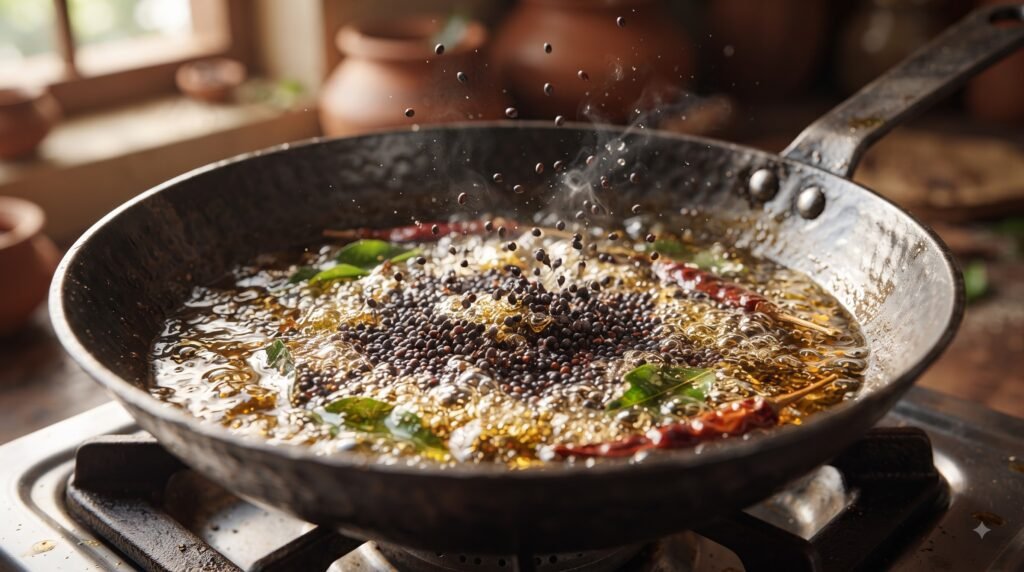
Tiny black seeds hit hot oil, crackle for a few seconds, and the whole kitchen smells different. If you’ve eaten dal, a South Indian vegetable dish or a Bengali fish curry, you’ve already tasted what mustard seeds do. Here’s how Indian cooks use them, which kind to buy, and the mistakes that make a dish taste bitter.
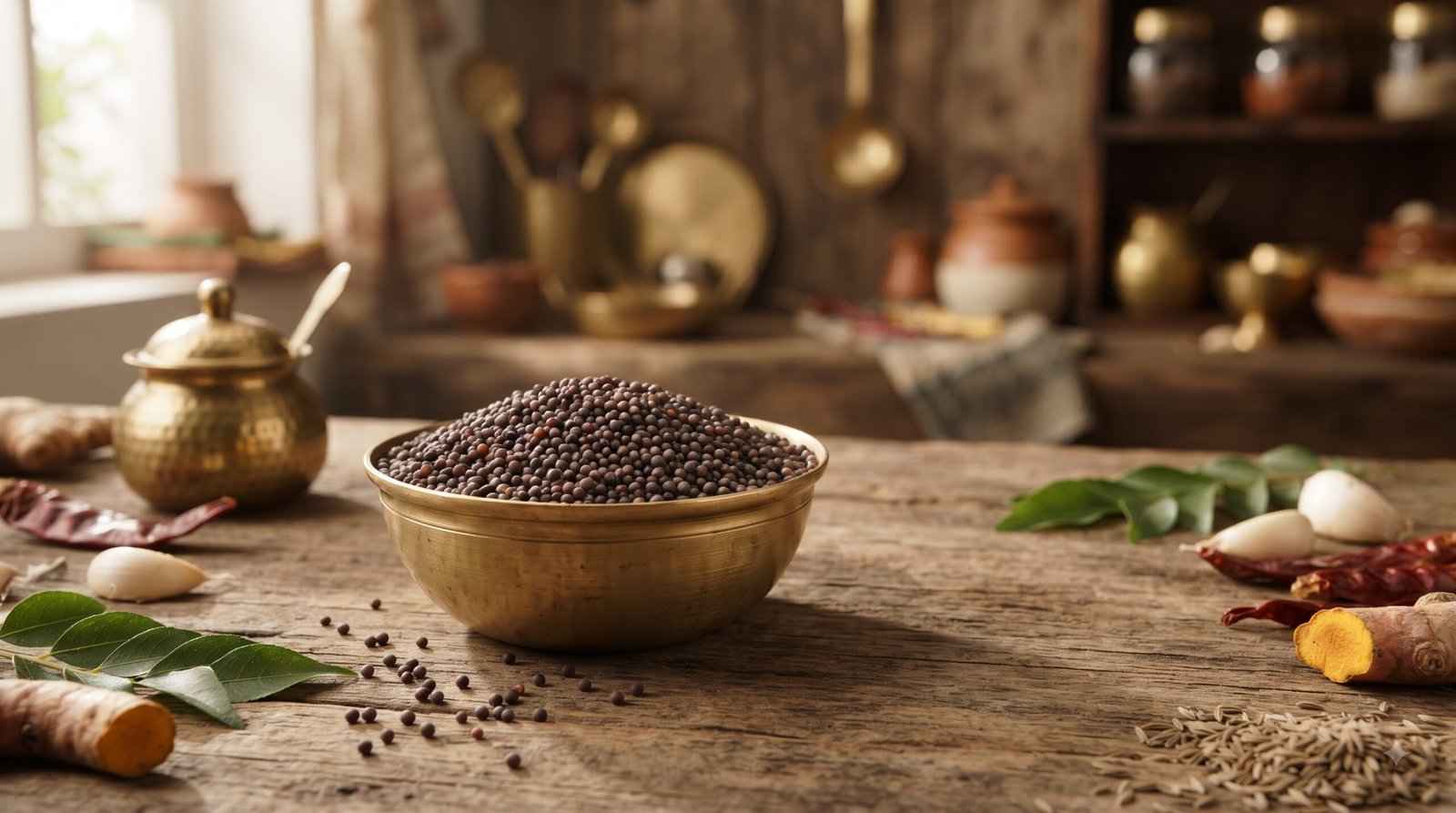
Why Do Indian Cooks Use Mustard Seeds?
Raw mustard seeds taste of very little. The sharp, nutty flavor only shows up when you heat them in oil or crush them with liquid. That’s why they almost never go into a dish dry.
In most home kitchens, mustard seeds do three jobs. They start a dish with a base layer of flavor. They add a gentle bitterness that balances sweet, sour and rich ingredients. And they bring texture, because the popped seeds stay slightly crisp inside curries and vegetables.
You’ll find them across the country, but they matter most in the south, in Bengal, Gujarat and Maharashtra, and in pickles everywhere.
Which Mustard Seeds Should You Buy?
This confuses people, mostly because of naming. In Hindi, rai and sarson are both used for mustard, and shops don’t always agree on which is which.
| Type | Flavor | Best used for |
|---|---|---|
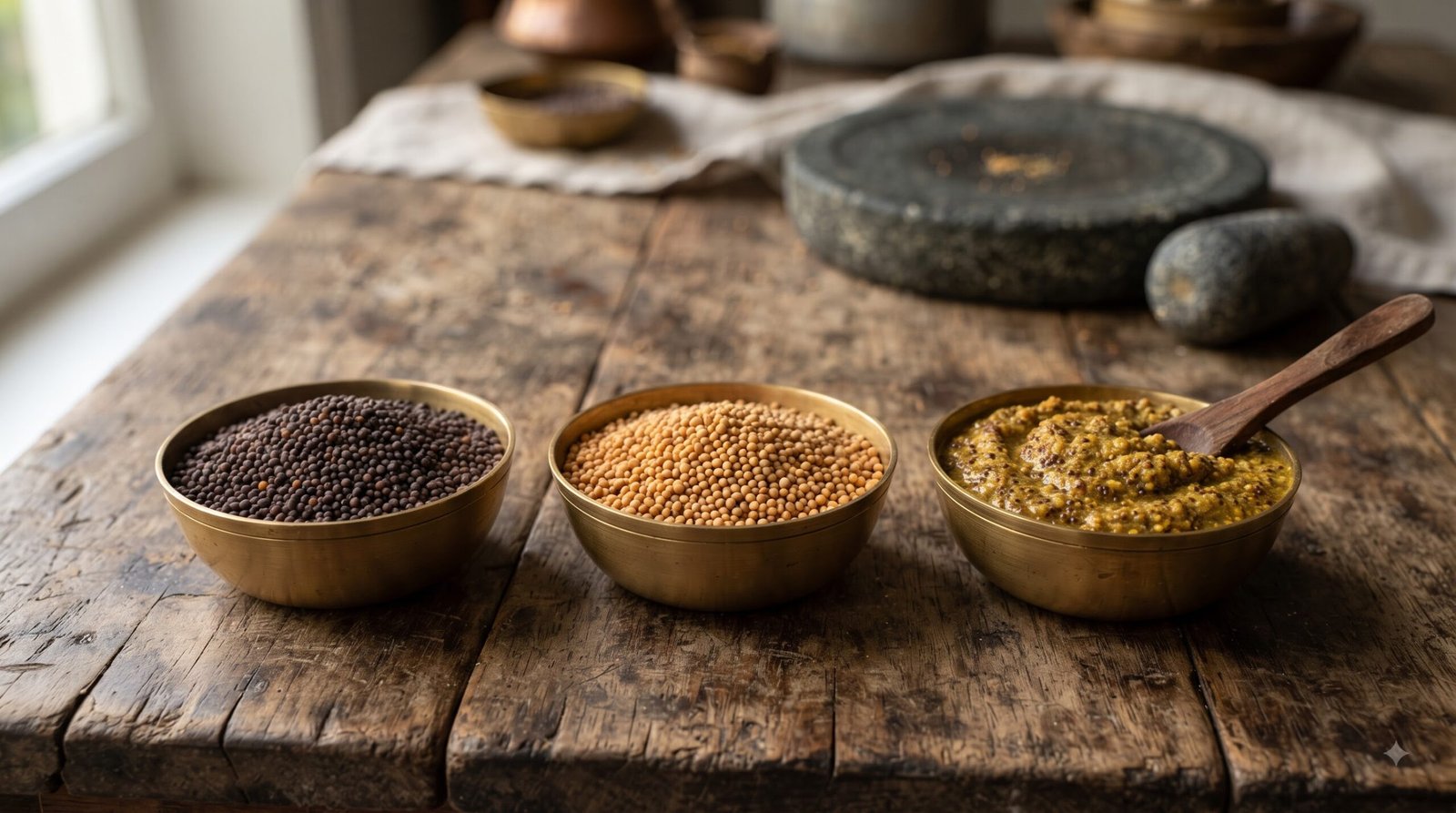
| Black mustard | Most pungent | Traditional South Indian tempering, though harder to find now |
| Brown mustard (rai) | Sharp, nutty | Everyday tadka, dals, vegetables, pickles |
| Yellow mustard | Mildest | Pickling, wet pastes, Western style condiments |
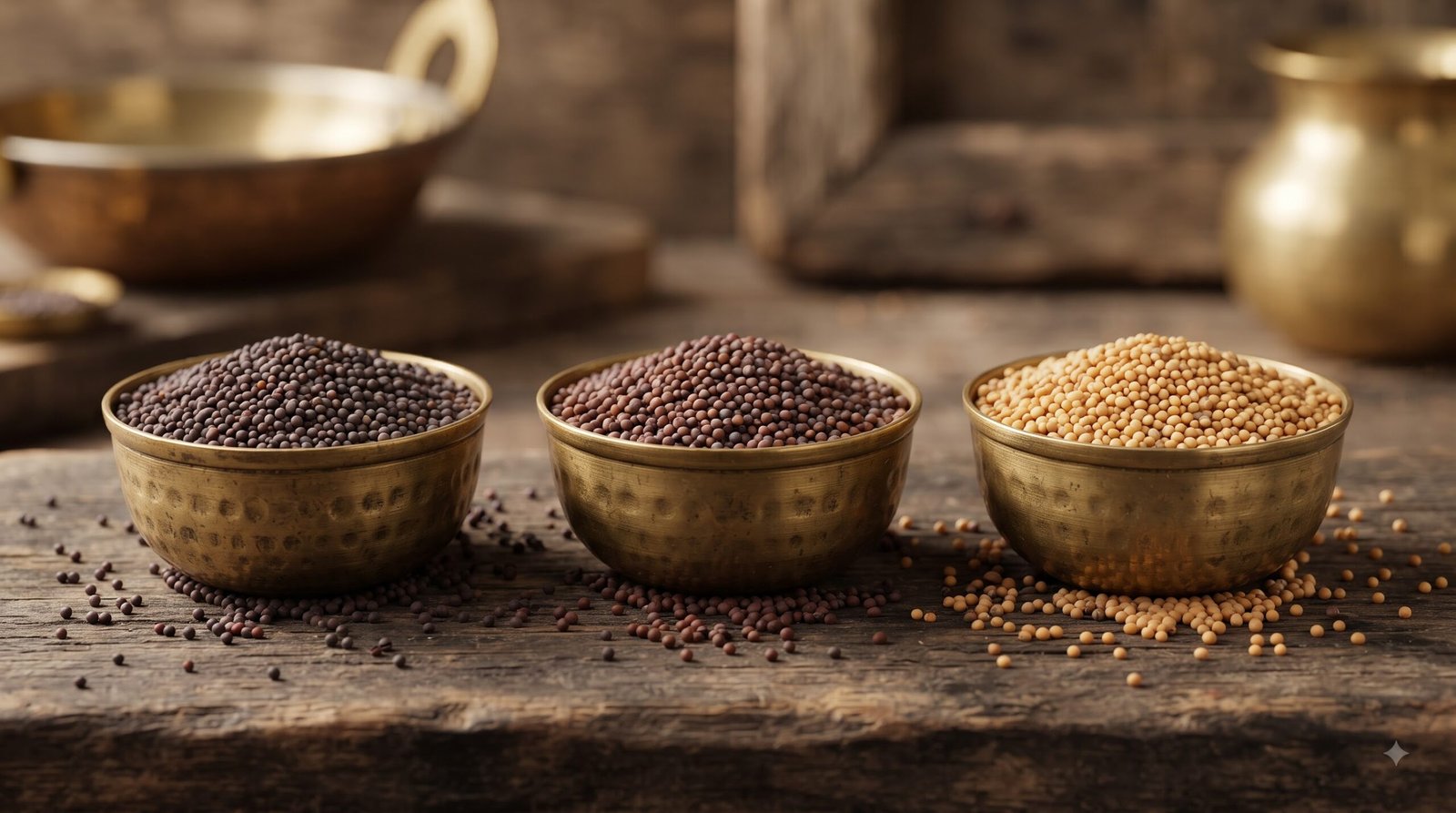
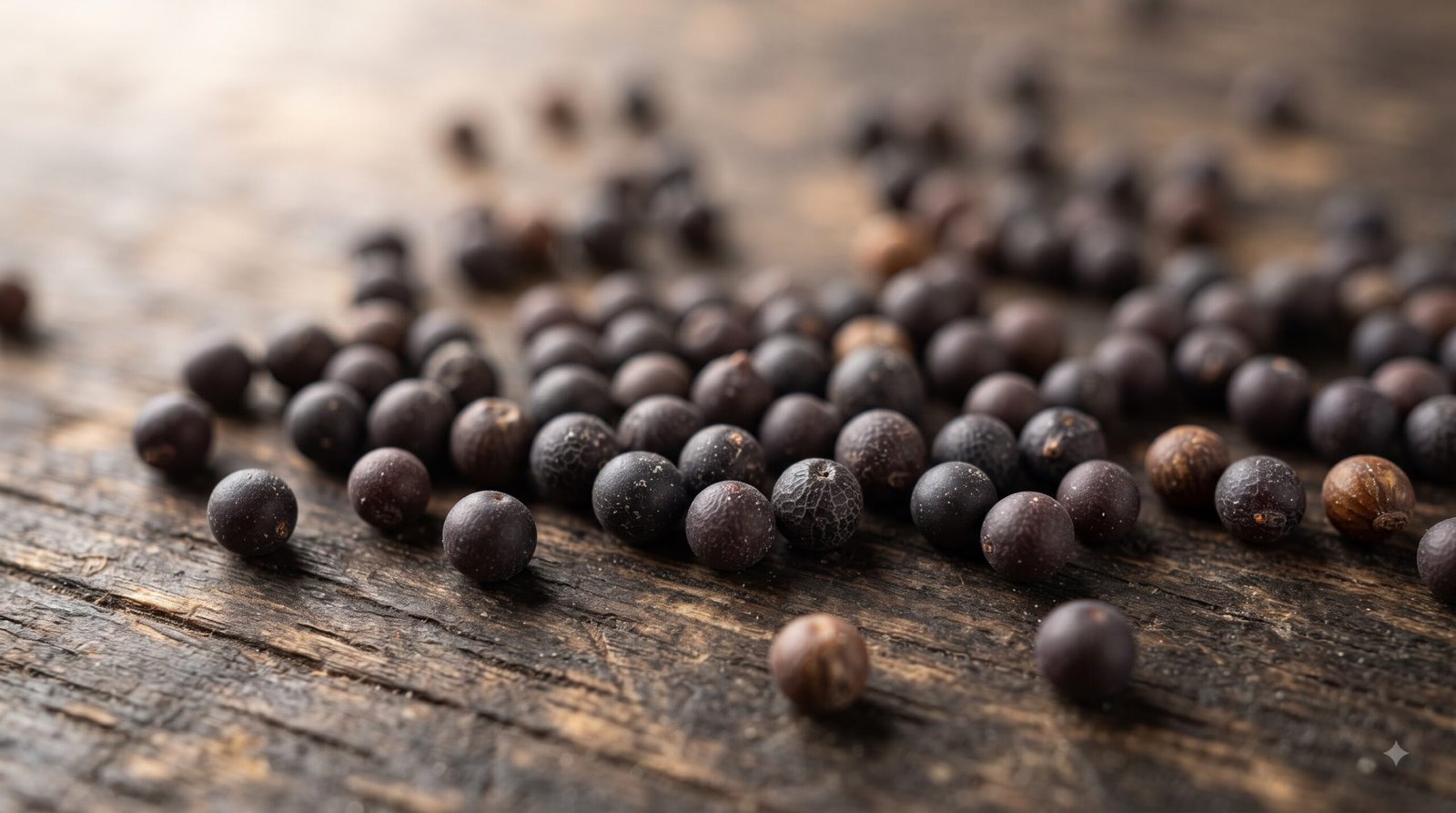
For tempering, buy small dark brown or black seeds. Yellow seeds tend to burn before they pop cleanly, so they suit pastes and pickles better.
How Do You Temper Mustard Seeds Properly?
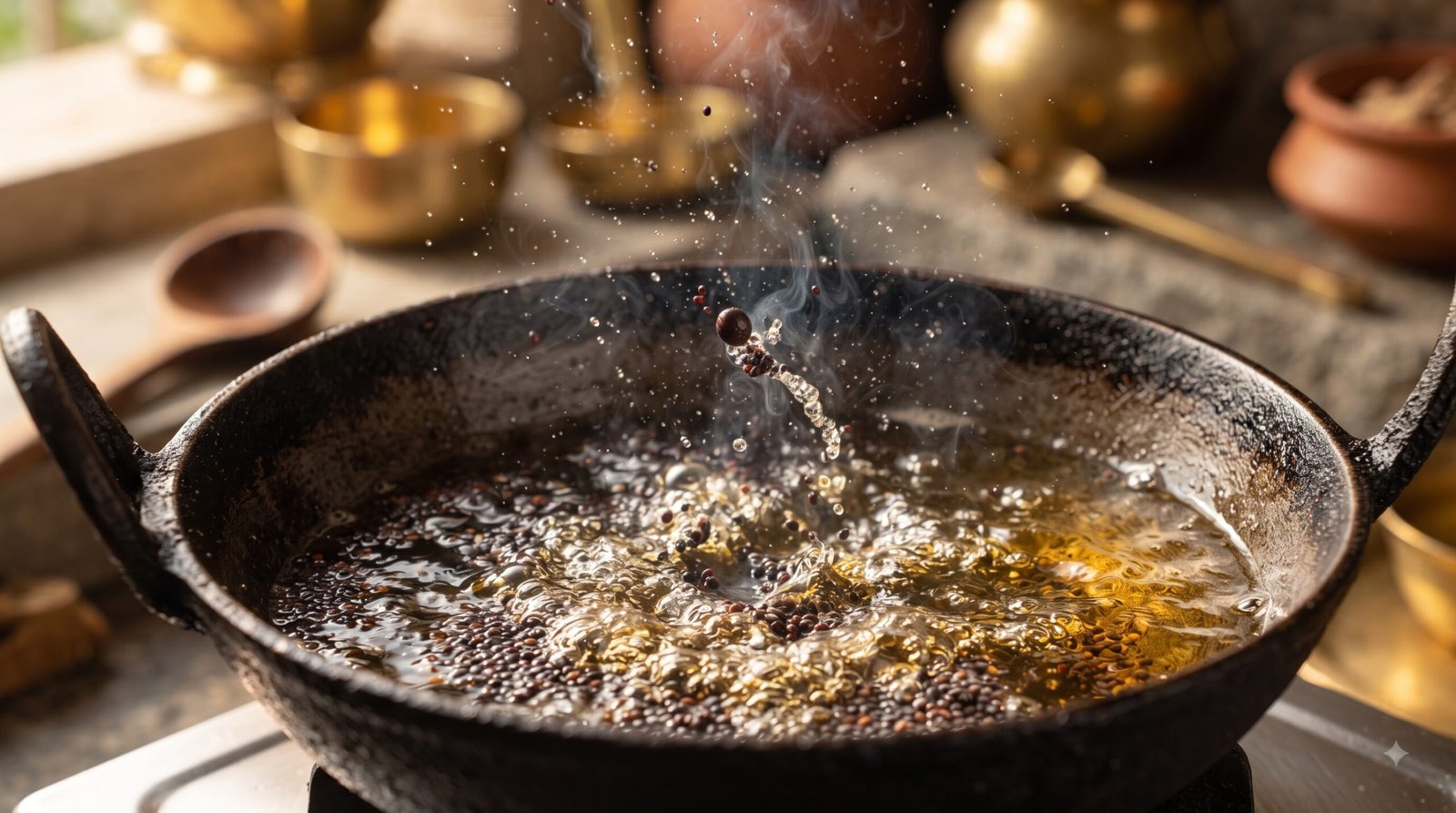
Tempering is called tadka, chhaunk, tarka or popu, depending on where you are. The idea is the same everywhere: flavor the fat first, then pour it over the food or build the dish on top of it.
- Heat a tablespoon or two of oil or ghee in a small pan on medium heat.
- Drop in two or three seeds as a test. If they sizzle right away, the oil is ready.
- Add the rest of the seeds. They’ll start popping within seconds.
- When the popping slows, add the next ingredient: curry leaves, dried red chilies, cumin, asafoetida (hing) or onions.
- Add the main ingredient or pour the tadka over a finished dish.
What Happens When You Burn Them?
Burnt mustard seeds turn bitter and acrid, and no amount of salt or cream fixes that. If the seeds go dark gray or you smell something harsh, tip it out and start again. It costs you thirty seconds and saves the whole dish.
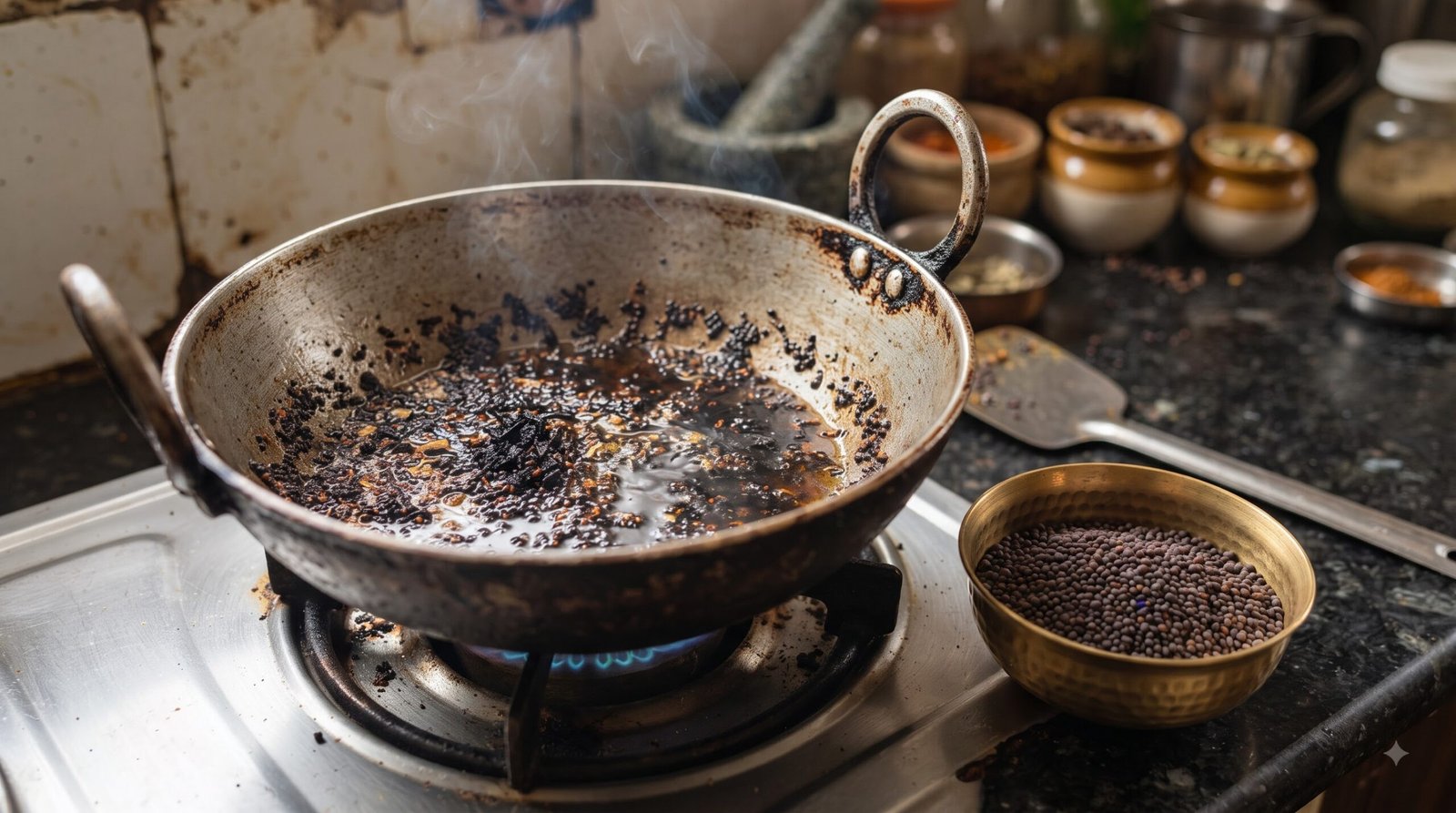
The usual causes are oil that’s too hot, a pan left unattended, or adding the seeds and walking away to chop something. Tempering is quick. Have everything within reach before the seeds go in.
How Do Different Regions Use Mustard?
South India
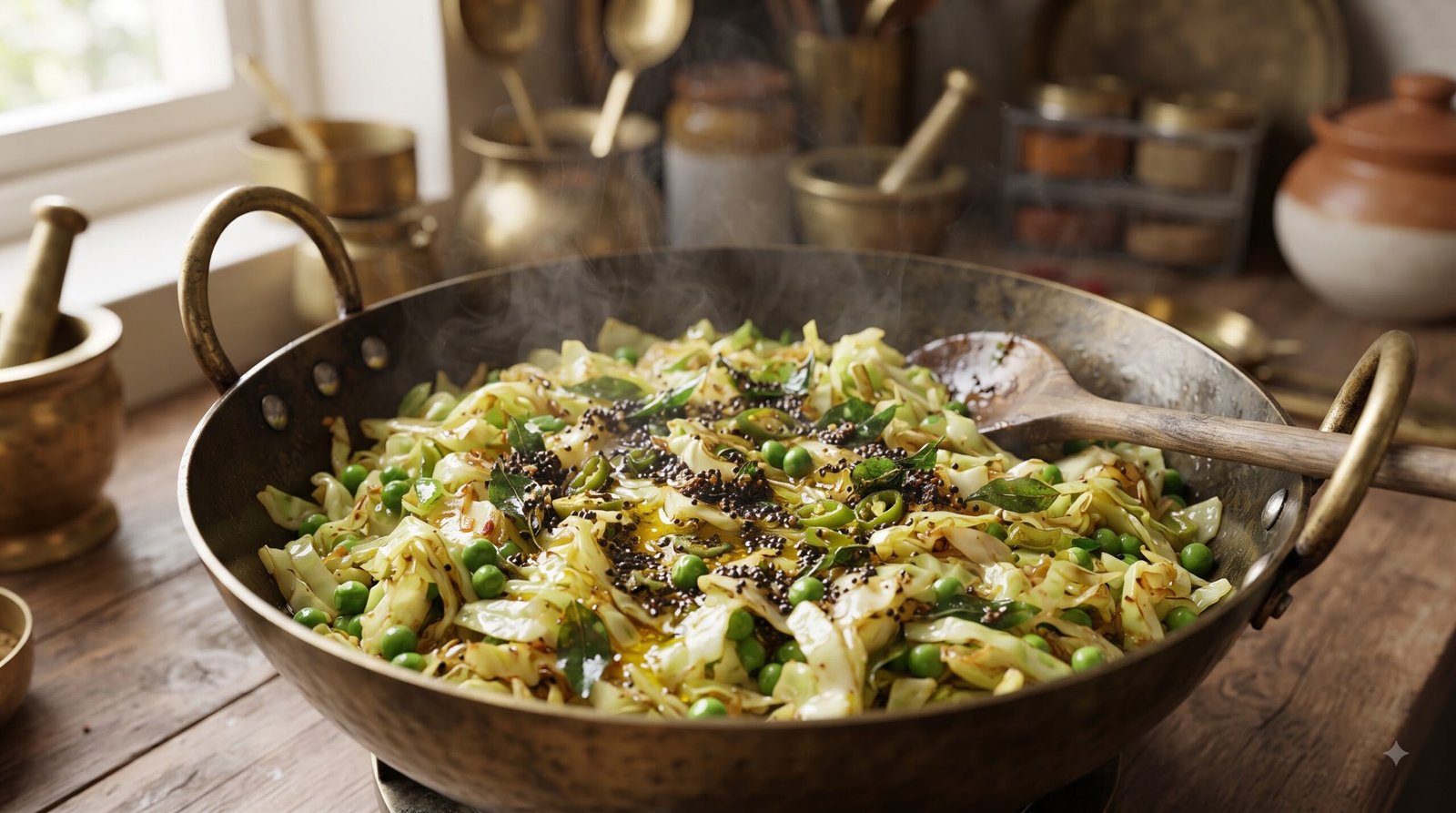
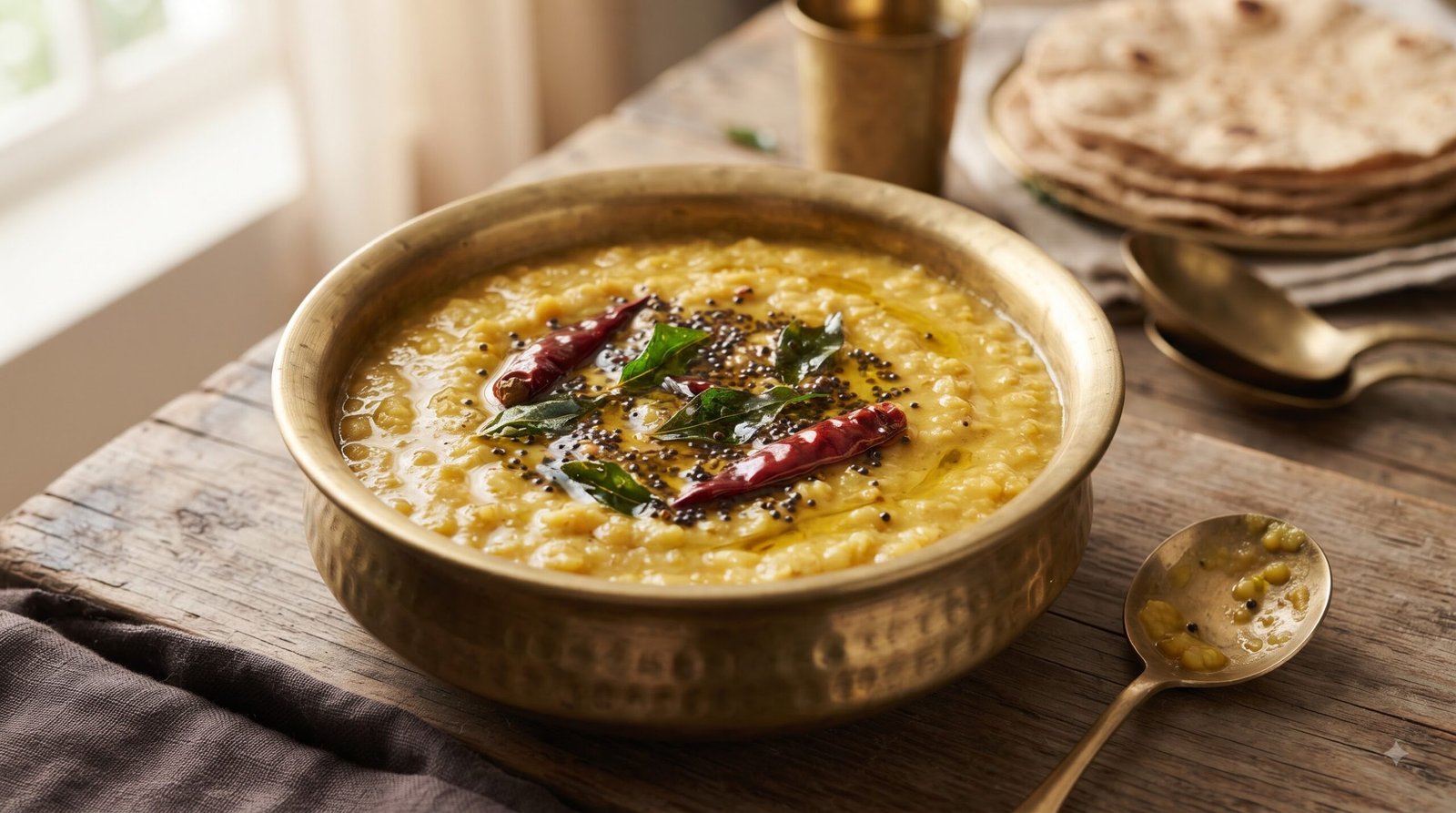
Mustard seeds are close to non negotiable in the south. They go into the tempering for sambar, rasam, coconut chutneys, yogurt rice and dry vegetable dishes, usually with urad dal, curry leaves and dried chilies.
Bengal
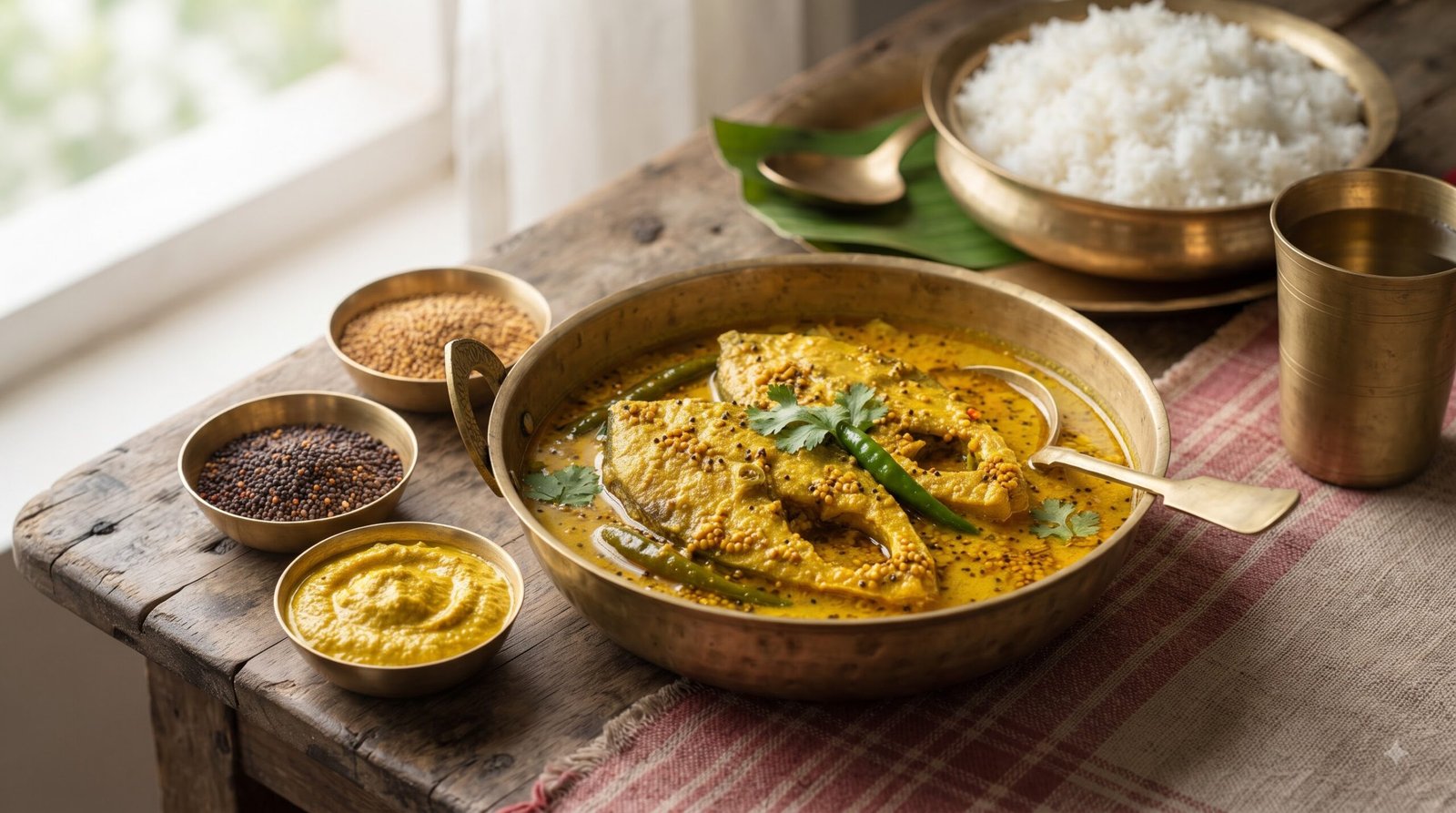
Bengali cooking uses mustard in a different way. Seeds are ground into a paste, often with green chilies, and used for fish like hilsa or rohu. Mustard oil is the cooking fat. There’s also kasundi, a pungent fermented mustard relish, usually eaten alongside fried snacks or fish.
North India and Punjab
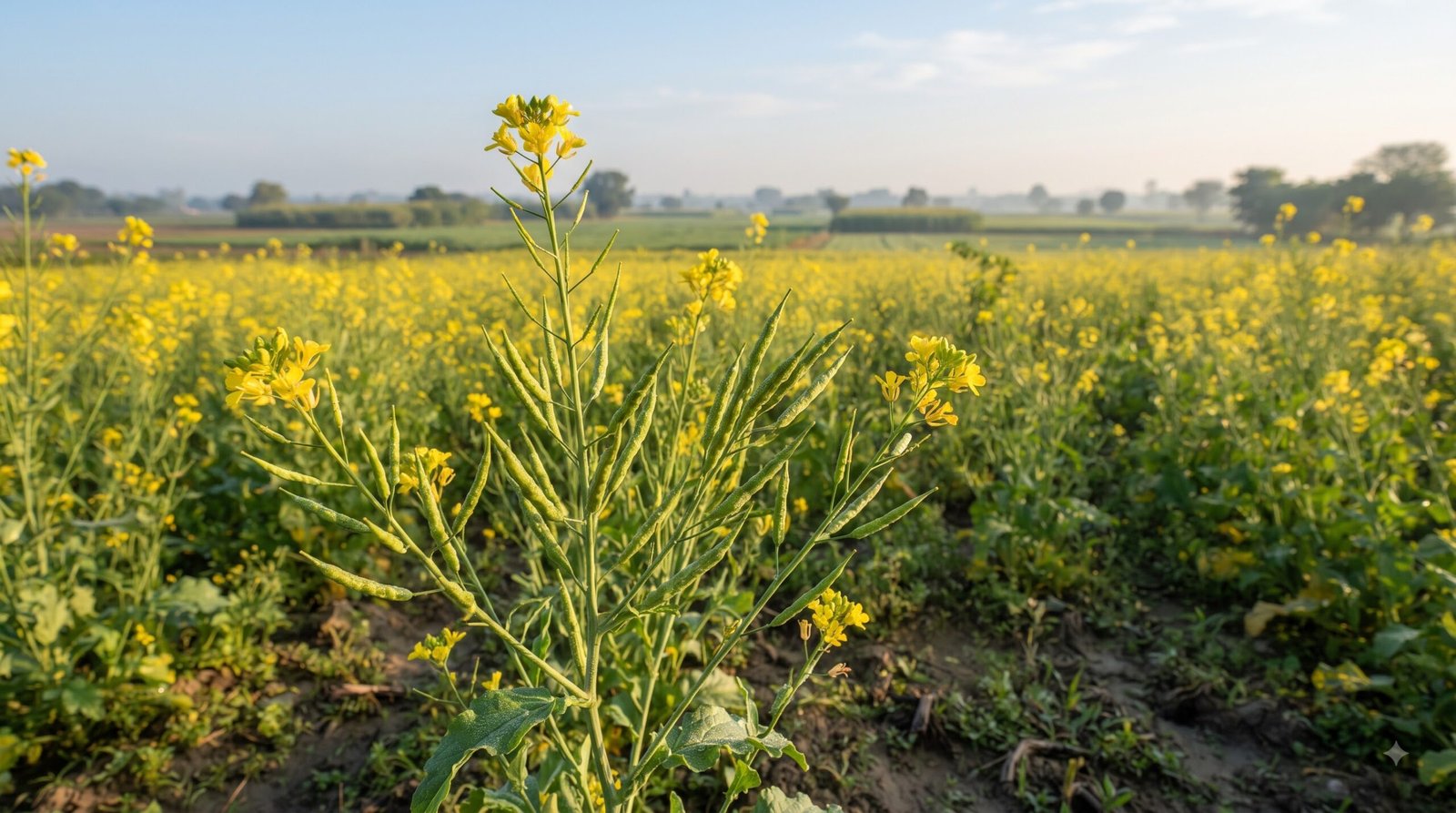
In Punjab the star is often the greens: sarson da saag in winter, cooked down slowly and served with makki di roti. Mustard oil is common in pickles and in many home kitchens, though ghee and refined oils are more common now.
Gujarat and Maharashtra
Here mustard seeds go into the tempering for dhokla, poha, upma, kadhi and quick vegetable dishes, often alongside sesame and a pinch of sugar.
What About Mustard Oil?
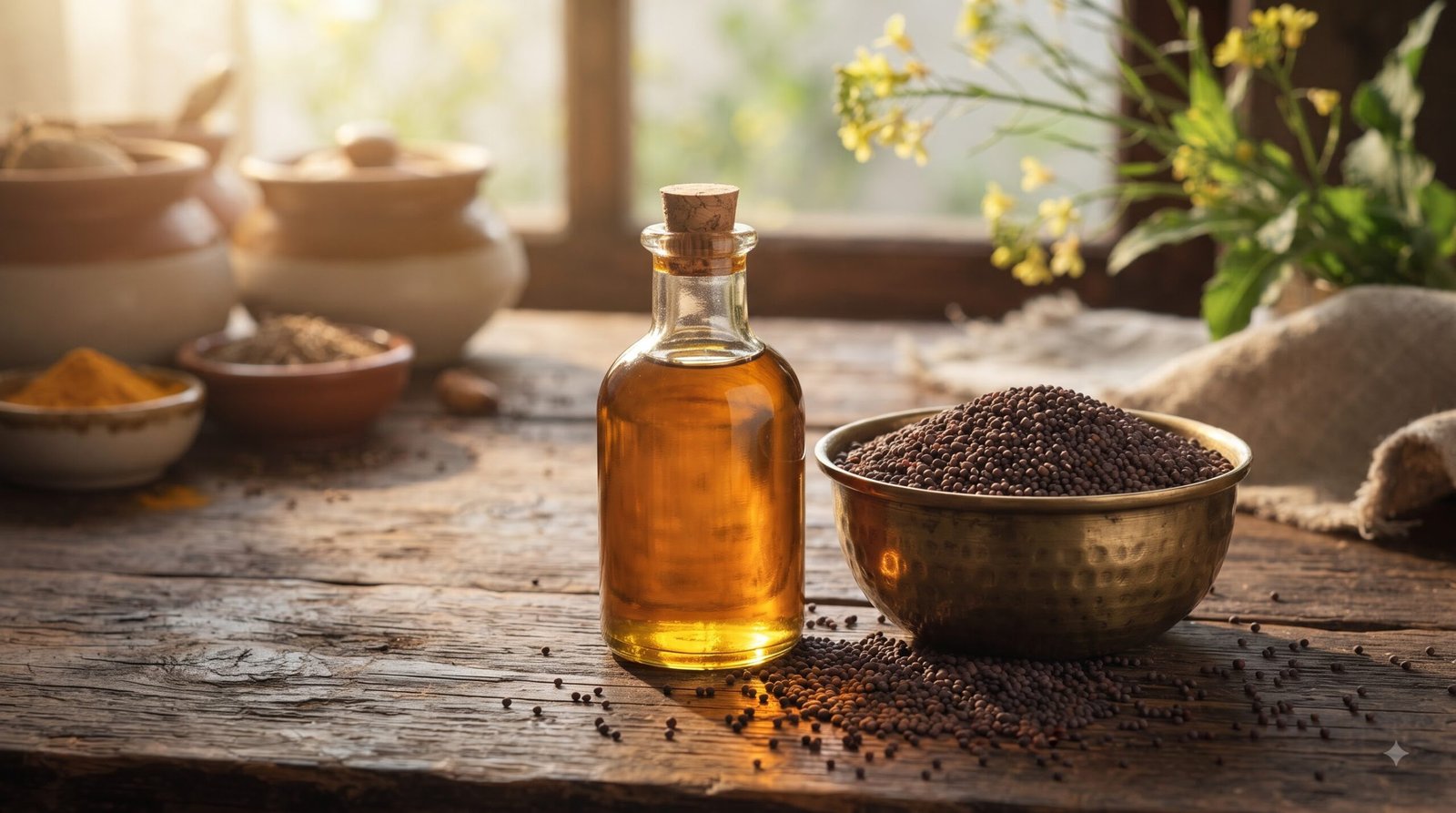
Mustard oil has a sharp smell that surprises first time visitors. Many cooks heat it until it just starts to smoke before cooking, which mellows the pungency. It’s a regional taste. If you didn’t grow up with it, start with small amounts.
Are Mustard Seeds Good for You?
Mustard seeds contain compounds called glucosinolates, found in cruciferous vegetables too. When seeds are crushed and wet, an enzyme turns them into pungent compounds that researchers study for their anti inflammatory effects. Whole seeds in a tadka give you the flavor first. Ground mustard, as in Bengali pastes, gives you more of that chemical reaction. Very high heat for long periods reduces the enzyme’s activity.
Seeds are used in small amounts in cooking, so think of them as a flavoring, not a health food.
How Should You Store Them?
Keep whole seeds in an airtight jar, away from heat and light. They last a long time. Buy small quantities from a busy spice shop if you can, and avoid seeds that smell musty. In Delhi, Khari Baoli near Old Delhi is the place for this. Ground mustard goes stale faster, so grind only what you need.
Where Can You Learn This in Delhi?
Reading about a tadka only gets you so far. The timing, the sound of the seeds and the smell right before they burn are easier to learn standing at the stove. In our Indian cooking class, you cook six dishes in a family kitchen, and tempering comes up in nearly every one. If you’d rather start with tea and home food, the chai master class is a gentler introduction.
Frequently Asked Questions
What is the difference between rai and sarson?
Rai usually means the small brown or black mustard seeds used for tempering. Sarson often refers to the plant, the greens or the oil, though usage varies by region and shopkeeper.
Why do mustard seeds pop in hot oil?
Moisture inside the seed turns to steam, and the hard outer coat bursts. The popping tells you the oil is hot enough and the seeds are releasing flavor.
Can I use yellow mustard seeds for tadka?
You can, but they rarely pop cleanly and burn easily. Brown or black seeds work better for tempering.
How long should mustard seeds cook?
Usually 15 to 30 seconds in hot oil. Move on once the crackling slows.
Can I substitute mustard powder or prepared mustard?
Not really. Powder gives heat without the popped, nutty character of a tadka, and prepared mustard has vinegar and other flavors. If you have no seeds, use cumin for a different but workable base.
Are mustard seeds used in vegetarian and vegan Indian food?
Yes, constantly. They’re a staple in vegetarian dishes, and they’re plant based.
Is mustard oil safe to cook with?
It has been used in Indian homes for generations, particularly in the east and north. Rules on culinary use of mustard oil differ between countries, so check your local guidance if you plan to buy it abroad.
Cook With Us in Delhi
Learn tempering, spice blending and home style dishes in a real Delhi kitchen. Or eat your way through the city’s street food first.
Book the Cooking Class Explore Street Food Tours