

Getting the timing right at the Taj Mahal matters more than most travelers realize. Arrive at the wrong hour and you’re squinting through midday haze, surrounded by thousands of people, sweating through marble that radiates heat. Arrive at the right time and it’s a genuinely different experience. Quieter. More light. Easier to breathe.
This guide covers exactly when to go, when not to go, and what to realistically expect depending on the month and the hour. No fluff.
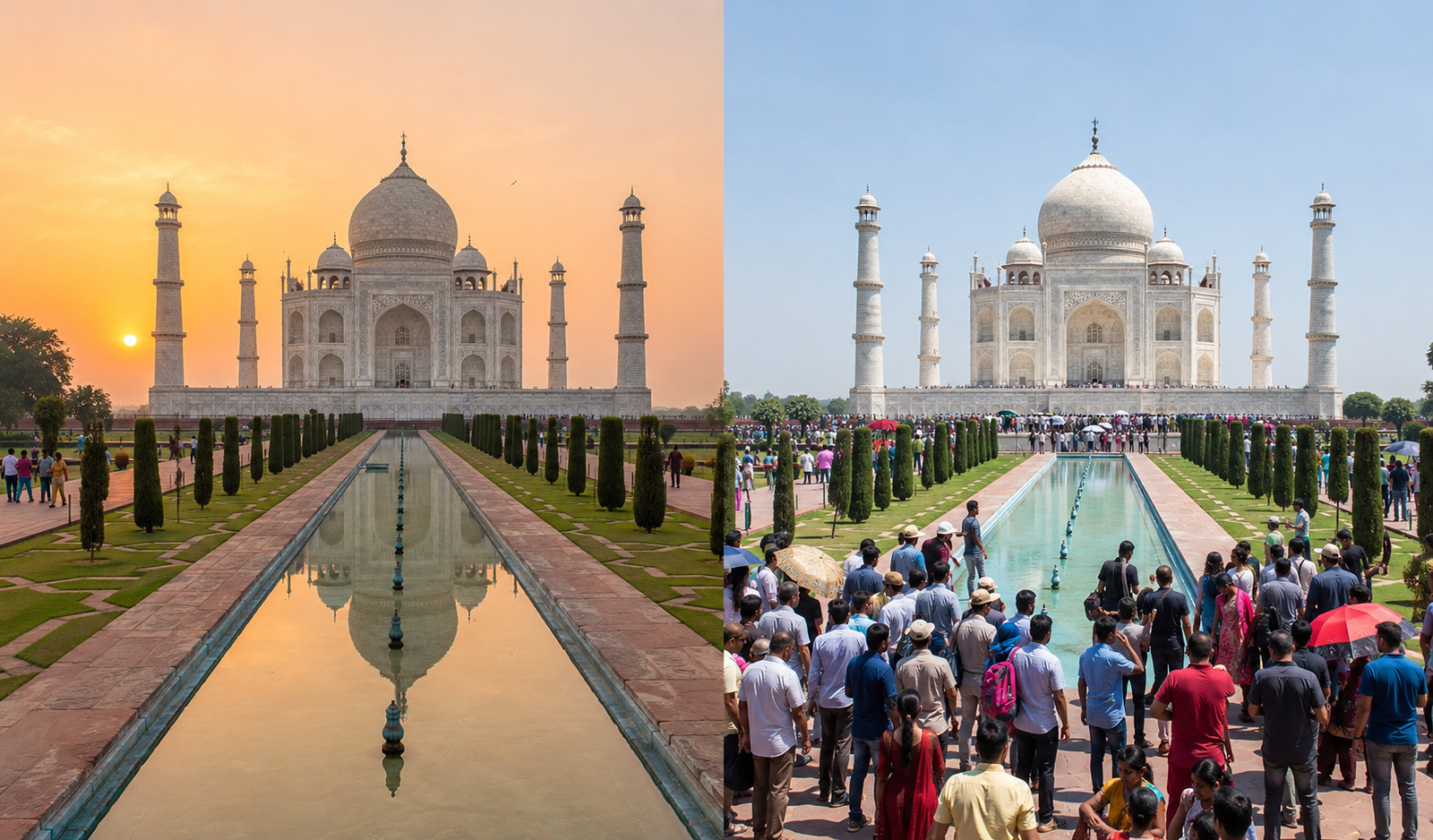
The Short Answer on Best Season
October through March is when most travelers should plan their visit. Temperatures are manageable, the sky is clearer, and the marble doesn’t become a heat trap. Within that window, November and February tend to offer the most balanced conditions: not too cold in the early morning, not yet crowded with peak-season holiday traffic.
October has an edge if you want smaller crowds before the winter rush begins. March starts pushing into warmer territory but the light is good and gardens are still green.
Best overall months: October, November, and February. These strike the best balance between weather, crowd levels, and photographic light conditions.
Month by Month: What to Expect
| Month | Weather | Crowds | Verdict |
|---|---|---|---|
| October | Warm days, pleasant evenings | Low to moderate | Excellent |
| November | Cool and clear | Moderate | Excellent |
| December | Cold mornings, foggy | High (holiday season) | Good, but foggy |
| January | Dense fog possible | High | Risky for photos |
| February | Mild, sunny | Moderate | Excellent |
| March | Warming up | Moderate | Good |
| April – June | Hot to extremely hot (42°C+) | Low | Not recommended |
| July – September | Monsoon, humid, rainy | Very low | Skip unless flexible |
A note on January fog: Agra gets thick winter fog between late December and mid-January. You can show up at sunrise and see almost nothing for the first 45 minutes. It can lift and become beautiful, but it can also stay all morning. If clear photos are a priority, January carries real risk.
Why Sunrise Is the Best Time of Day
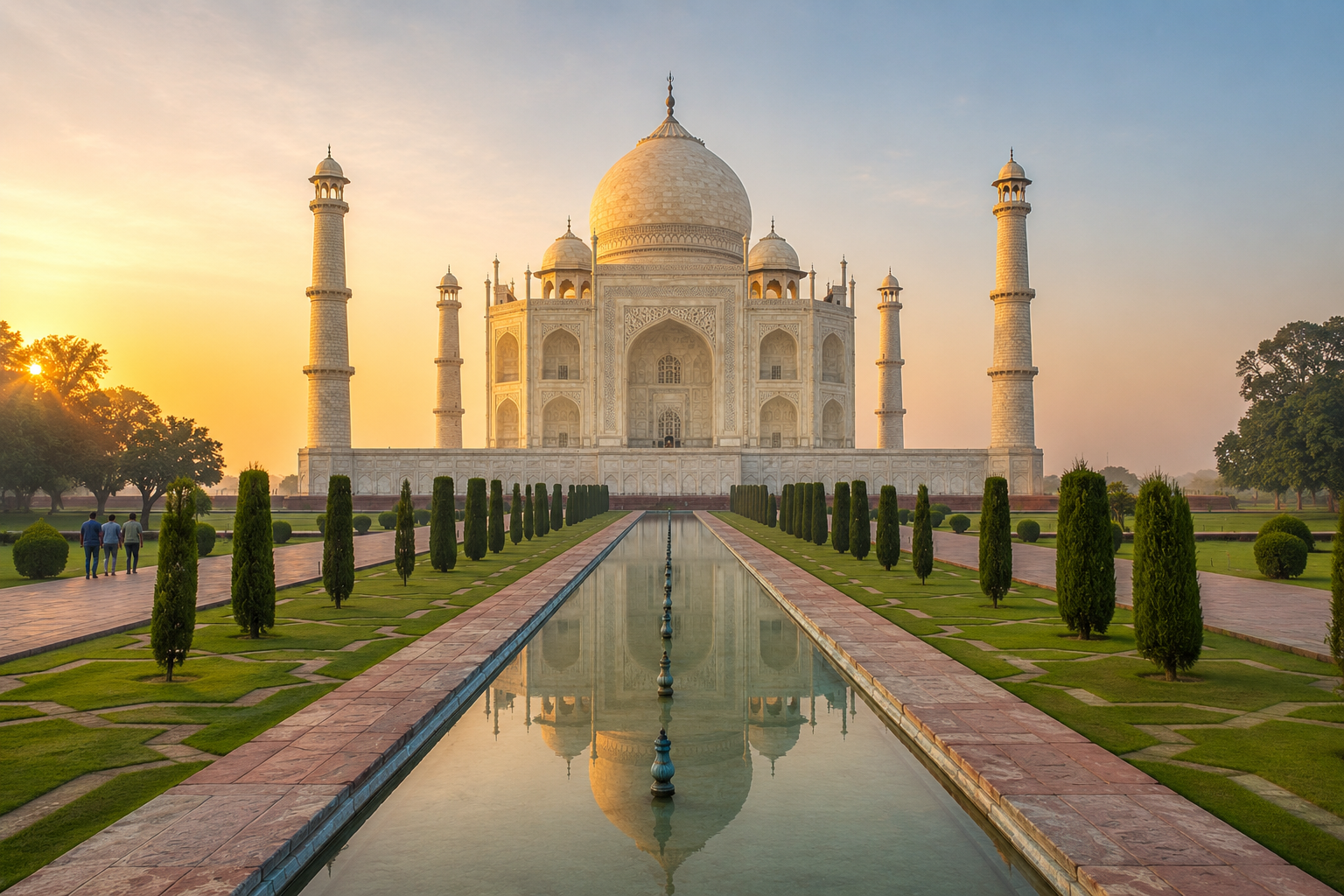
The Taj Mahal opens 30 minutes before sunrise. Getting there at that first opening is the single best decision you can make about your visit. The light in those first 45 to 60 minutes is soft, directional, and flattering. The white marble catches pale gold and pink tones that disappear by 9 AM. And the grounds are genuinely quiet.
By 8:30 to 9 AM, buses of visitors start arriving. By 10 AM the paths fill up noticeably. If you’re coming from Delhi on a day trip, that means leaving by 4:30 to 5 AM. It’s early, but it’s worth it.
Practical tip: Ticket counters open one hour before sunrise. You can buy on the spot in the morning, but buying online the day before through the official ASI portal saves time and offers a small discount.
Exact Times to Avoid at the Taj Mahal
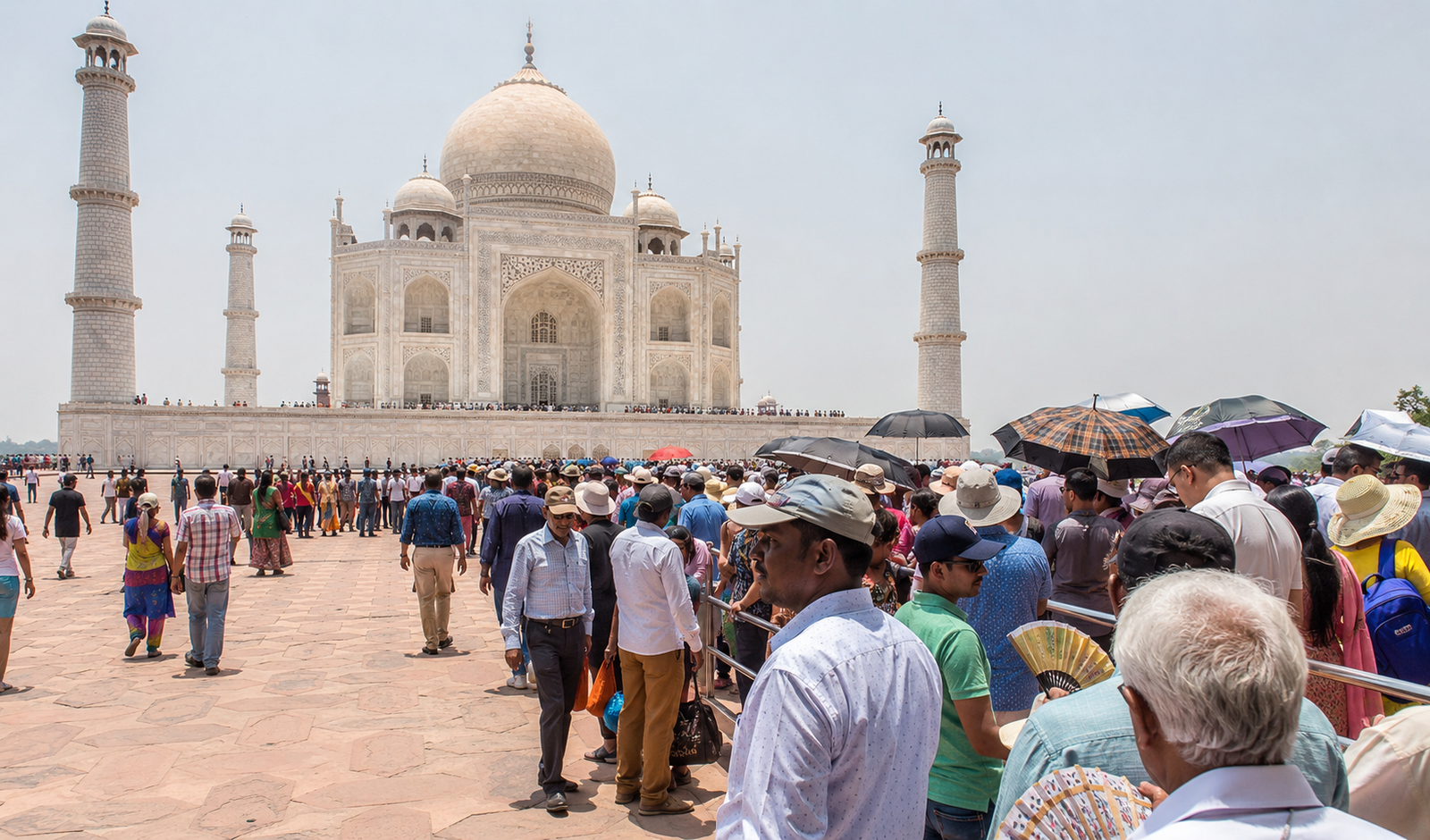
The worst window is 10 AM to 3 PM. This is when the bulk of day-trippers arrive, tour buses unload, and the marble reflects serious heat. There’s no shade inside the main complex. On a summer afternoon the ground temperature can feel extreme. Even in winter, this stretch is the most crowded and least enjoyable.
Avoid these specific situations:
- Weekends and Indian public holidays — domestic tourist traffic spikes significantly, especially from cities like Delhi, Lucknow, and Jaipur
- Friday — the Taj Mahal is completely closed for general visitors on Fridays for prayers
- 10 AM to 3 PM any day — peak crowd hours regardless of season
- Mid-April through June — temperatures regularly cross 42°C in Agra; the marble becomes physically uncomfortable to walk on
- Dense fog days in January — check local Agra forecasts before committing to the trip
The Winter Morning Experience
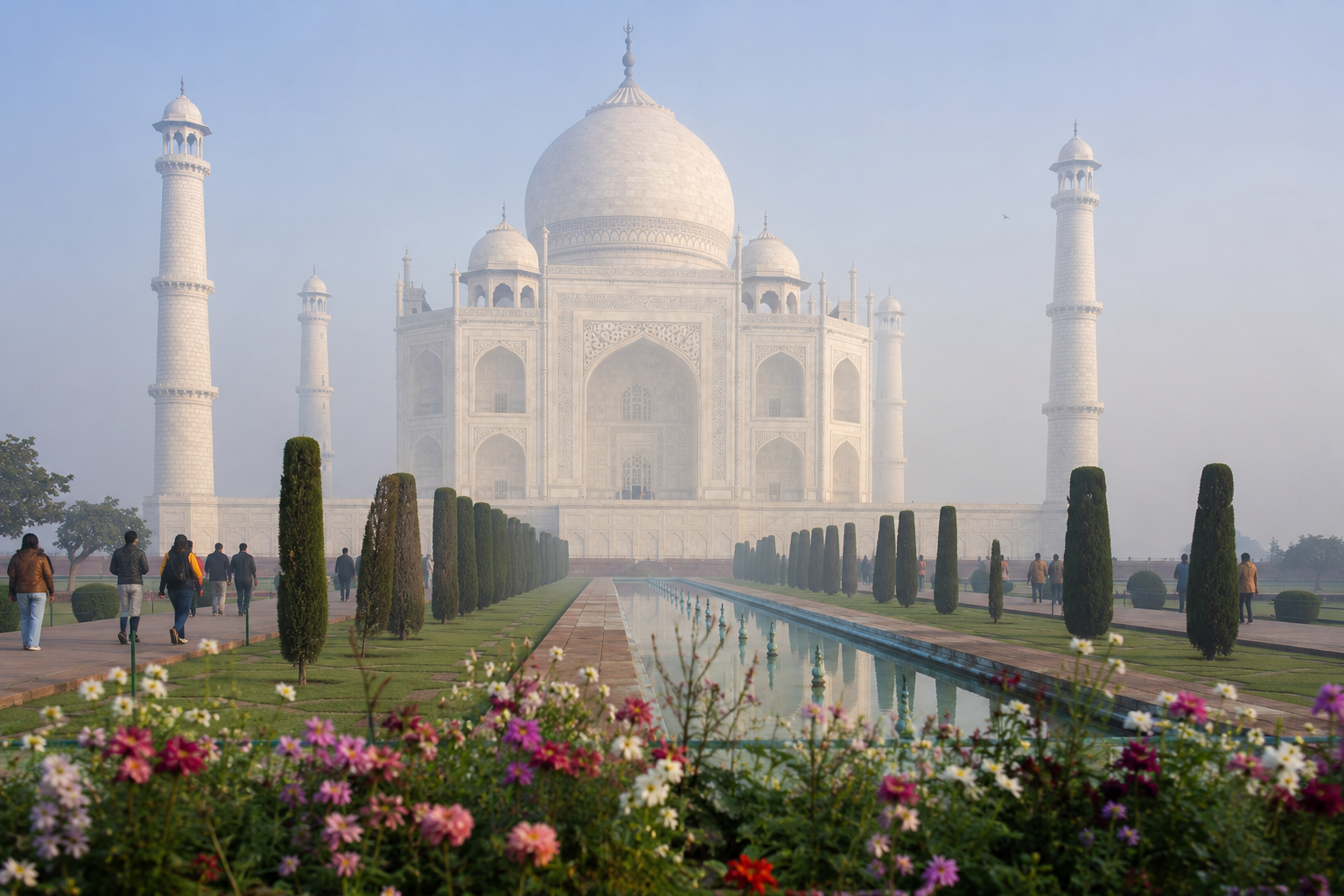
A clear winter morning between October and February is the version of the Taj Mahal most travelers remember. The air is cool enough to walk comfortably. The light builds gradually. The reflecting pool in front of the main structure actually reflects properly when the surface is still, which tends to happen in the early morning before wind picks up and before crowds disturb the area.
Bring a light layer. It can be genuinely cold before sunrise in December and January, especially near the river side of the complex. By the time you’ve walked through the gardens and spent an hour inside, you’ll have warmed up naturally.
Sunset from Mehtab Bagh: The Overlooked Option

Most visitors only think about being inside the Taj complex. But sunset from Mehtab Bagh, the Mughal garden directly across the Yamuna River from the Taj, gives you a completely different and far less crowded perspective. The monument turns amber and then deep gold in the last light of day. It’s quieter, requires a separate (very cheap) entry ticket, and the view is unobstructed.
This works particularly well if you’ve already done your sunrise visit inside the complex and want a second look at the end of the day without fighting crowds. The walk from the eastern bank back to Agra city is also pleasant in the evening cool.
Night Viewing: What You Should Know
The Taj Mahal offers limited night viewing on the full moon night and two days before and after each full moon. Entry is from 8 PM to midnight, strictly limited to 400 visitors per night in batches of 50, with each group getting 30 minutes inside. Tickets must be bought in advance through the ASI website or from the Archaeological Survey of India office in Agra.
The moonlit Taj is genuinely beautiful, but the experience is tightly managed. You won’t have time to linger or explore. Think of it as a very focused and atmospheric 30-minute viewing rather than a relaxed visit. Photography rules inside also apply at night.
Night viewing ticket details: Available 7 days in advance through asi.paygov.org.in. Maximum 400 visitors per night. No rescheduling, so check the lunar calendar before booking.
Entry Fees at a Glance (2026)
| Visitor Type | Basic Entry Fee | Main Mausoleum (Optional) |
|---|---|---|
| Foreign tourists | ₹1,100 | ₹200 additional |
| SAARC / BIMSTEC nationals | ₹540 | ₹200 additional |
| Indian / OCI cardholders | ₹50 | ₹200 additional |
| Children under 15 | Free | — |
Buying online saves ₹5 per Indian ticket and ₹50 per foreign ticket. Small discount, but the convenience of skipping the counter queue in the early morning is the real benefit.
Planning a Day Trip from Delhi
Delhi to Agra is roughly 200 kilometres. By car or private transfer it takes three to four hours depending on traffic and the route you take. The Yamuna Expressway is the fastest option. If you’re leaving for a sunrise visit, a 4:30 to 5 AM departure from Delhi puts you at the Taj gates around opening time.
The Gatimaan Express train connects Hazrat Nizamuddin station in Delhi to Agra Cantonment in about 100 minutes and is a comfortable option if you’re not going for first-light entry. Check current schedules before booking as morning departure times vary.
A well-structured day trip from Delhi can cover the Taj Mahal, Agra Fort, and a quick stop at either Mehtab Bagh or Itmad-ud-Daula, and still get you back to Delhi by evening. Our Delhi to Taj Mahal Day Trip is built around exactly this kind of efficient, unhurried itinerary.
Want to See the Taj Mahal the Right Way?
Join our guided day trip from Delhi that handles the early start, transport, and local insight so you can focus on the experience itself.
View the Taj Mahal Day TripFrequently Asked Questions
What is the single best time to visit the Taj Mahal?
Sunrise on a weekday between October and February. The light is best, crowds are thinnest at opening, and temperatures are comfortable for walking the full complex.
What time does the Taj Mahal open every day?
The gates open 30 minutes before local sunrise. This varies slightly through the year. Ticket counters open one hour before sunrise. It is closed every Friday for general visitors.
Is the Taj Mahal worth visiting in summer?
It’s possible but genuinely unpleasant from mid-April through June. Temperatures in Agra can cross 42°C. If visiting in summer, going at sunrise is essential, not optional. Expect to leave by 9 AM before the heat becomes serious.
Can I visit the Taj Mahal on a Friday?
No. The Taj Mahal is completely closed to tourists on Fridays. It remains open for mosque prayers inside the complex, but no sightseeing is permitted. Plan your trip for any other day of the week.
How do I book a night viewing ticket for the Taj Mahal?
Night viewing is available on full moon nights and two days before and after each full moon. Tickets must be booked in advance online through the ASI portal. Entry is limited to 400 people per night in timed batches of 50.
Is January a bad time to visit the Taj Mahal?
January can be beautiful but thick fog is common, especially in the first half of the month. Check Agra weather forecasts a few days before your trip. If the sky is forecast to be clear, January mornings after fog lifts can be stunning.
How much time do I need at the Taj Mahal?
Two to three hours is enough to walk the full complex, enter the mausoleum, and see the gardens without rushing. Allow extra time at sunrise if you’re there specifically for photography.
What should I avoid bringing to the Taj Mahal?
Large backpacks and bags are not allowed inside. Carry only essentials: phone, camera, ticket, water, and a small personal bag. Food and drinks are also restricted within the complex.