
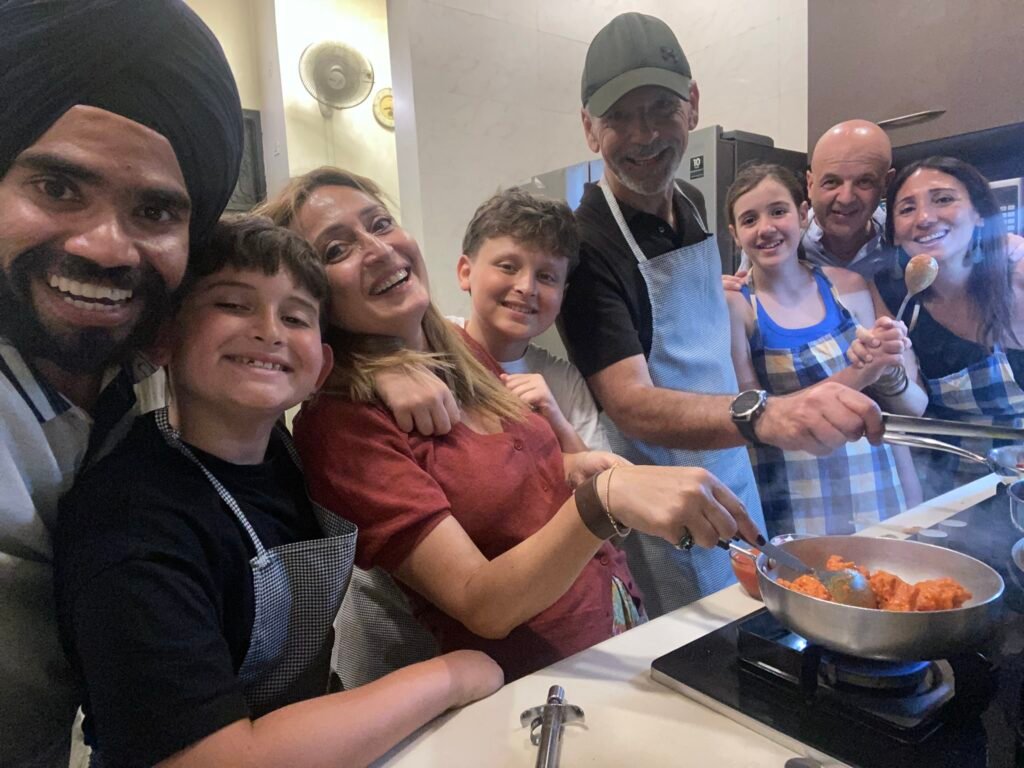
Most travelers who come to India spend their time navigating monuments, markets, and restaurants. They see a lot. But there’s a particular kind of understanding that only comes when someone opens a door and invites you inside.
Not a restaurant. Not a tourist attraction. An actual home, with a kitchen that smells of cumin and mustard seeds, a family moving around comfortably in their own space, and a meal being made specifically for you to learn from and eat together.
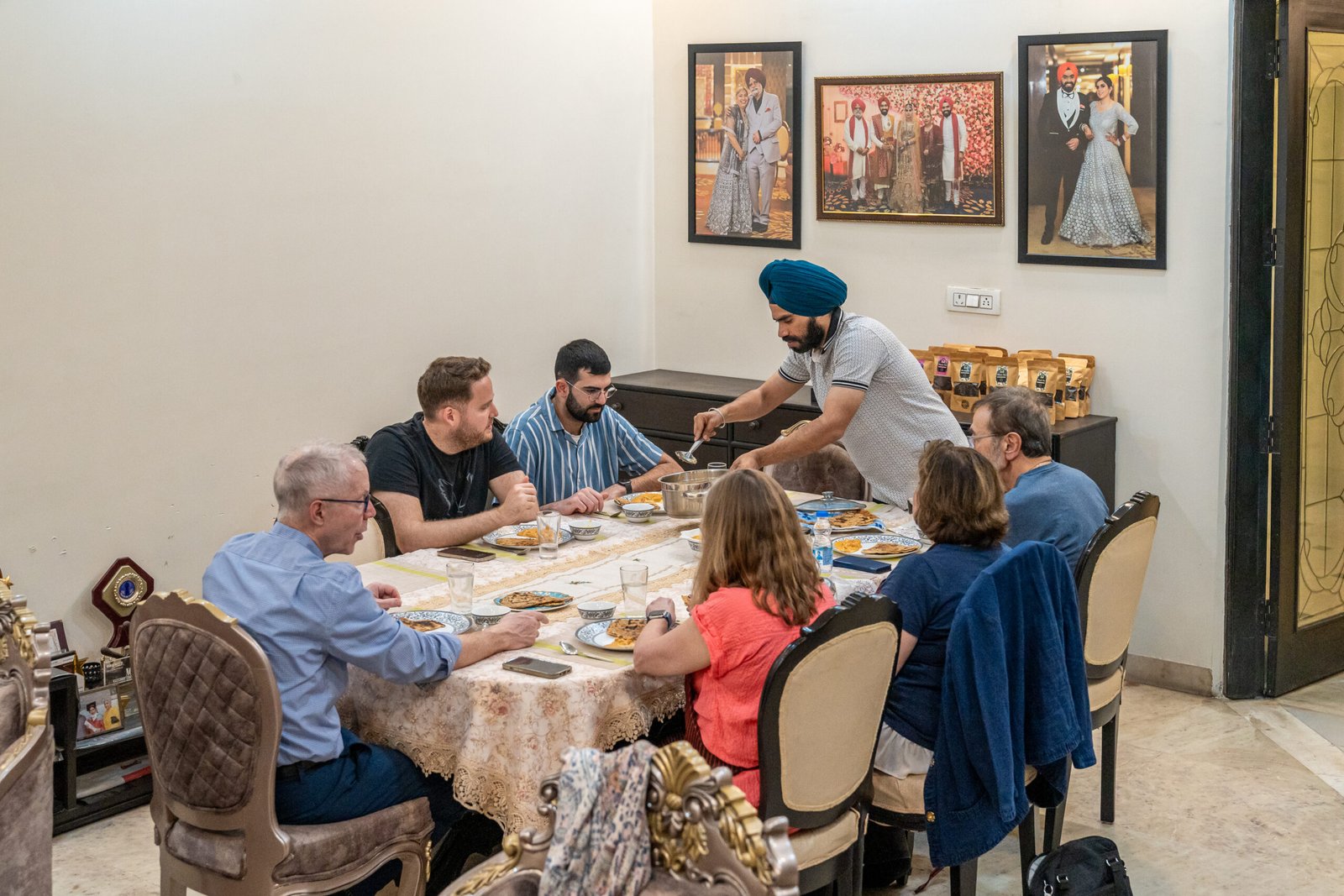
Not a restaurant. Not a tourist attraction. An actual home, with a kitchen that smells of cumin and mustard seeds, a family moving around comfortably in their own space, and a meal being made specifically for you to learn from and eat together.
That shift, from tourist to guest, changes something in how you read India. It’s hard to explain precisely, but travelers who’ve done it say the same thing in different ways: it felt real in a way that nothing else on their trip did.
What Happens When You Walk Into Someone’s Kitchen
Indian kitchens are working spaces. They’re not staged. There’s usually a pressure cooker somewhere. A row of steel dabbas filled with spices, each one used daily and in specific combinations depending on what’s being cooked. A small temple corner or a calendar with a deity’s image near the wall. Shoes left at the door.
When you step into that space, the context of India immediately becomes more specific. It stops being abstract. You’re not reading about Indian cooking or watching a travel show. You’re standing next to someone who learned to make dal from her mother, who learned from hers, and she’s now showing you where to start.
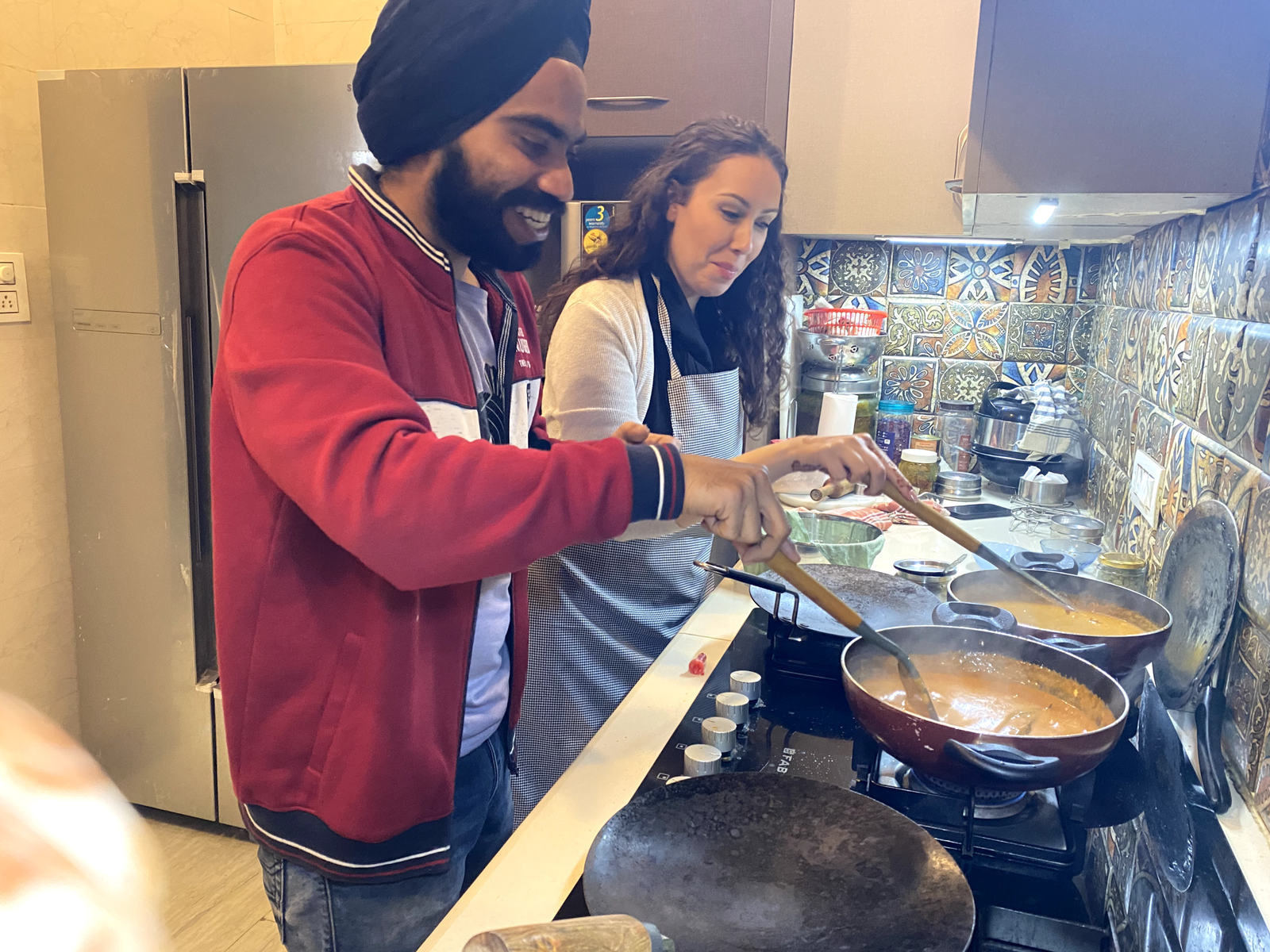
What surprises most visitors is how straightforward it feels. Indian home cooking has a reputation for being complicated, and restaurant Indian food often is. But everyday home cooking follows a logic that clicks quickly once someone explains it properly. The layering of oil, whole spices, aromatics, and then everything else. Once you understand the base, many dishes start to make sense.
The Six Dishes Class: What You Actually Learn
The Art of Indian Cooking experience is built around six core dishes, chosen deliberately. Not restaurant dishes. Not special occasion recipes. The kind of cooking that happens in Delhi homes most evenings, which is actually the cooking most worth understanding if you want to recreate Indian food when you get home.
You’ll work through dal, a vegetable dish, a bread or rice preparation, a raita, and usually a chai to finish. The point isn’t just to follow a recipe. It’s to understand why each step exists. Why you bloom whole spices before anything else. Why certain spices go in early and others near the end. Why the onions need to be cooked properly before the tomatoes, and what “properly” actually looks like.
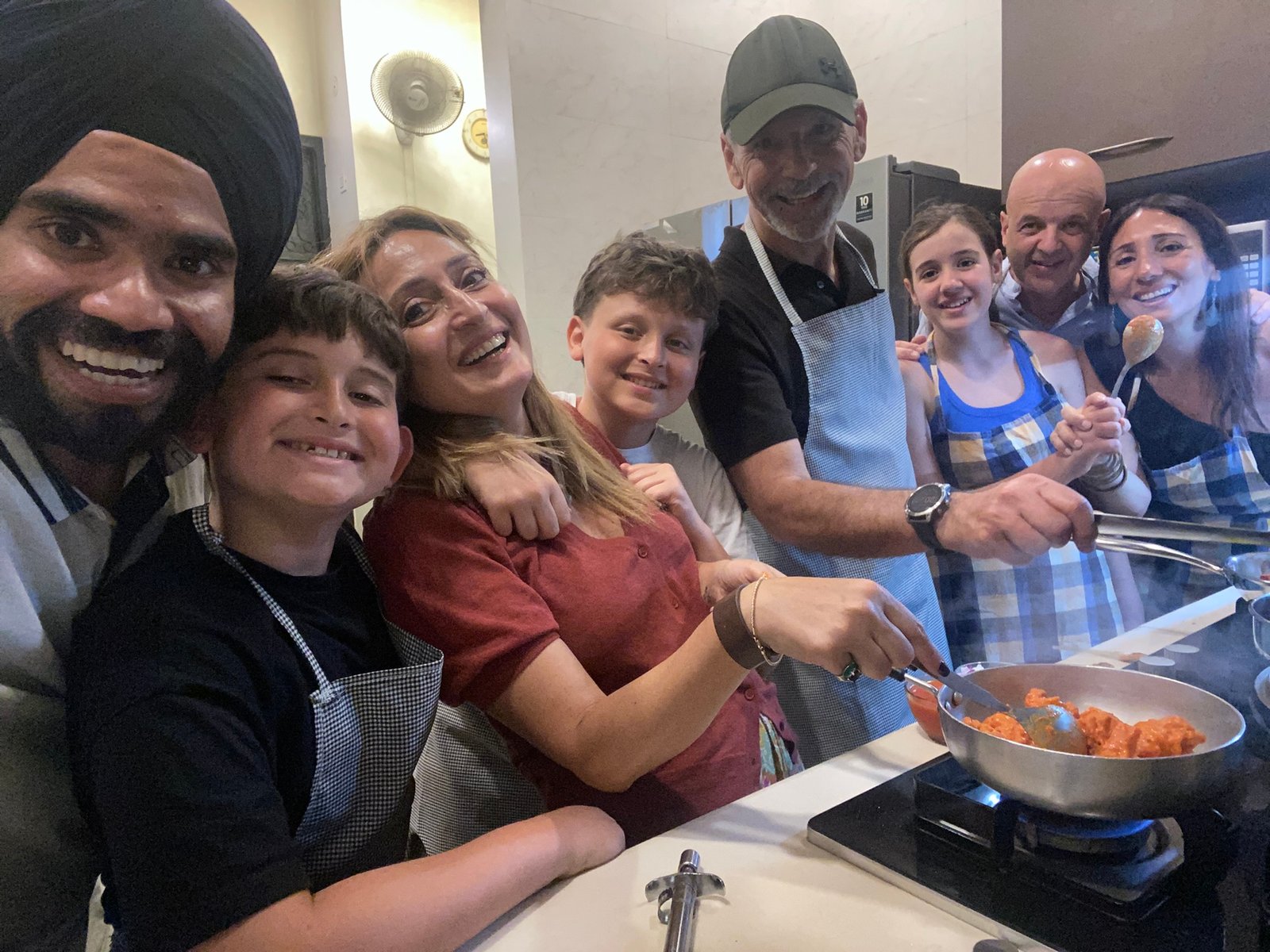
These are the things cookbooks often skip or compress into a single line. Having someone show you in real time, in a real kitchen, makes the difference between a recipe you’ll attempt once and one you’ll actually keep making.
Good to know: The class accommodates vegetarian, vegan, and most dietary preferences. Tell the host in advance and the menu adjusts naturally, because Indian home cooking already has a deep vegetarian tradition built into it.
Chai in an Indian Home Is a Different Experience Entirely
If the cooking class is where you learn technique, the chai masterclass is where you understand ritual. Chai in India isn’t a drink that gets made and handed over. It’s something people make with attention, usually several times a day, with small variations depending on the season, the mood, and who’s in the house.
The Chai Master Class experience takes you through this properly. The spice combinations. The ratio of milk to water. The simmering time. Why masala chai and ginger chai taste so different even though they’re both “Indian tea.” And then you sit down and drink it with the family, which is the actual point.
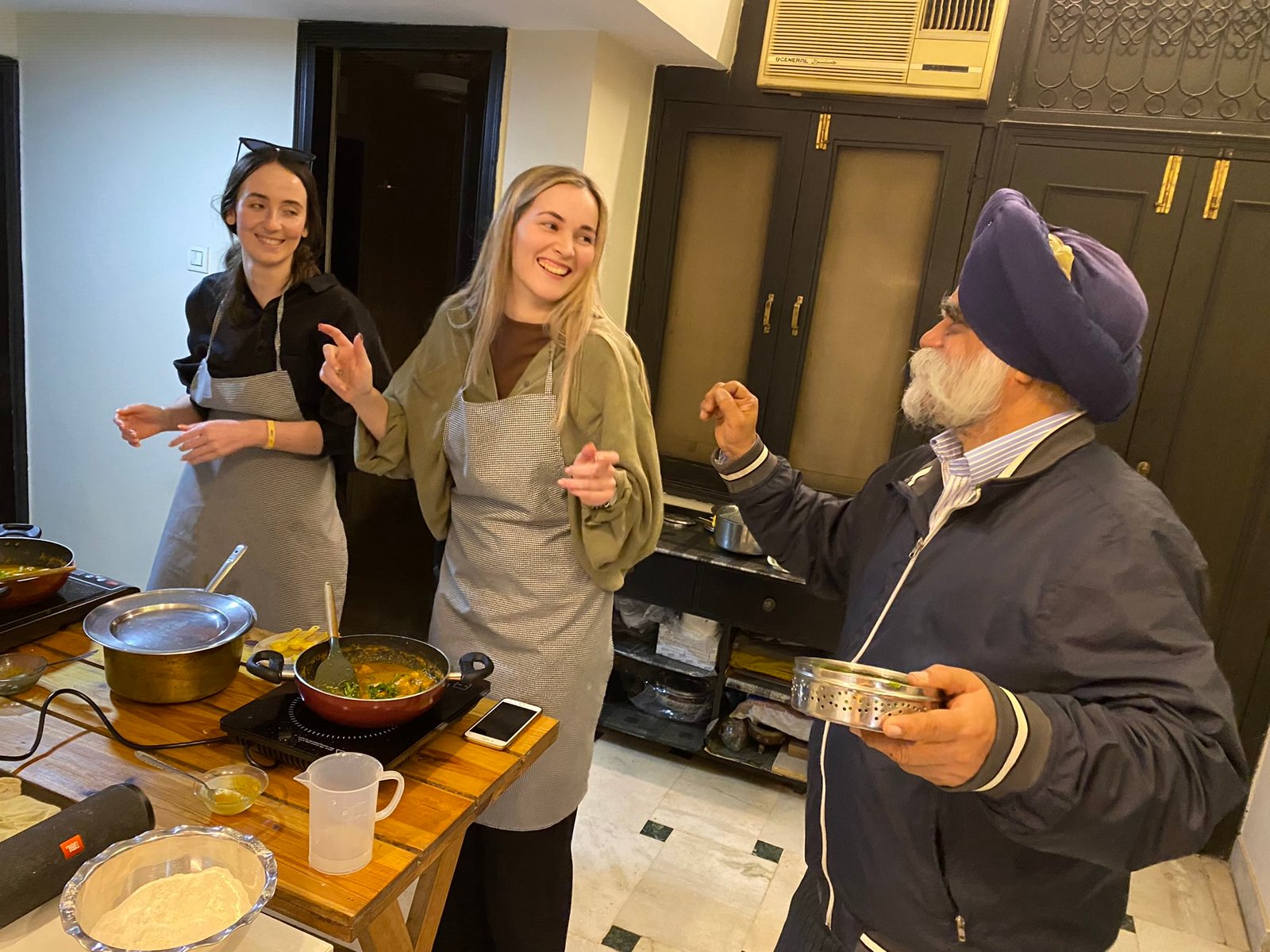
That transition, from making something together to sitting and eating or drinking it, is where most of the real conversation happens. Topics come up that don’t come up in guided tours. What daily life looks like. How the neighborhood has changed. What people cook when guests come versus what they cook on a regular Tuesday.
Why This Feels Different From a Restaurant or a Cooking School
Restaurant meals in India are great. But they’re performances in a way, optimized for a customer’s experience. Cooking schools are also useful but often feel institutional, with commercial kitchens and standardized recipes.
A home is neither of those things. It’s informal in a way that’s actually more informative. You notice things you wouldn’t notice in a restaurant setting. The way spices are stored. The specific brand of ghee a family prefers. The fact that the rotis being made right now are slightly different from last time because the flour is a different batch. These small details are what actually make Indian cooking make sense.
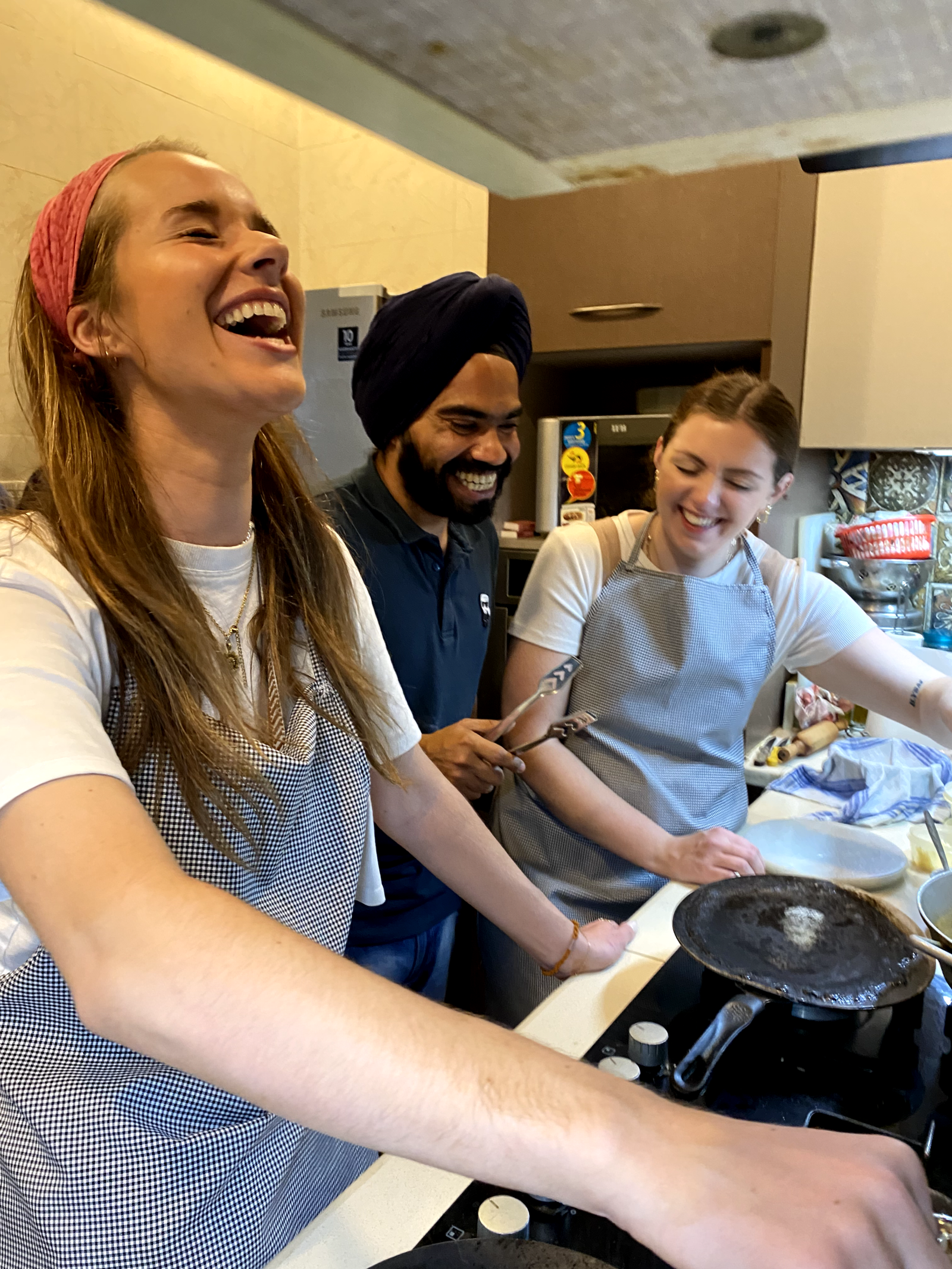
There’s also the hospitality dynamic. Indian hospitality is genuinely generous, and it functions differently in a home setting. You’re not a customer being served. You’re a guest being fed, which carries a different emotional weight on both sides.
What the Food Itself Tells You About India
Indian food varies enormously by region, by community, by religion, by season. Delhi home cooking specifically reflects the city’s history: Punjabi influence from Partition migration, Mughal era flavors that worked their way into everyday cooking, the particular confidence of a city that has absorbed people and traditions from across the country.
When you cook with a Delhi family, you’re cooking within that specific tradition. It’s different from what you’d learn in a coastal Indian home, or a Rajasthani kitchen, or a Tamil Nadu household. That specificity is what makes it valuable. You’re not learning “Indian food.” You’re learning how one family in one city cooks, which is far more useful and far more interesting.
The Practical Details Worth Knowing Before You Go
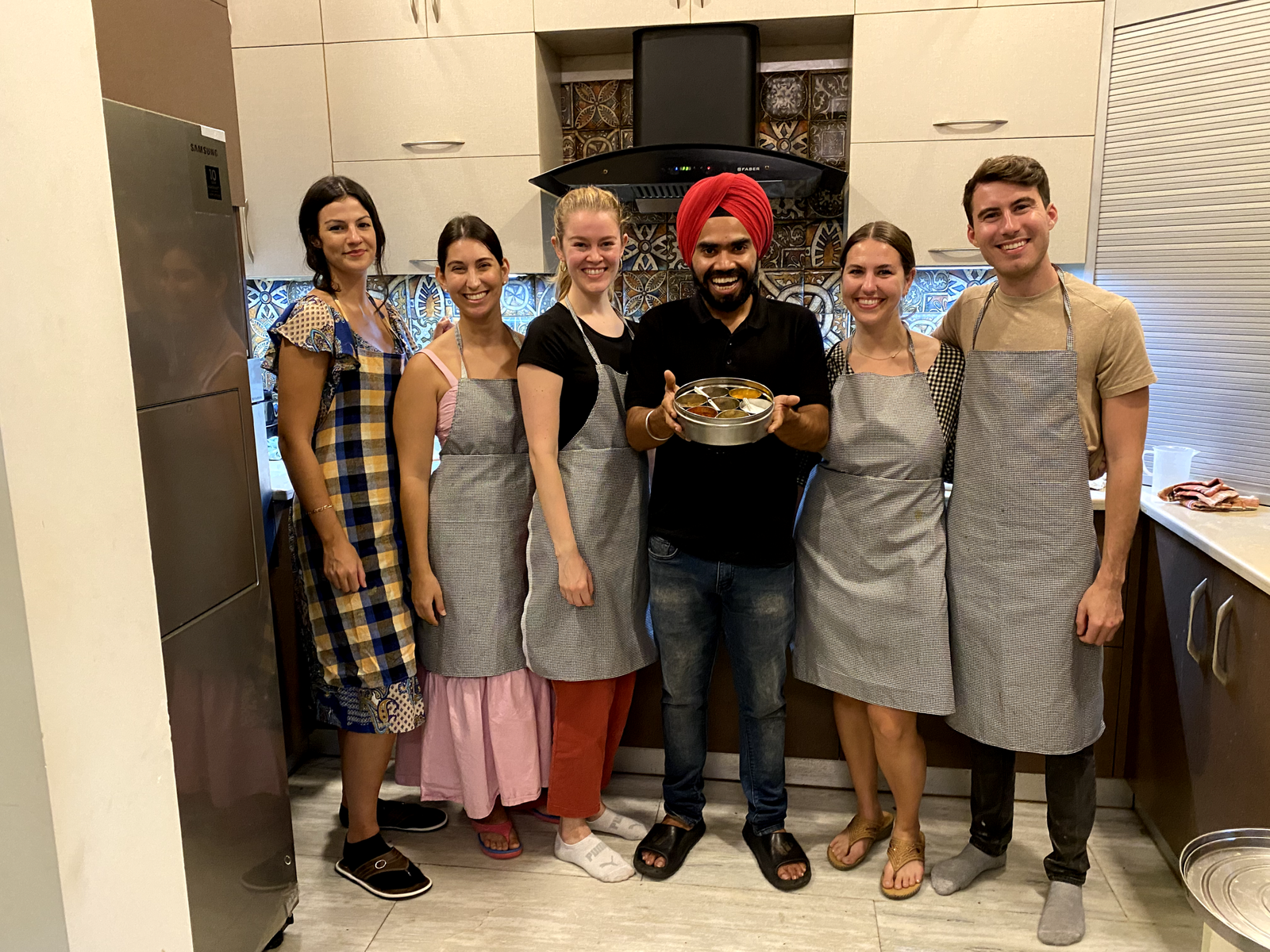
These experiences are small group or private, which matters. A cooking class in a home kitchen only works at an intimate scale. There’s no audience seating. Everyone participates, which means you’ll actually leave having cooked, not just watched.
- Sessions typically run between 3 and 4 hours, including the meal at the end
- Vegetarian menus are the default, with non-vegetarian options available on request
- The location is in a residential neighborhood in Delhi, not a commercial kitchen or hotel
- Groups stay small, usually no more than 6 to 8 people, often fewer
- No cooking experience is required or expected
- Recipes are shared afterward so you can actually make the dishes again at home
Practical note: Wear comfortable clothes you don’t mind getting a bit of turmeric on. It happens. Everyone finds it funny afterward.
Pairing the Home Visit With Other Delhi Experiences
The cooking class experience works well as part of a broader day in Delhi. Some travelers do the Old Delhi Food and Cultural Experience in the morning and the home cooking class in the afternoon. The contrast is genuinely interesting. Street food in Old Delhi is chaotic, loud, and historical. A home kitchen is the opposite in almost every way, but both are completely Delhi.
If you’re spending more time in the city, the Delhi Street Food Beyond Old Delhi tour fills in a different side of the food picture, covering neighborhoods that most tourists skip entirely.
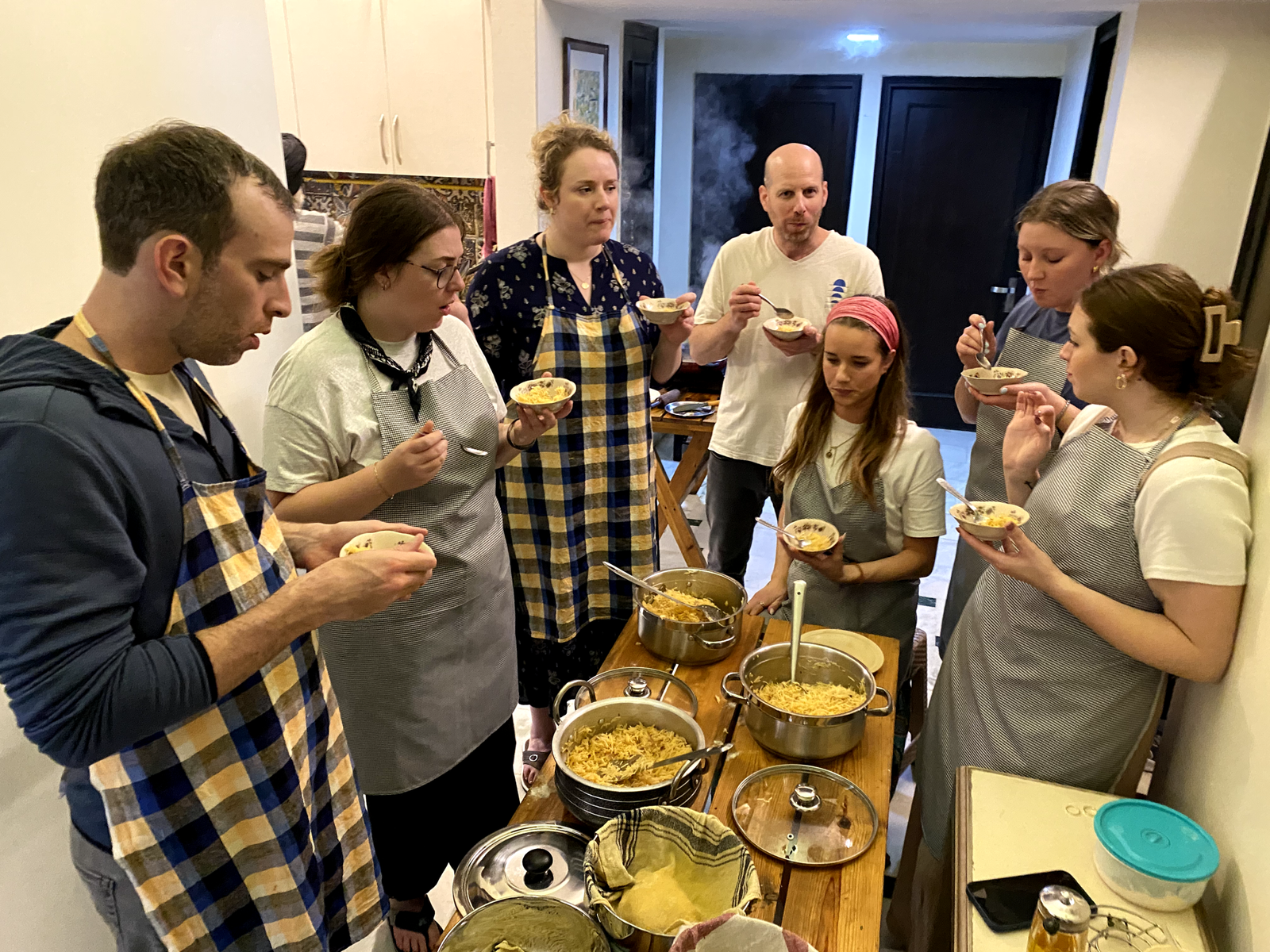
For travelers who want the food experience without the cooking participation, the Luxury Old Delhi Street Food Tasting in a Local Home offers a similar intimacy, with more focus on tasting and conversation than on cooking instruction.
Why It Stays With You Longer Than Most Things on Your Trip
Monuments are impressive and worth seeing. But they’re the same for every visitor. A home cooking experience is specific to the day you’re there, the person teaching you, the conversation that unfolds while the dal simmers.
Travelers often say that months after returning home, they’ll make a dish they learned in Delhi and the memory comes back clearly. Not just the food, but the kitchen, the smell, the person who showed them how it’s done. That kind of retention is rare in travel. It’s what happens when an experience is genuinely personal rather than just well-organized.
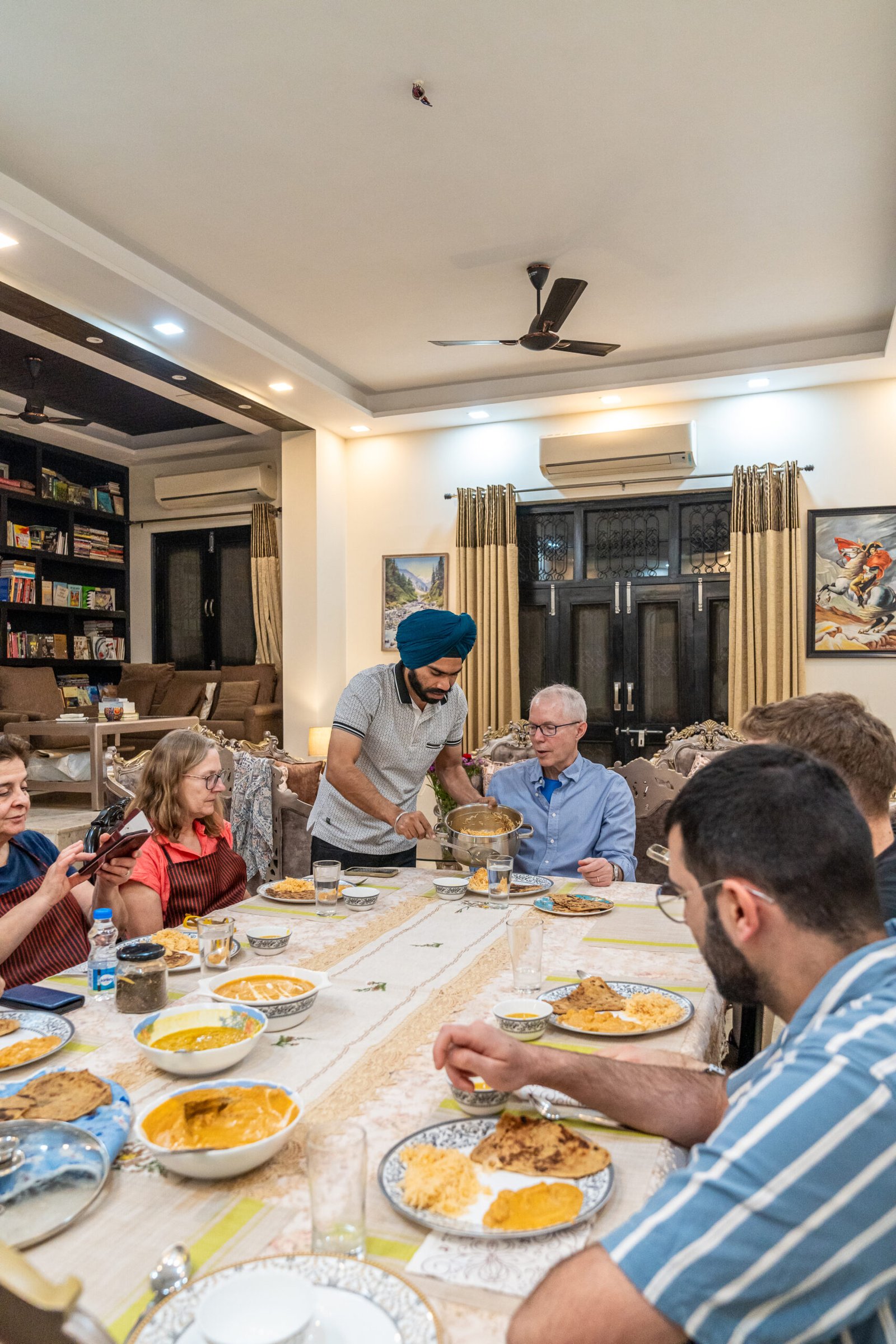
India has a lot to offer visitors who move through quickly. But the experiences that tend to reshape how people understand the country are almost always the quieter, more personal ones. Sitting in someone’s home, making food together, eating it at the same table. That’s not a tour highlight. It’s something closer to actually being here.
Book a Home Cooking Experience in Delhi
Small groups, real homes, proper Indian food. Choose the experience that fits your trip.
Art of Indian Cooking — 6 Dishes Chai Master ClassFrequently Asked Questions
What is an Indian home cooking class in Delhi actually like?
You visit a real family home, not a commercial kitchen. A local host teaches you how to make several traditional Indian dishes from scratch, explains the logic behind each technique, and then you sit and eat together. The group is small, usually under 8 people, and the atmosphere is informal and relaxed.
Do I need any cooking experience to join?
None at all. The classes are designed for complete beginners as much as for people who already cook. The teaching focuses on understanding rather than skill, so even if you’ve never made dal before, you’ll follow easily.
Is the food vegetarian?
The default menu is fully vegetarian, which reflects how most Indian home cooking actually works. Non-vegetarian options can usually be arranged with advance notice. Vegan and gluten-free variations are also possible for most dishes.
How long does the cooking class take?
Most sessions run about 3 to 4 hours from start to finish, including the meal at the end. It’s not rushed. The eating and conversation at the end are part of the experience, not an afterthought.
Will I get the recipes to take home?
Yes. Recipes are shared after the class so you can recreate the dishes in your own kitchen. Most travelers say this is one of the most useful things they bring back from India.
How is this different from a cooking class at a hotel?
Hotel cooking classes happen in commercial kitchens with a professional setup. A home class happens in a real kitchen where that family actually cooks every day. The informality is the point. You notice things, have different conversations, and understand Indian domestic life in a way that a hotel setting can’t offer.
Can I combine the cooking class with other Delhi experiences?
Easily. Many travelers pair it with an Old Delhi food walk in the morning, or add the Chai Master Class to extend the experience. Explore Real India offers a range of food and cultural experiences that work well together across a day or across a longer trip.