
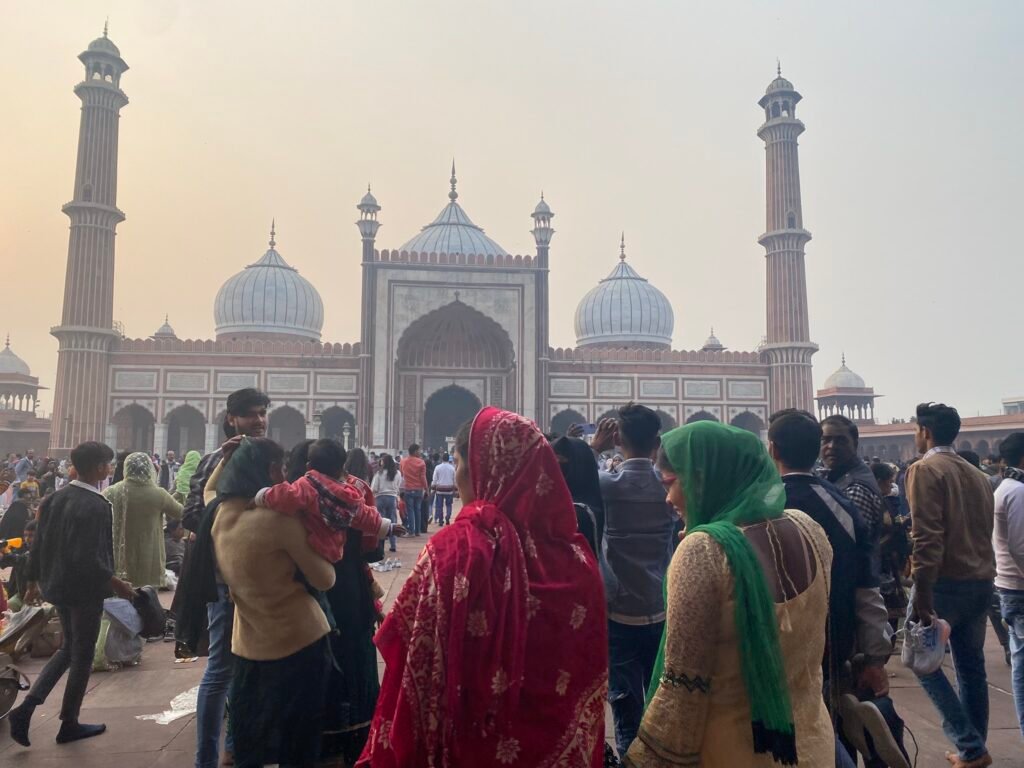
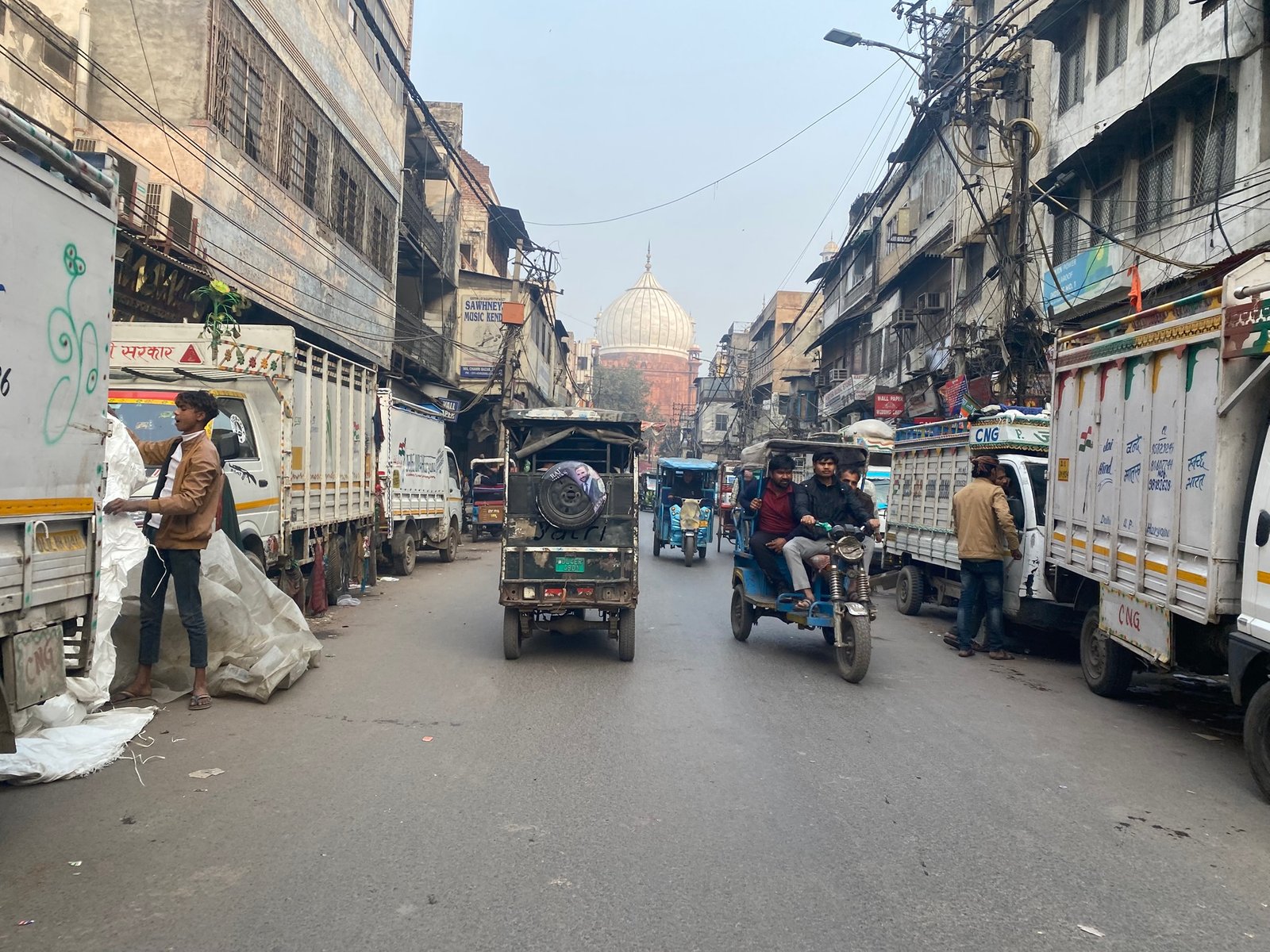
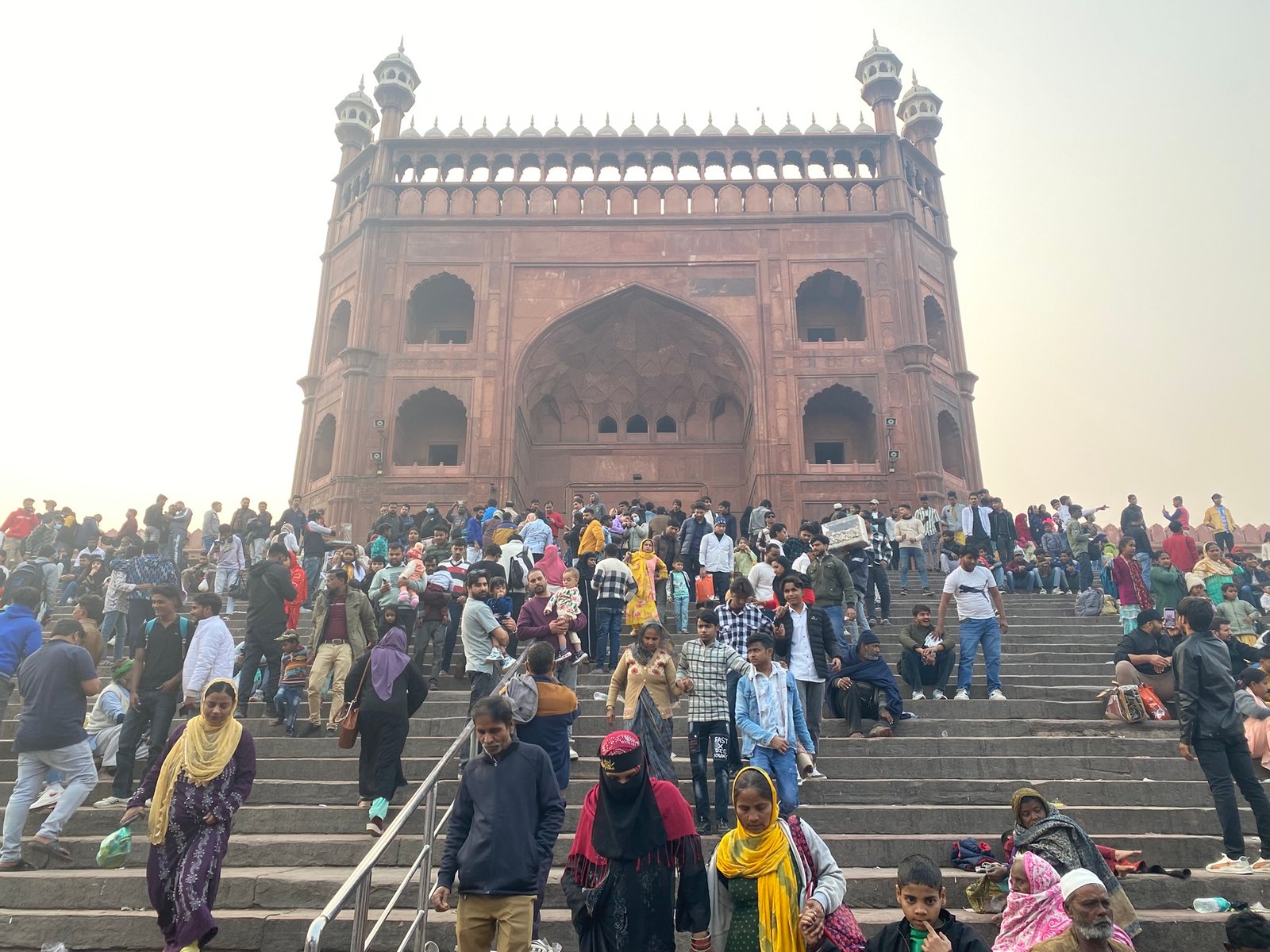
Walk out of Chandni Chowk’s narrow lanes and the sky suddenly opens up. Three massive red sandstone gates rise ahead, and beyond them sits a courtyard big enough to hold twenty five thousand people. This is Jama Masjid, and it has been the spiritual center of Old Delhi since the 1650s.
A Bit of History Worth Knowing
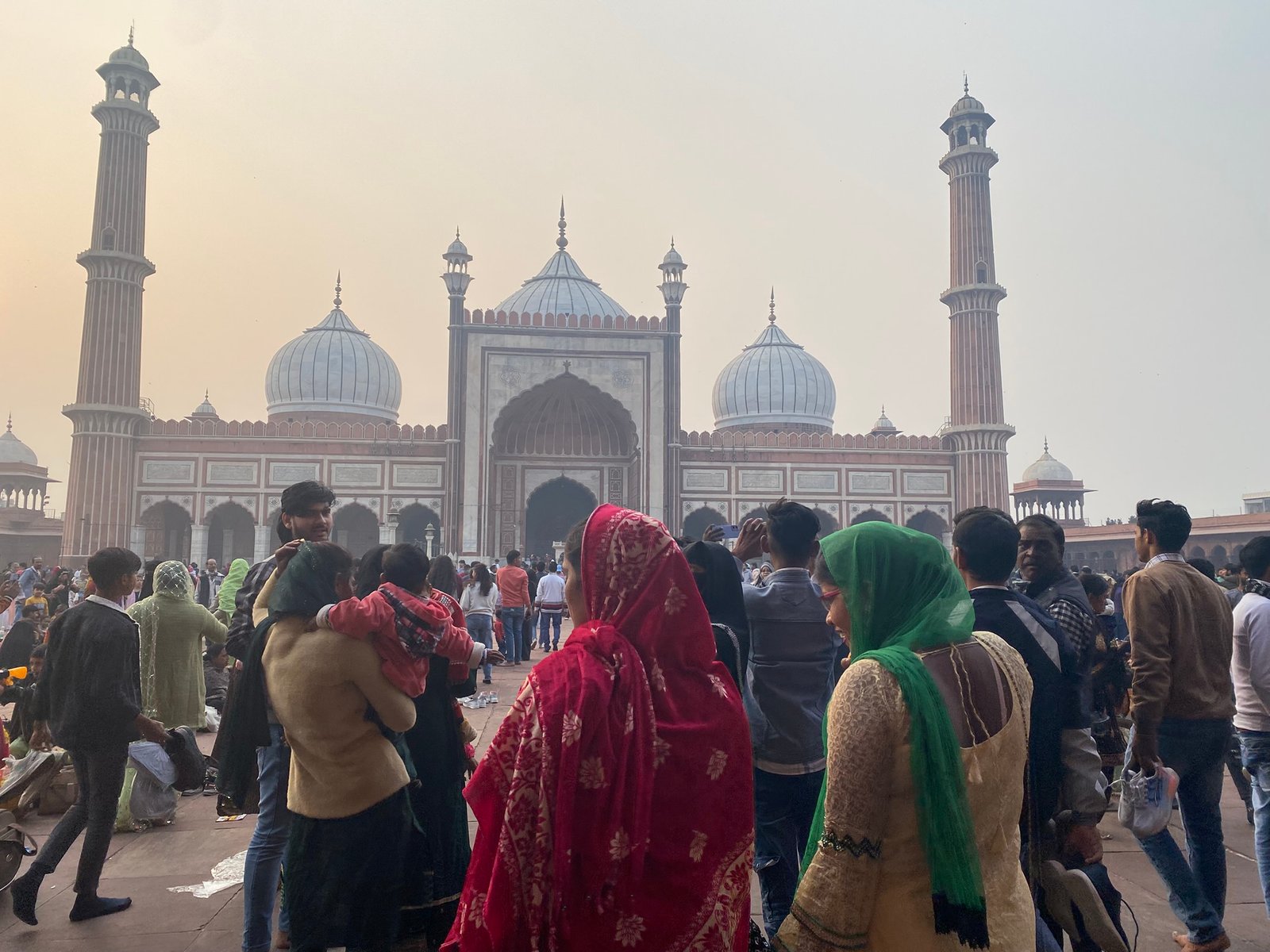
Emperor Shah Jahan commissioned the mosque, the same ruler responsible for the Taj Mahal and the Red Fort. Construction began in 1644 and the building was finished in 1656, after thousands of workers spent years on the carving and stonework. Shah Jahan reportedly modeled it on the Jama Masjid of Fatehpur Sikri, which explains why certain arches and domes feel familiar if you have already visited Agra.
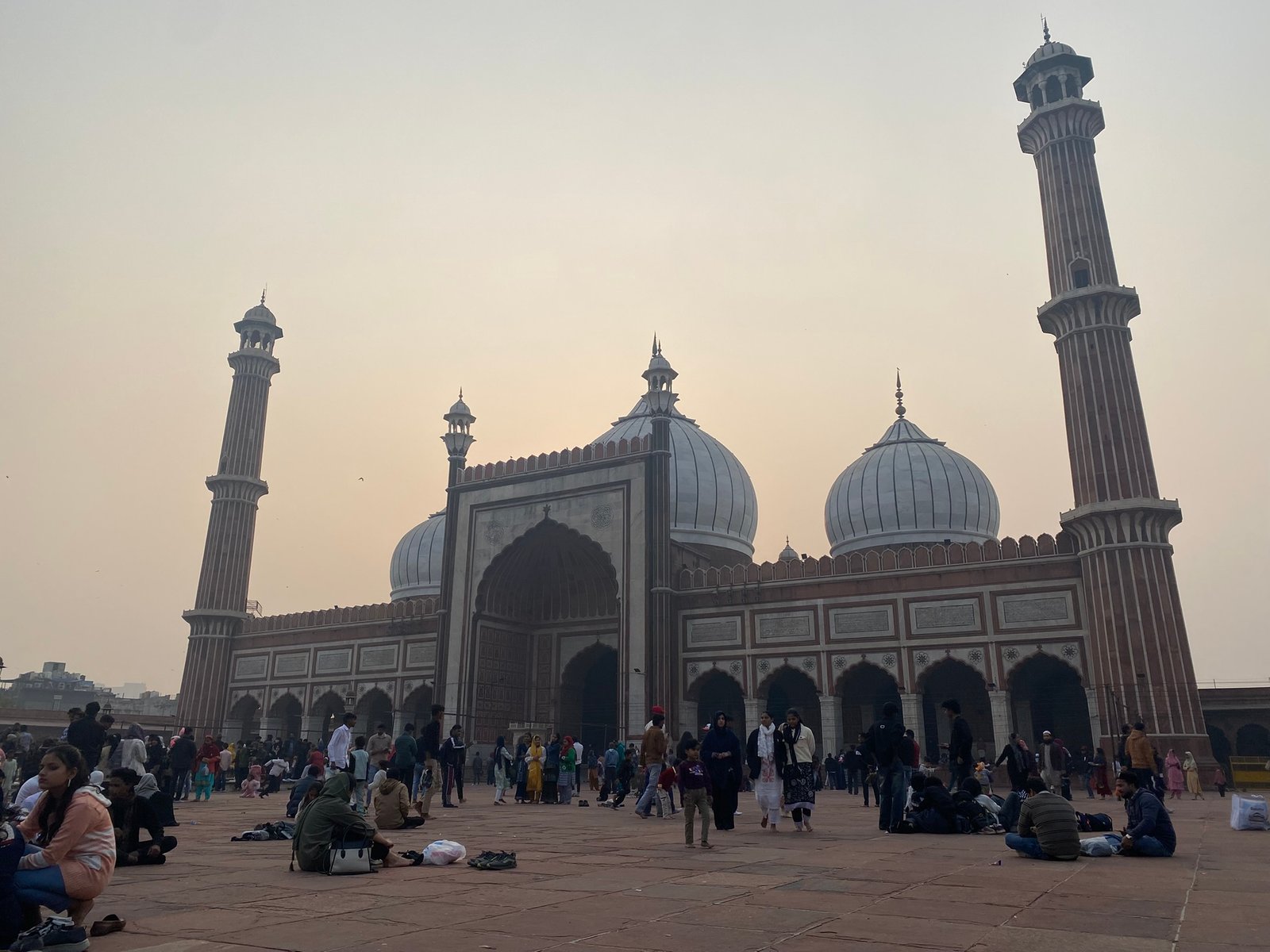
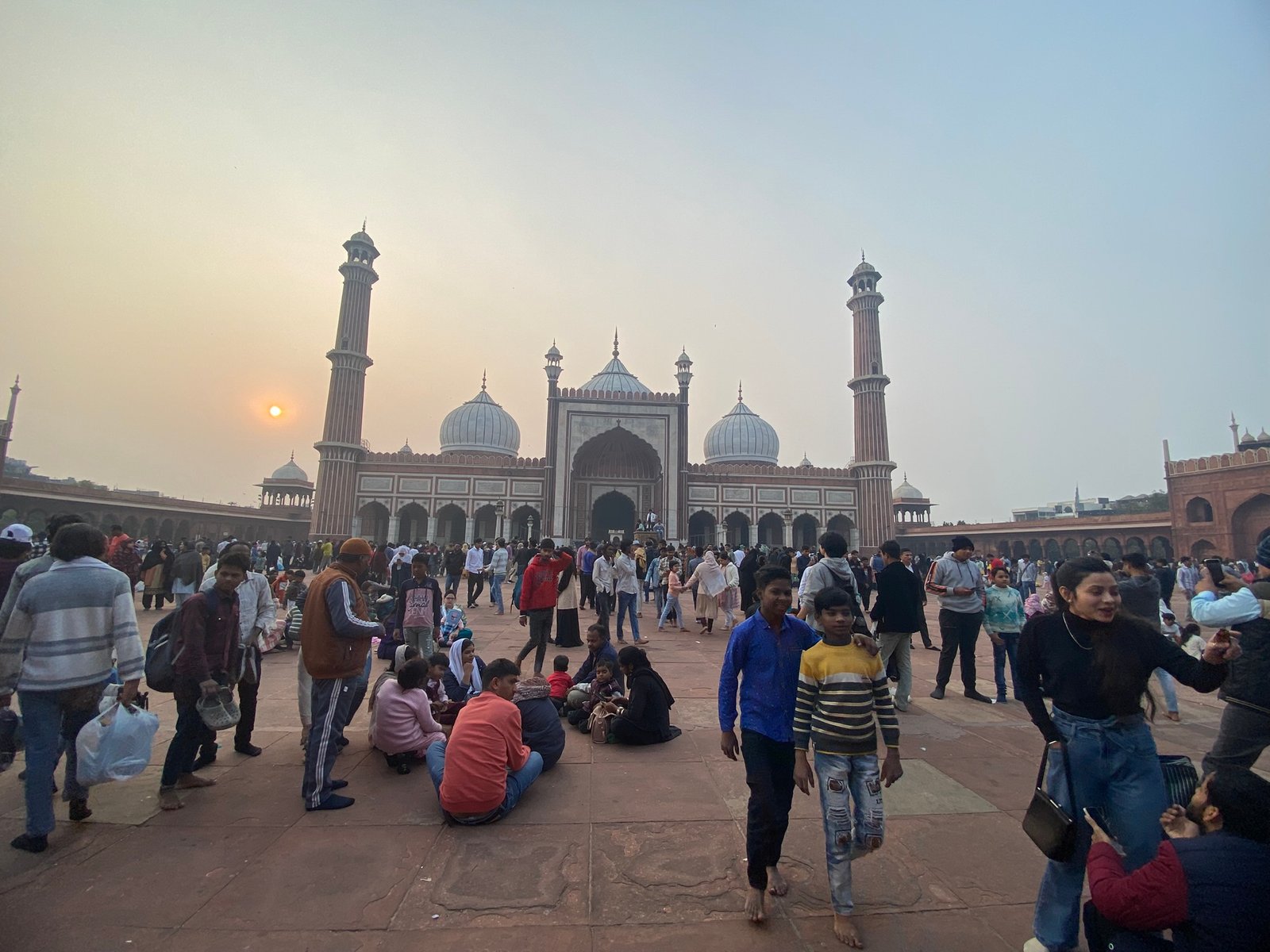
What makes it stand out isn’t just size. The alternating strips of red sandstone and white marble across the two 40 meter minarets give the whole structure a striped, almost graphic look that photographs beautifully in early morning light.
Jama Masjid Timings
The mosque follows a split schedule to accommodate prayer, and it’s worth knowing before you plan your day.
| Day | Timing |
|---|---|
| Monday to Sunday | 7:00 am to 12:00 pm, then 1:30 pm to 6:30 pm |
Foreign tourist hours generally run 8:00 am till sunset, while Indian visitor hours often start around 11:00 am till sunset. Either way, the mosque closes to sightseers during the five daily prayer times, so if you arrive and find gates shut for twenty minutes, that’s normal, not an error.
Entry Fee and Extra Charges
There is no entry fee to walk into Jama Masjid itself. Where the confusion usually starts is with the add on charges, and these vary a fair bit depending on which gate you enter from and the year you check.
- Camera or photography fee: around Rs 300, sometimes waived depending on the guard on duty
- Minaret climb: roughly Rs 100 for foreigners, cheaper for Indian visitors
- Robe rental for modesty: around Rs 50 per person, sometimes free
- Shoe storage: Rs 10 to Rs 50 per pair if you want someone to watch them
Note: A few government listings mention a separate Rs 400 charge for foreign tourists, so it’s sensible to carry small change and expect prices to shift slightly from visit to visit.
What to Wear
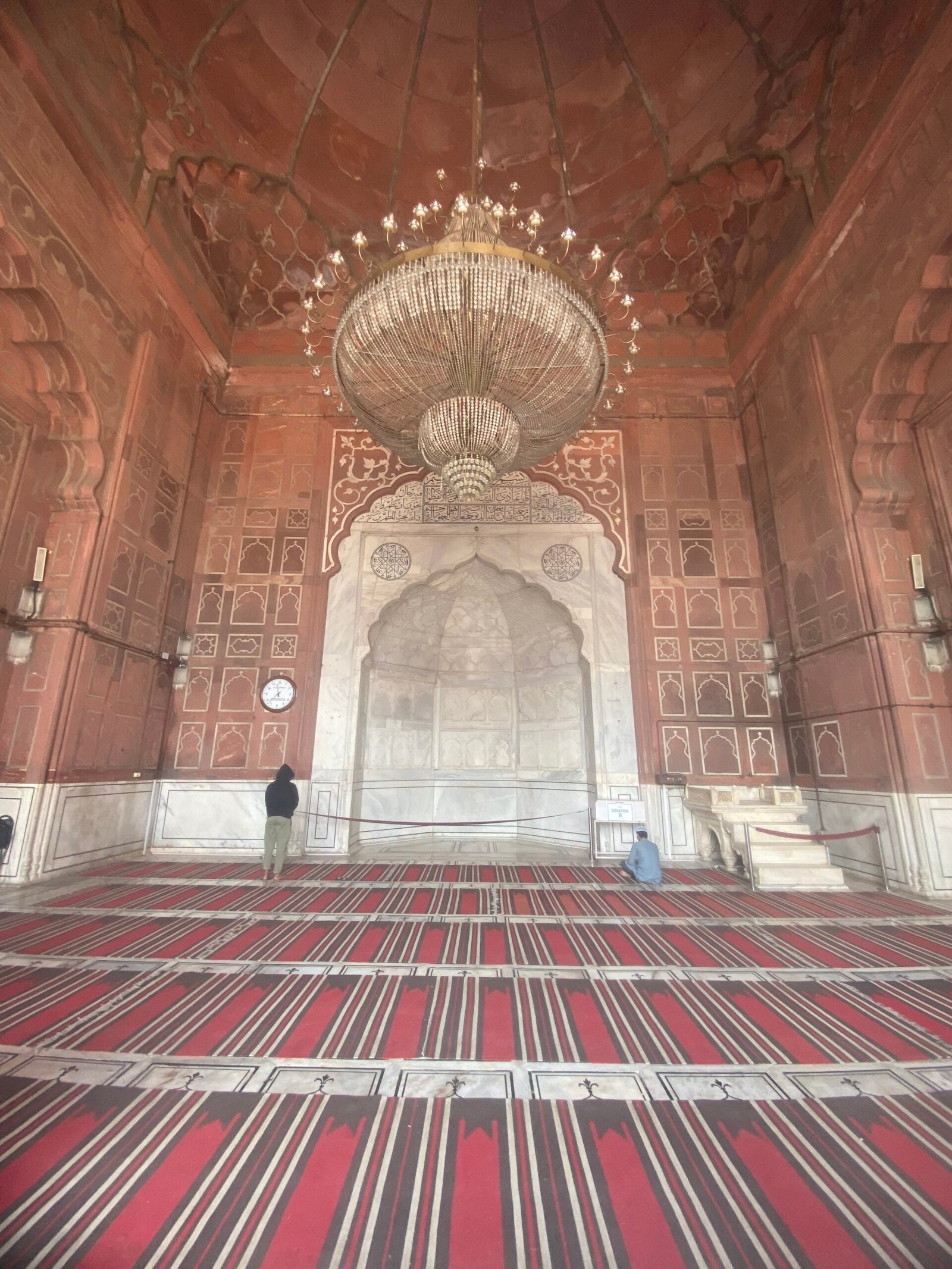
This is an active place of worship, not a museum, and the dress code reflects that. Shoulders, arms, and legs need to be covered for everyone, men included. Shorts and sleeveless tops won’t get you turned away outright, but you will be handed a robe to put on over your clothes, usually for a small rental fee.
Women should carry a scarf for their hair, though it isn’t always strictly enforced. Shoes come off before you step onto the courtyard, so flip flops or shoes you can slip on and off quickly make the whole process easier.
Getting There
Jama Masjid sits just west of the Red Fort, right in the thick of Old Delhi. The nearest metro stations are Jama Masjid on the Violet Line and Chawri Bazaar on the Yellow Line, both a short walk from the entrance. If you’re coming by cab or auto rickshaw, traffic in this part of the city gets dense fast, so factor in extra time, especially on Fridays and during festival weeks.
Best Time to Visit
Early mornings right after the 7 am opening tend to be quiet, with soft light that works well for photos of the minarets and courtyard. Afternoons pull in tour groups and school trips, and the courtyard stone gets uncomfortably hot underfoot by midday in summer, so barefoot visitors should keep that in mind.
Evenings around sunset have their own appeal. The call to prayer echoes across Old Delhi’s rooftops, and the mosque takes on a warm glow that’s genuinely different from the daytime experience. October to March is generally considered the most comfortable stretch for a visit.
Etiquette Inside the Mosque
- Avoid loud conversation or posing dramatically for photos, this is a functioning place of prayer
- Skip visiting during the five daily prayer windows if you’re only there to sightsee
- Don’t attempt inappropriate poses near the domes, staff do call this out
- Ask before photographing people praying or resting inside
Pairing Jama Masjid With Old Delhi’s Food Scene
Most travelers combine a Jama Masjid visit with a walk through Chandni Chowk’s food lanes, since the mosque sits right at the edge of that market. If you’d rather have someone guide you through the safer stalls and skip the guesswork, our Old Delhi street food tasting tour covers both the historic sights and the food in one afternoon. For a broader look at what’s beyond the mosque area, our guide to Delhi’s best street food beyond Old Delhi is worth a read too.
Frequently Asked Questions
Is Jama Masjid free to enter?
Yes, walking into the mosque and courtyard is free for everyone. Charges apply only for cameras, the minaret climb, robe rental, and shoe storage.
Can non Muslims visit Jama Masjid?
Yes, the mosque is open to visitors of all faiths outside prayer times, as long as the dress code and general etiquette are followed.
How much time should I plan for a visit?
Most visitors spend around 45 minutes to an hour, longer if you climb the minaret or linger for photos.
What’s the closest metro station?
Jama Masjid station on the Violet Line and Chawri Bazaar on the Yellow Line are both within walking distance.
Is there a strict dress code for women?
Shoulders and legs need covering, and a robe is available on site if needed. A headscarf is recommended though not always checked.
Want to explore Jama Masjid and Old Delhi’s food lanes with a local guide?
Book the Old Delhi Tour