
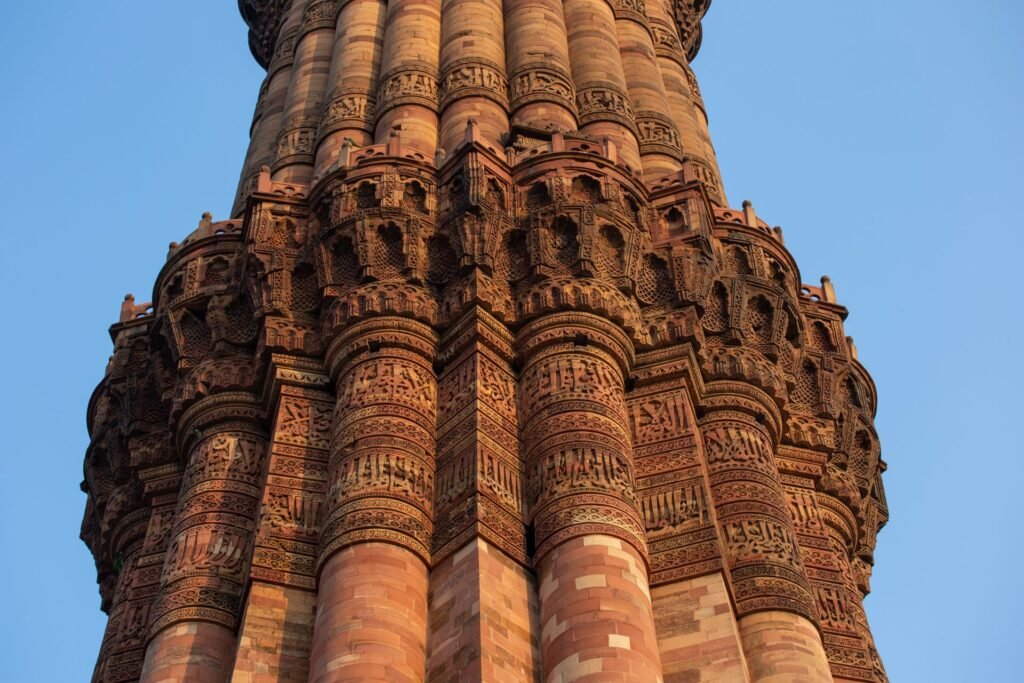
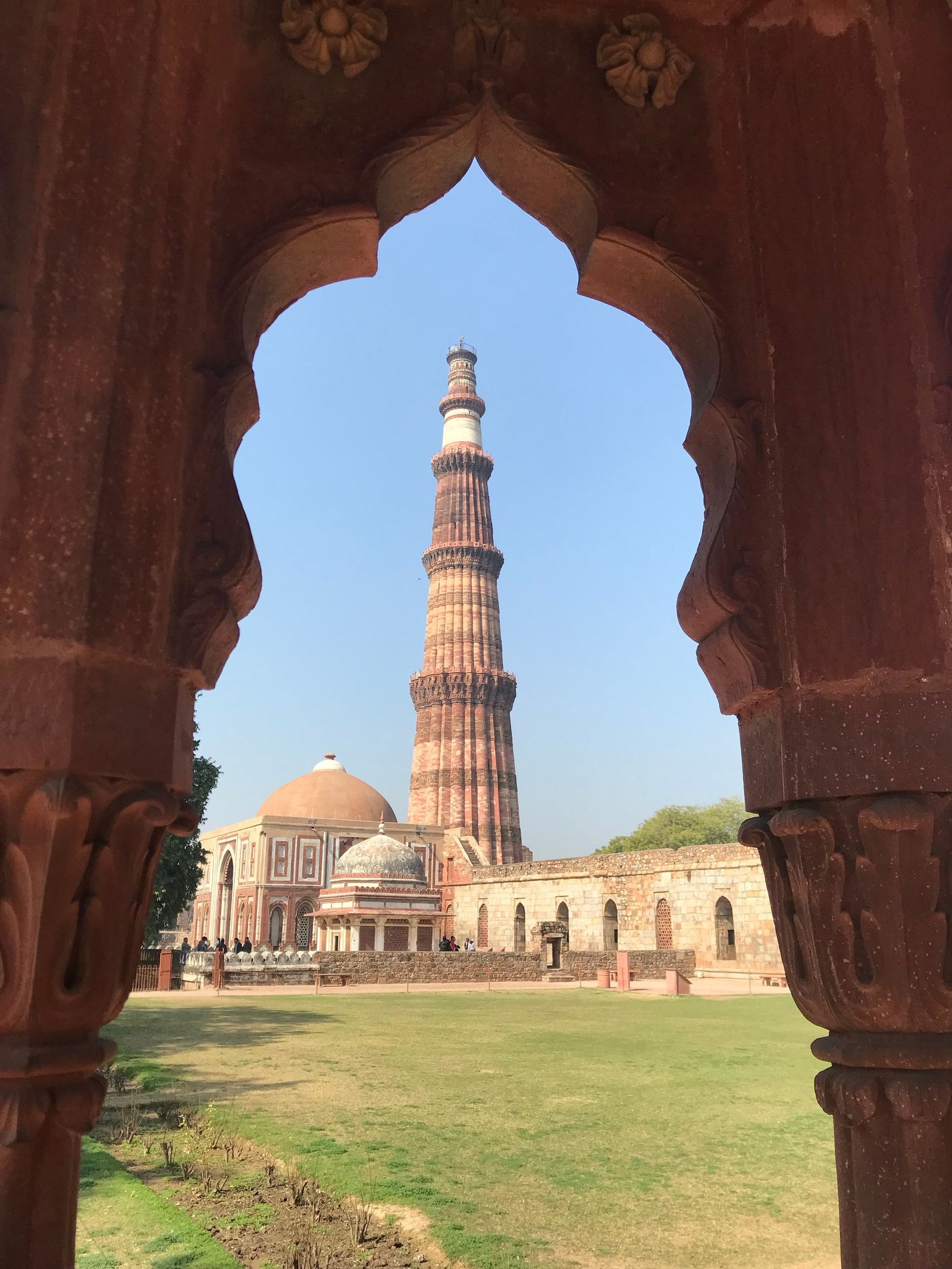
Qutub Minar is the kind of monument that looks smaller in photos than it feels standing under it. At 72.5 metres, it’s the tallest brick minaret in the world, and once you’re inside the complex, the scale of the whole site starts to make sense, not just the tower itself.
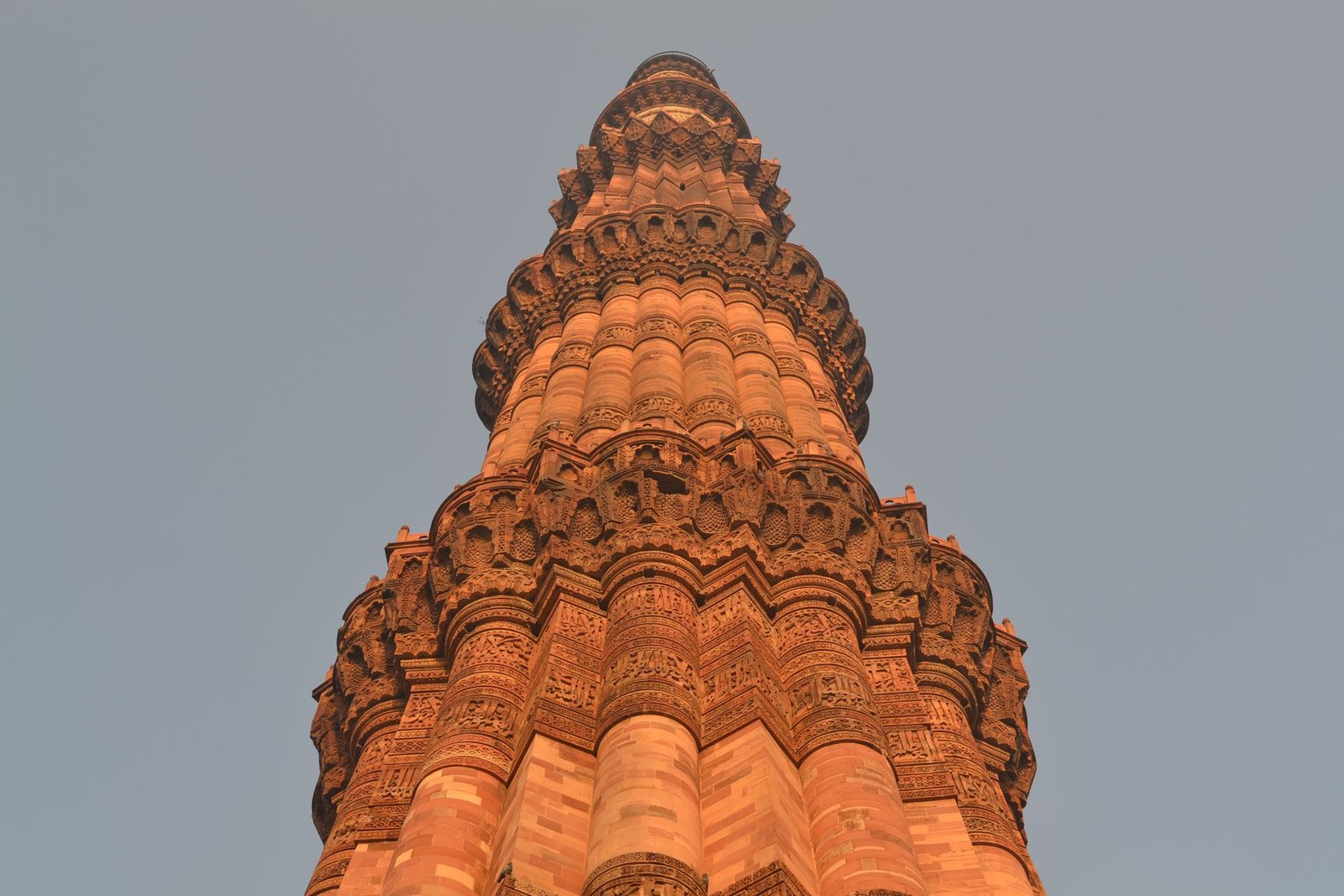
A Quick History Without the Textbook Feel
Construction began in 1199 AD under Qutb ud din Aibak, the first Sultan of Delhi, though he only managed to complete the first storey before he died. His successor, Iltutmish, added three more storeys, and the tower was eventually completed by Firoz Shah Tughlaq more than 150 years later after lightning damage forced repairs. That layered construction history is actually visible if you look closely, the lower storeys are red sandstone with fluted edges, while the upper two mix marble and sandstone in a noticeably different style.
The minar was likely built as a victory tower, marking the start of Muslim rule in Delhi, though some historians argue it also served as a minaret for the adjoining Quwwat ul Islam Mosque, calling worshippers to prayer. Either way, it’s a genuinely rare survivor. Most structures from that era in Delhi haven’t held up nearly as well.
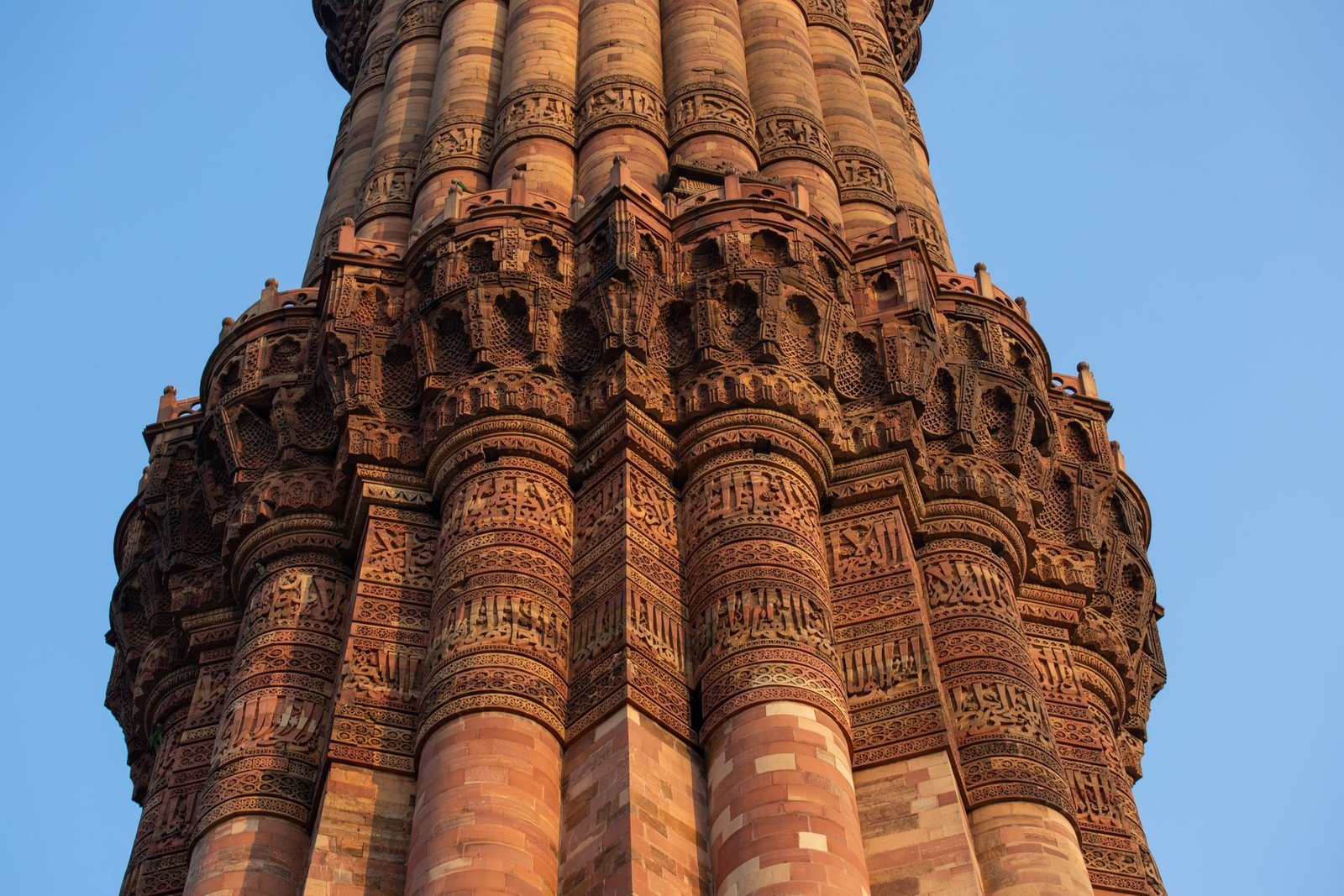
What Else Is Inside the Complex
People often show up expecting just the tower and end up spending far longer than planned exploring the rest of the site. The Qutub Minar complex includes several structures worth slowing down for:
-
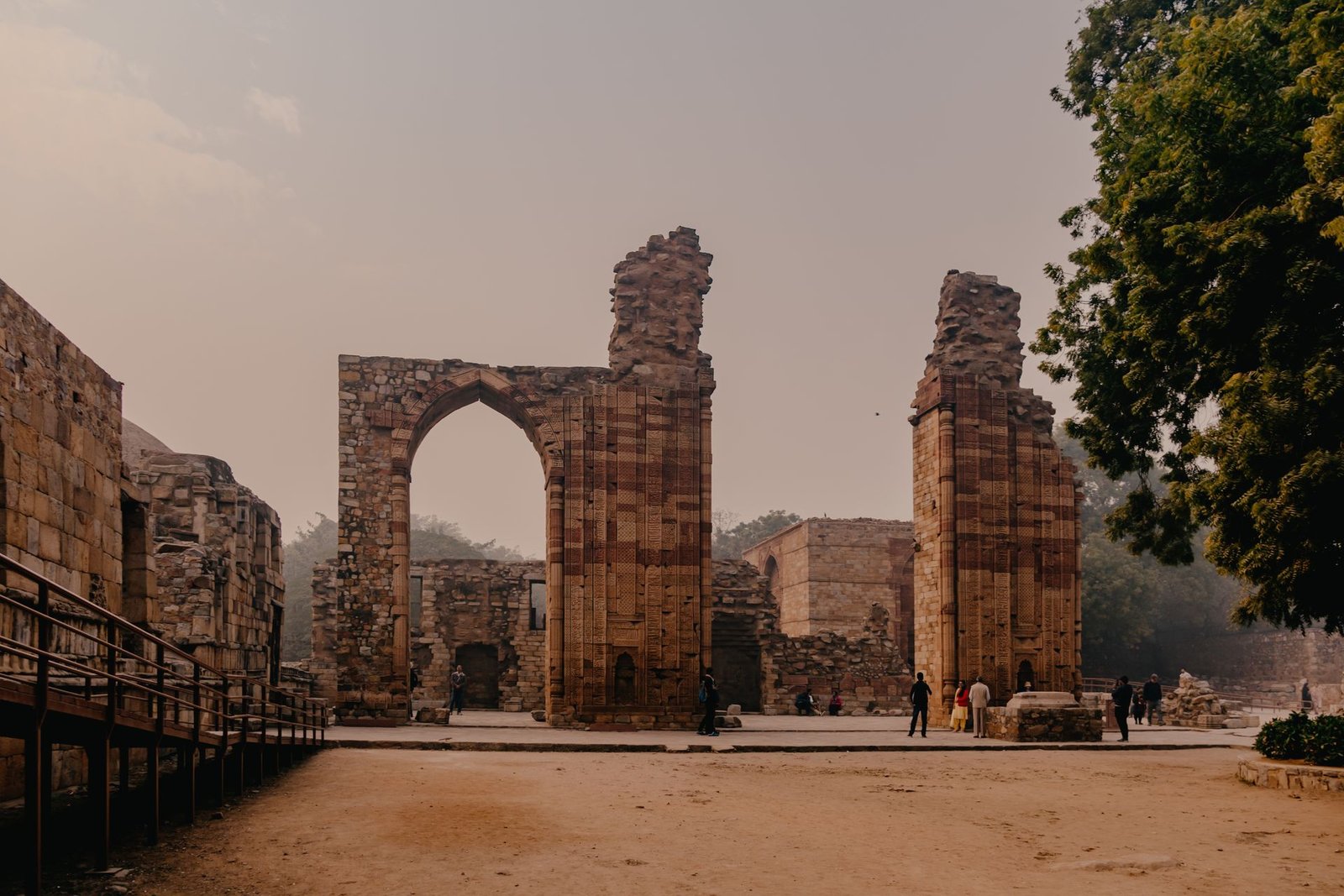
>Quwwat ul Islam Mosque, believed to be the earliest surviving mosque built by the Delhi Sultanate, constructed partly using material from demolished Hindu and Jain temples
>The Iron Pillar, a 7.2 metre, six ton column that has resisted rusting for over 1,600 years, a fact that still puzzles metallurgists studying its composition
>Alai Darwaza, an ornately carved gateway added by Alauddin Khalji, considered one of the finest early examples of Indo Islamic architecture in Delhi
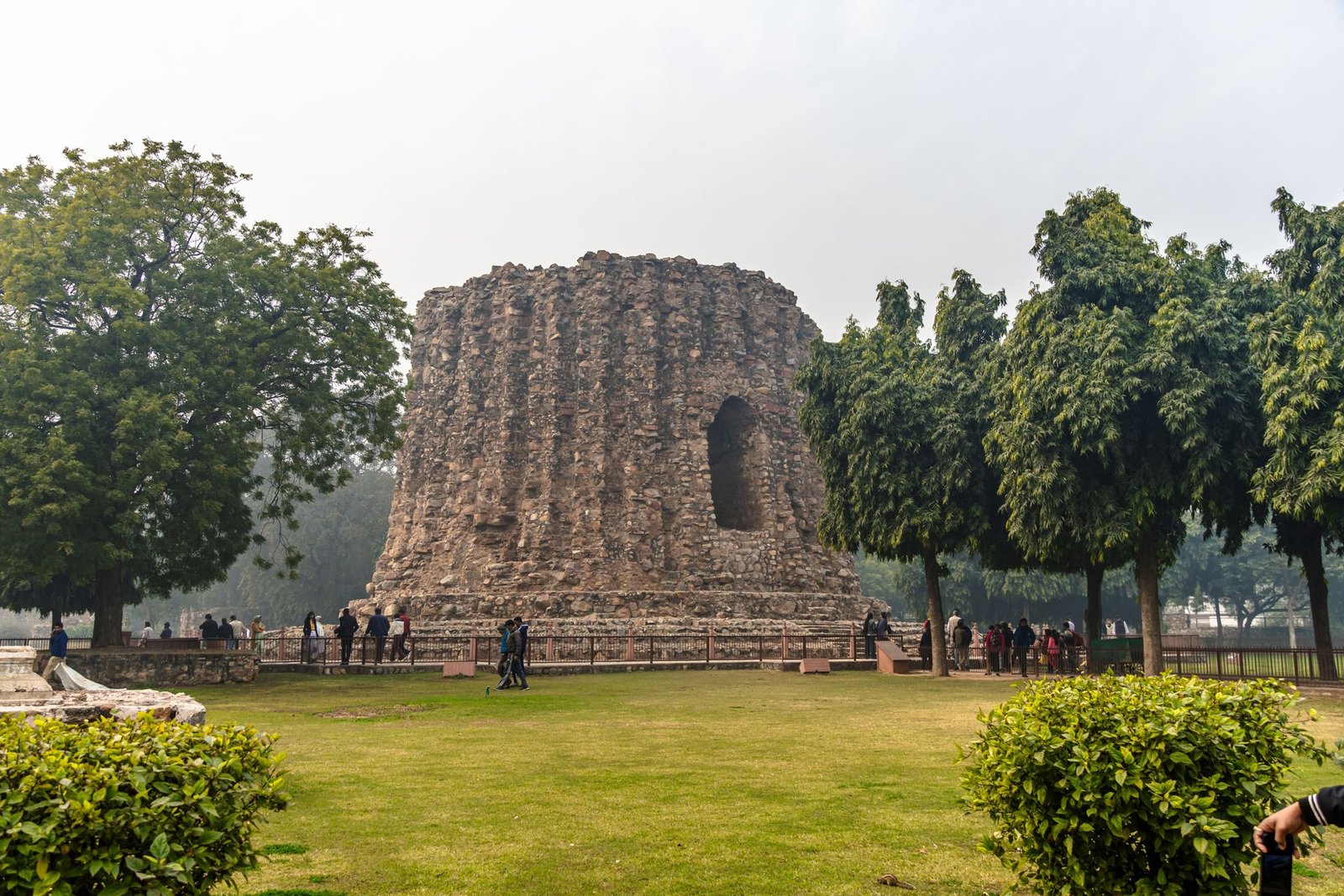
>Alai Minar, an unfinished tower Khalji started to outdo the Qutub Minar in scale, abandoned after his death and left standing at roughly a quarter of its planned height
>Tombs of Iltutmish and Imam Zamin, quieter corners of the complex where the crowds thin out considerably
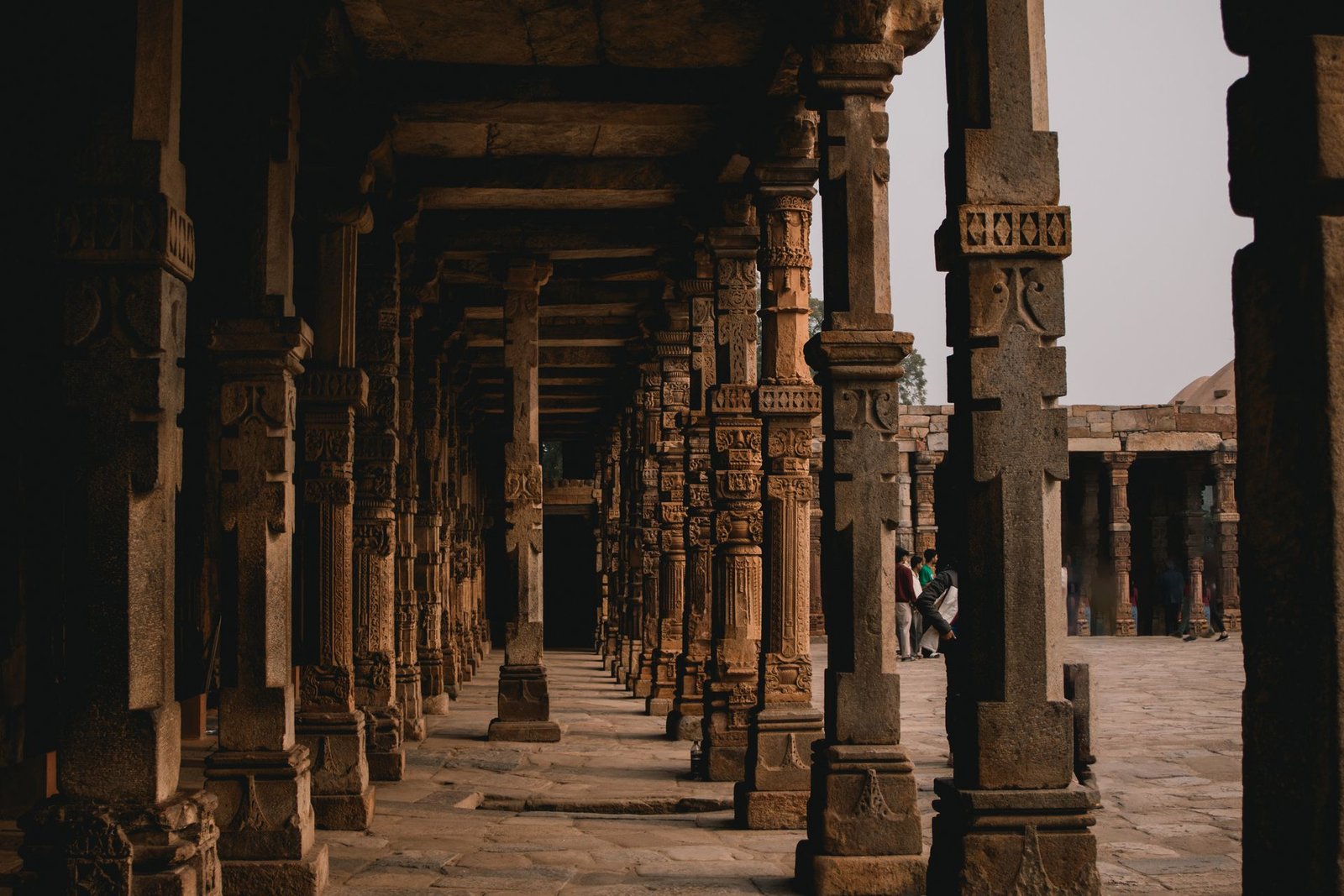
Local tip: Most visitors rush the tower and skip the mosque ruins behind it. The pillared corridors there are quieter and honestly more atmospheric in soft morning light, before the tour groups arrive around 10 am.
Timings, Tickets and Getting There
The complex is generally open from sunrise to sunset, though most sources list standard hours as 7 am to 5 pm daily, seven days a week. Entry for Indian nationals is around Rs 35 to 40, while foreign visitors pay approximately Rs 550, and children below 15 enter free. Note that you can no longer climb inside the minar itself, that’s been restricted since 1981 after a stampede incident, but the grounds and surrounding monuments remain fully open.
| Detail | Information |
|---|---|
| Timings | 7 am to 5 pm, daily |
| Entry fee (Indian) | Rs 35 to 40 |
| Entry fee (Foreigner) | Approx Rs 550 |
| Nearest metro | Qutub Minar Station, Yellow Line |
| Time needed | 1.5 to 2.5 hours |
| Best season | November to March |
The Qutub Minar metro station on the Yellow Line drops you within a short auto rickshaw ride of the entrance. If you’re coming from central Delhi, plan for traffic around Mehrauli, it’s a busier stretch than it looks on a map.
When to Visit for the Best Experience
November through March is the comfortable window, when Delhi’s heat and humidity ease off enough to actually enjoy walking around the grounds. Early morning visits, right after opening, give you the best light for photographs and noticeably fewer people blocking the good angles. Summer visits aren’t impossible, just plan for shade breaks and carry water, the sandstone reflects heat more than you’d expect by midafternoon.
Pairing Qutub Minar With Other Delhi Experiences
Qutub Minar sits well in a half day itinerary alongside Mehrauli Archaeological Park nearby, which is often overlooked but holds dozens of smaller tombs and step wells. If you’re building a fuller Delhi day, many travelers pair a morning at the Qutub complex with an afternoon exploring Old Delhi’s food and heritage side, an entirely different flavor of the city’s history.
Exploring more of Delhi’s layered history?
Discover our Old Delhi walking tours, street art walk at Lodhi Gardens, and cooking classes for a fuller sense of the city.
See Delhi Experiences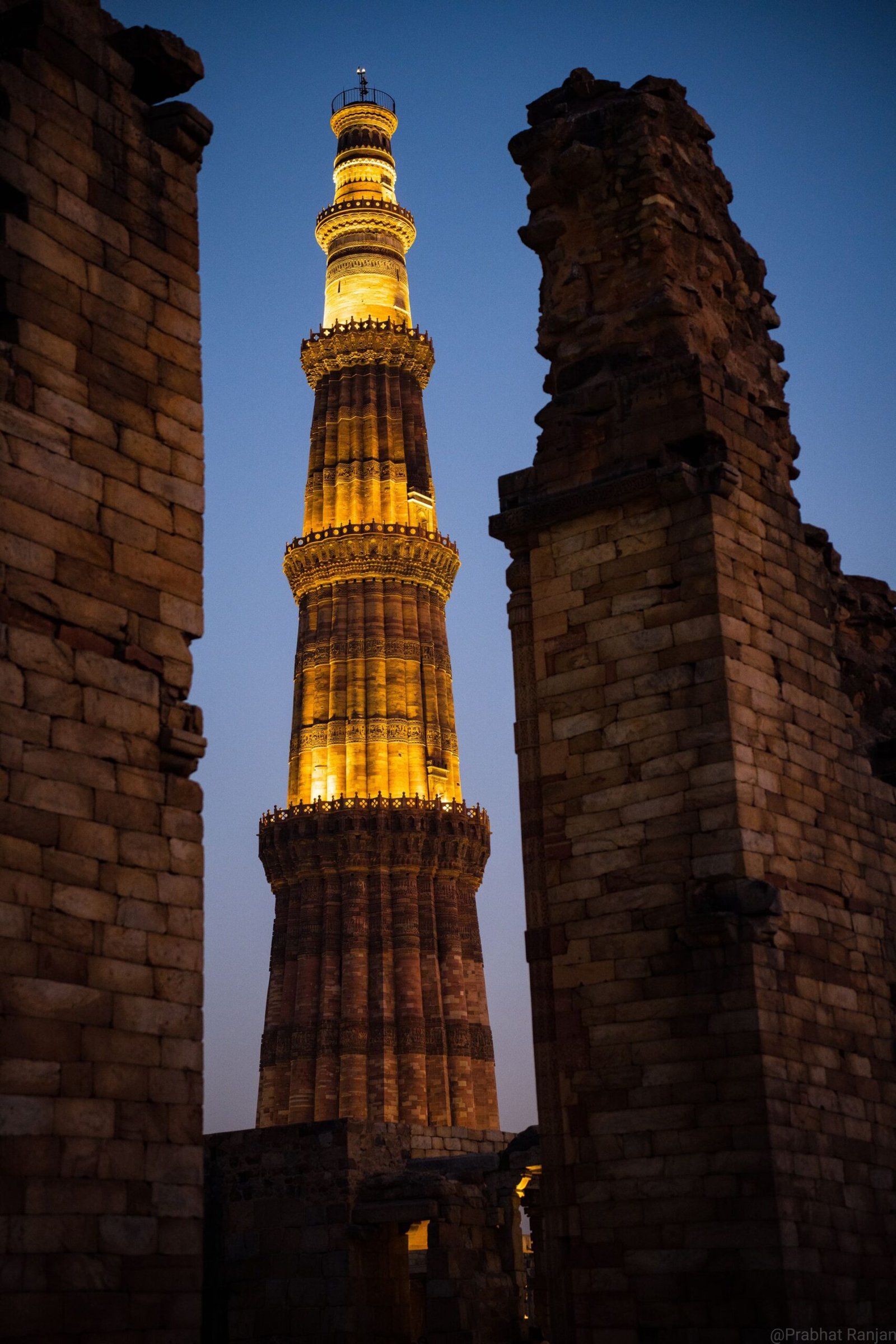
Frequently Asked Questions
Can you go inside Qutub Minar?
No, entry inside the tower has been closed to the public since 1981 following a stampede. Visitors can walk around the base and explore the surrounding complex freely.
How much time do you need to visit Qutub Minar?
Most visitors spend between 1.5 and 2.5 hours covering the minar, the mosque ruins, the Iron Pillar and Alai Darwaza at a comfortable pace.
Is Qutub Minar worth visiting?
Yes, it’s a UNESCO World Heritage Site with genuinely rare architectural and historical significance, including the corrosion resistant Iron Pillar that has puzzled metallurgists for centuries.
What is the best time of day to visit Qutub Minar?
Early morning, shortly after the 7 am opening, offers the softest light for photos and the smallest crowds before tour groups arrive.
Is Qutub Minar close to the metro?
Yes, the Qutub Minar metro station on the Yellow Line is a short auto rickshaw ride from the entrance.