
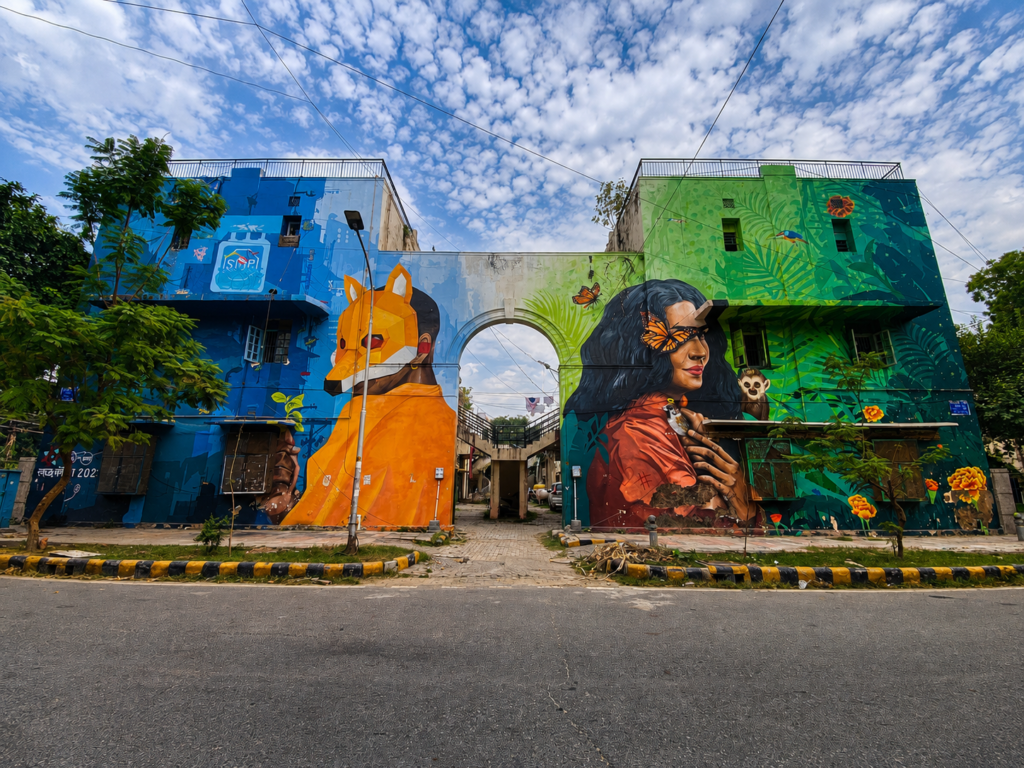
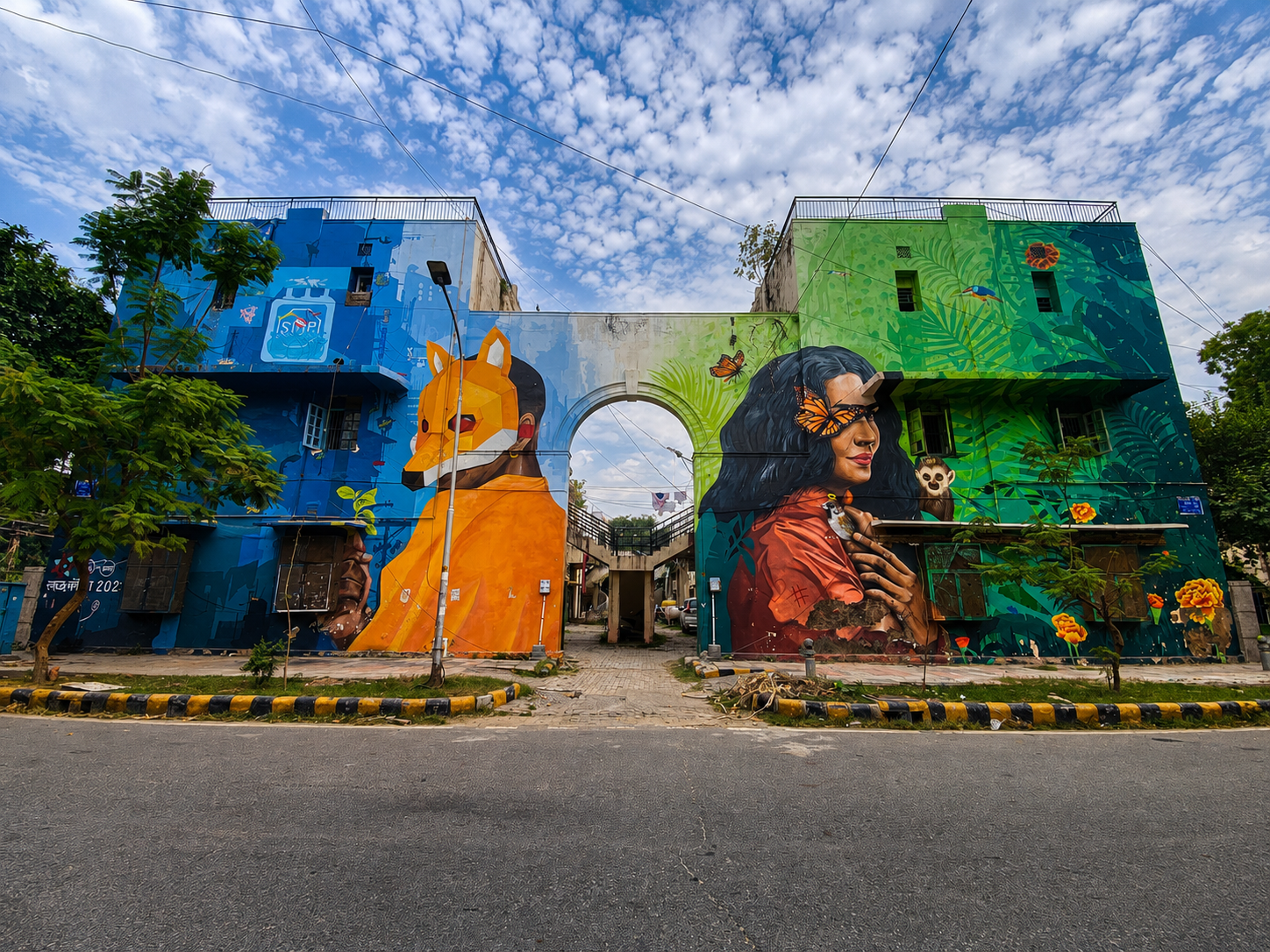
Most first time visitors to Delhi never realise the city has a proper open air art scene until someone points them toward a wall in Lodhi Colony or a lane in Shahpur Jat. There is no single street art district here. Instead there are several, each with its own character, its own reason for existing, and its own quirks. Some grew out of a formal government backed program. Others grew organically because a few artists needed cheap wall space and a neighborhood that would not object.
This guide walks through the main pockets worth your time, roughly in order of how easy they are to reach and how much they reward a slow, unhurried visit.
Lodhi Art District: Where It All Began
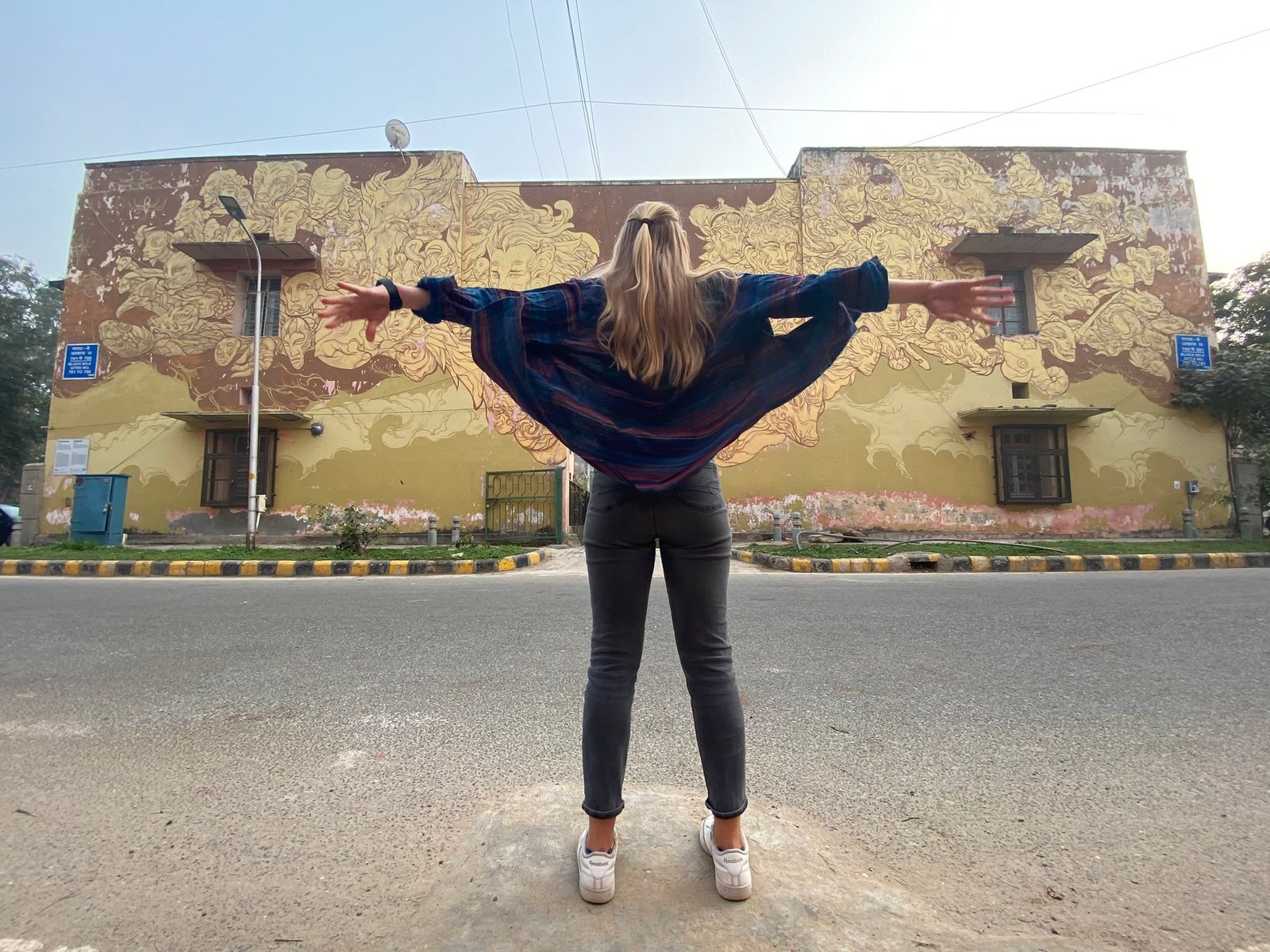
Lodhi Colony is the anchor of Delhi’s street art scene and the place most people mean when they say they want to see murals in Delhi. It started around 2014 when the St+art India Foundation, working with the local government housing body, convinced residents to let artists paint the walls of an otherwise quiet Lutyens era government colony. What followed is now considered India’s first open air art district, with more than sixty large scale murals spread across residential blocks, staircases and boundary walls.
The murals range from a giant multi story portrait to smaller, more political pieces tucked into stairwells that most visitors walk past without noticing. There is no single entry point or ticket counter. Meherchand Market is usually the easiest place to start, since it sits right at the edge of the colony and has enough cafes to break for lunch or coffee midway through the walk.
Shahpur Jat: Boutiques, Old Lanes and Quieter Murals
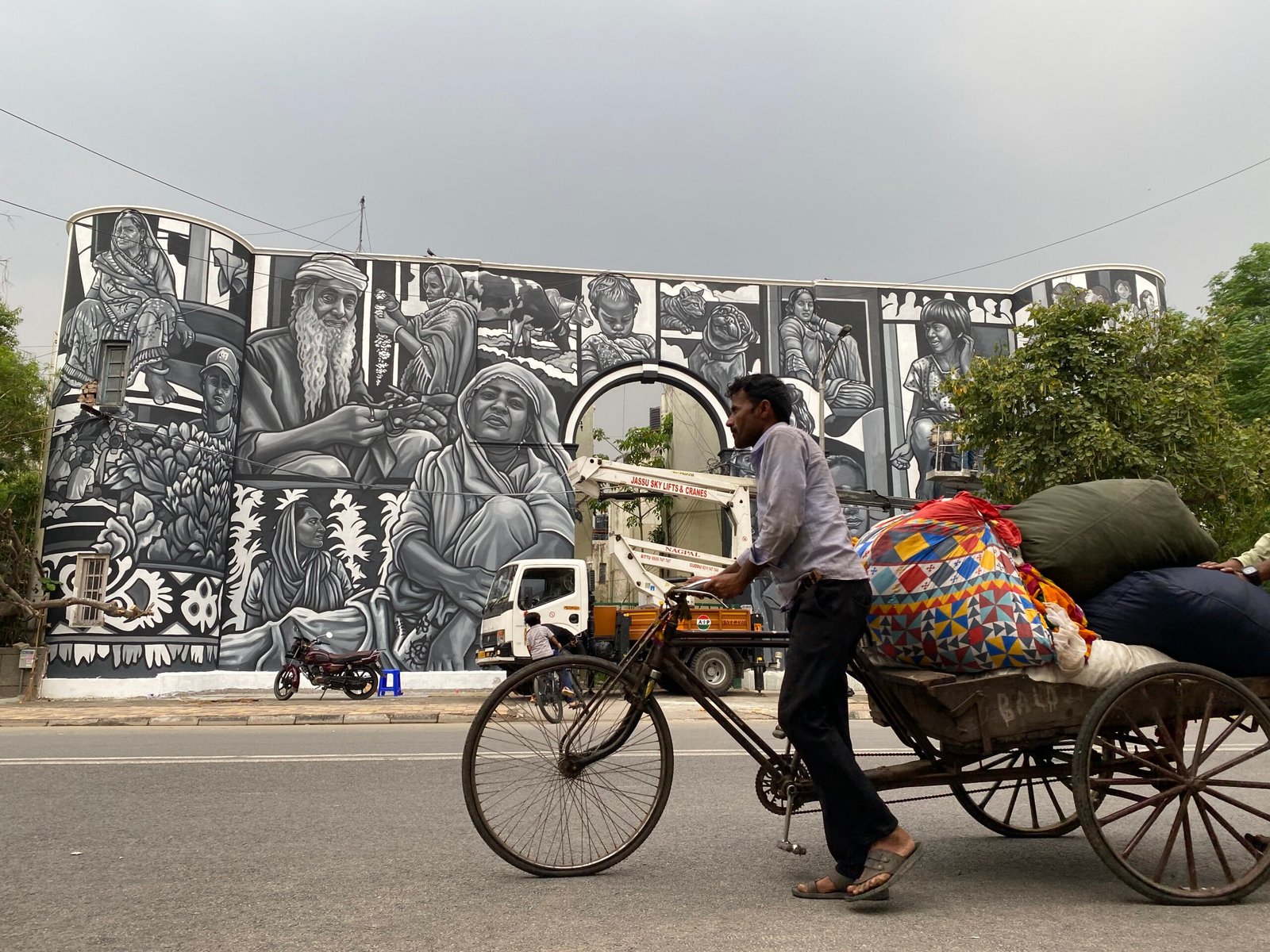
Shahpur Jat sits close to Siri Fort and has built a reputation as a designer boutique neighborhood, but its narrow, winding lanes also hold a scattering of murals and graffiti that feel less curated than Lodhi Colony. This is an urban village in the literal sense, meaning it grew informally around an older settlement, and the street art here tends to appear where a boutique owner or resident decided a blank wall needed something on it.
It works well as a second stop after Lodhi Colony because the pace is different. You are not hunting for a specific mural on a map here so much as noticing what is around the next turn. Combine it with browsing the boutiques and you get a half day that mixes art, shopping and a very different texture of Delhi than the monuments circuit.
Khirki Village: The Politically Charged Corner
Khirki Village is a different kind of neighborhood altogether. It sits near Saket and is home to a mix of long term residents and a large migrant community, and the street art here often carries a sharper social or political edge than what you will find in Lodhi Colony’s more polished murals. Walls here have literally been used to make statements, whether about gender, migration or urban inequality, and that gives the neighborhood a rawer, less tourist friendly feel.
It is worth visiting with awareness rather than treating it purely as a photo opportunity. Going with a local guide or as part of a small group tour, rather than wandering alone late in the day, is the more sensible approach here.
Meherchand Market: Street Art Meets High Street Fashion
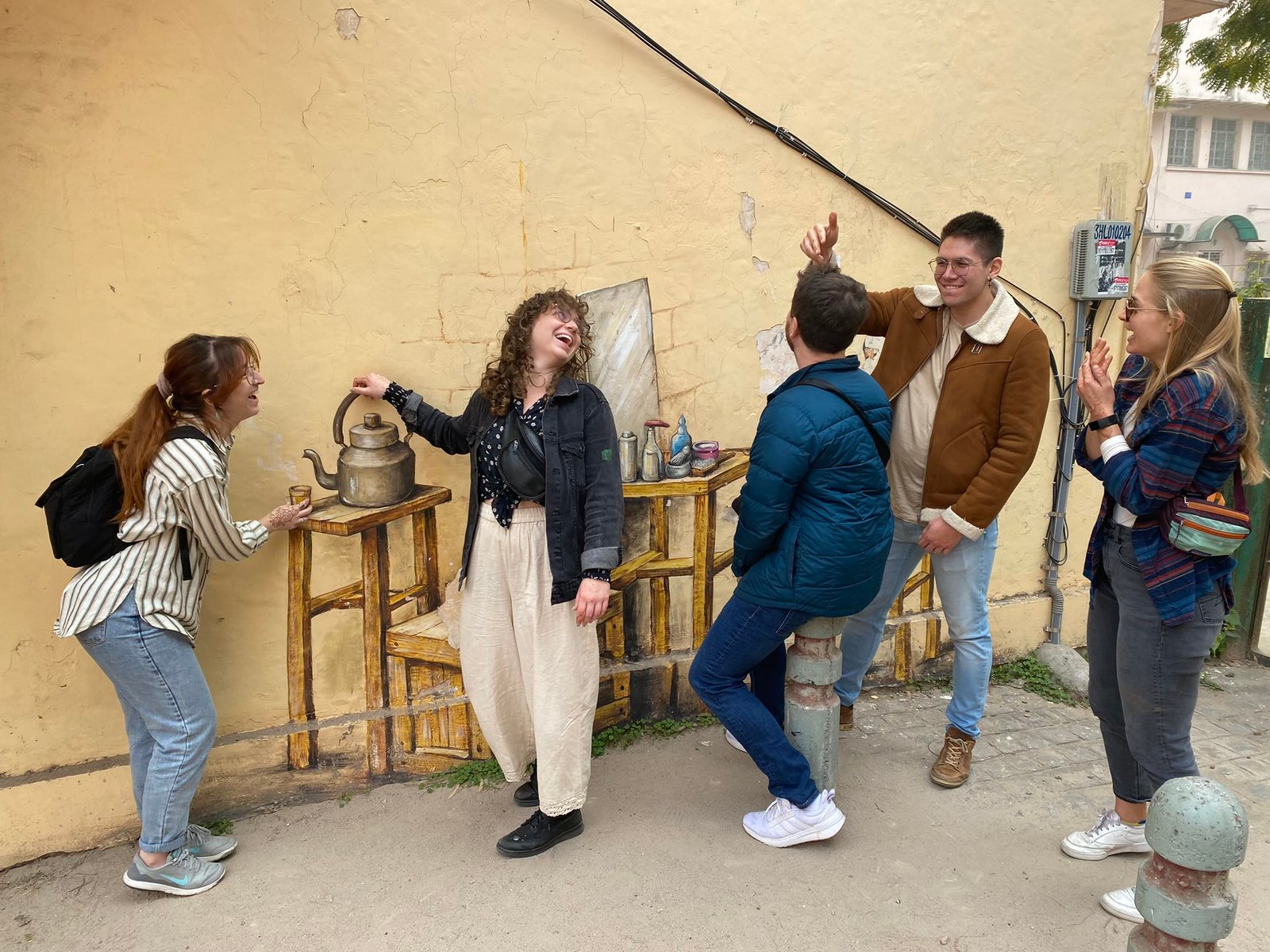
Meherchand Market sits between Lodhi Colony and Khan Market and blends fashion boutiques with a handful of striking murals along its main stretch. It is small enough to cover in under an hour, which makes it a convenient bridge between the Lodhi Art District walk and a stop at Khan Market for lunch.
Hauz Khas Village: Murals Among the Ruins
Hauz Khas Village pairs its fourteenth century step well and madrasa ruins with a lively café scene and a smaller but genuine cluster of street art. The murals here are less the point than the atmosphere, since most visitors come for the historic monument and the lakeside views, then discover the art almost by accident while wandering the lanes.
Planning Your Delhi Street Art Walk
| Neighborhood | Best For | Time Needed |
|---|---|---|
| Lodhi Art District | Large scale, curated murals | 3 to 4 hours |
| Shahpur Jat | Boutique shopping plus art | 1.5 to 2 hours |
| Khirki Village | Socially conscious, raw murals | 1 to 2 hours, guided |
| Meherchand Market | Quick stop between areas | 30 to 45 minutes |
| Hauz Khas Village | Art combined with ruins and cafes | 2 to 3 hours |
Mornings work best across all five neighborhoods. The light is softer for photography, the lanes are quieter, and Delhi’s heat by afternoon in most months makes extended walking uncomfortable. Autorickshaws or cab apps are the easiest way to move between neighborhoods since they are spread across South Delhi rather than clustered together.
Pairing Street Art With Delhi’s Food Scene
A street art walk pairs naturally with a food experience, since several of these neighborhoods sit close to Delhi’s better known food streets. If you are already planning your trip around Old Delhi, consider combining your art walk day with a street food tour beyond Old Delhi or a more immersive street food tasting in a local home. For travelers who want to understand the food itself rather than just eat it, a hands on Indian cooking class or a chai master class with a Delhi family rounds out the cultural side of the trip well.
If Delhi is only the first stop on a longer itinerary, the street art walk fits easily into a day or two before heading out on a day trip to the Taj Mahal, a same day Jaipur tour, or the full seven day Golden Triangle circuit with a tiger safari.
Frequently Asked Questions
Where did Delhi’s street art movement start?
It began around 2014 in Lodhi Colony, when the St+art India Foundation partnered with local authorities to turn a quiet government housing colony into what is now called India’s first open air art district.
Is Delhi street art safe to explore alone?
Lodhi Art District, Shahpur Jat and Hauz Khas Village are generally comfortable for solo exploration during daytime hours. Khirki Village is better visited with a guide, since it is less geared toward casual tourism and navigating it alone can be confusing.
How much time do I need for a full Delhi street art tour?
A full day covering Lodhi Art District, Meherchand Market and Shahpur Jat is realistic. If you want to add Khirki Village and Hauz Khas Village, plan for two half days instead of cramming everything into one.
Do I need a guide to see the murals?
Not strictly, since most of the murals in Lodhi Colony and Shahpur Jat are visible from public lanes. A guide helps most in Khirki Village and adds context everywhere else, especially around the meaning behind specific pieces.
Is street art in Delhi permanent?
No. Murals fade or get repainted over time, so the exact walls you see today may look different in a year or two. Checking recent photos before you go is a good idea.