
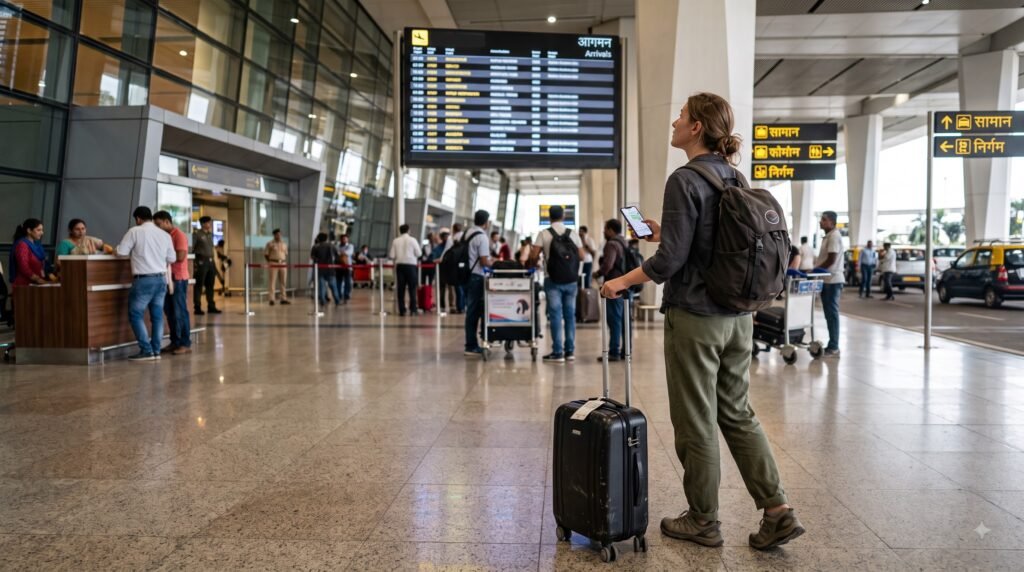
Most people who write to us before their first trip to India ask some version of the same question: where do I even start? There’s a lot of noise online, half of it outdated, half of it written by people who spent four days in the country and decided they understood it. This guide is meant to cut through that. It’s the practical stuff we tell first time guests on our own tours, the questions people actually ask us at the airport pickup, over chai, halfway through a street food walk in Old Delhi.
India is not a country you finish planning for in one sitting. But you also don’t need to. You need the essentials sorted, a rough shape for your days, and enough context to not feel blindsided by things that are completely normal here but unfamiliar if you’ve never been.
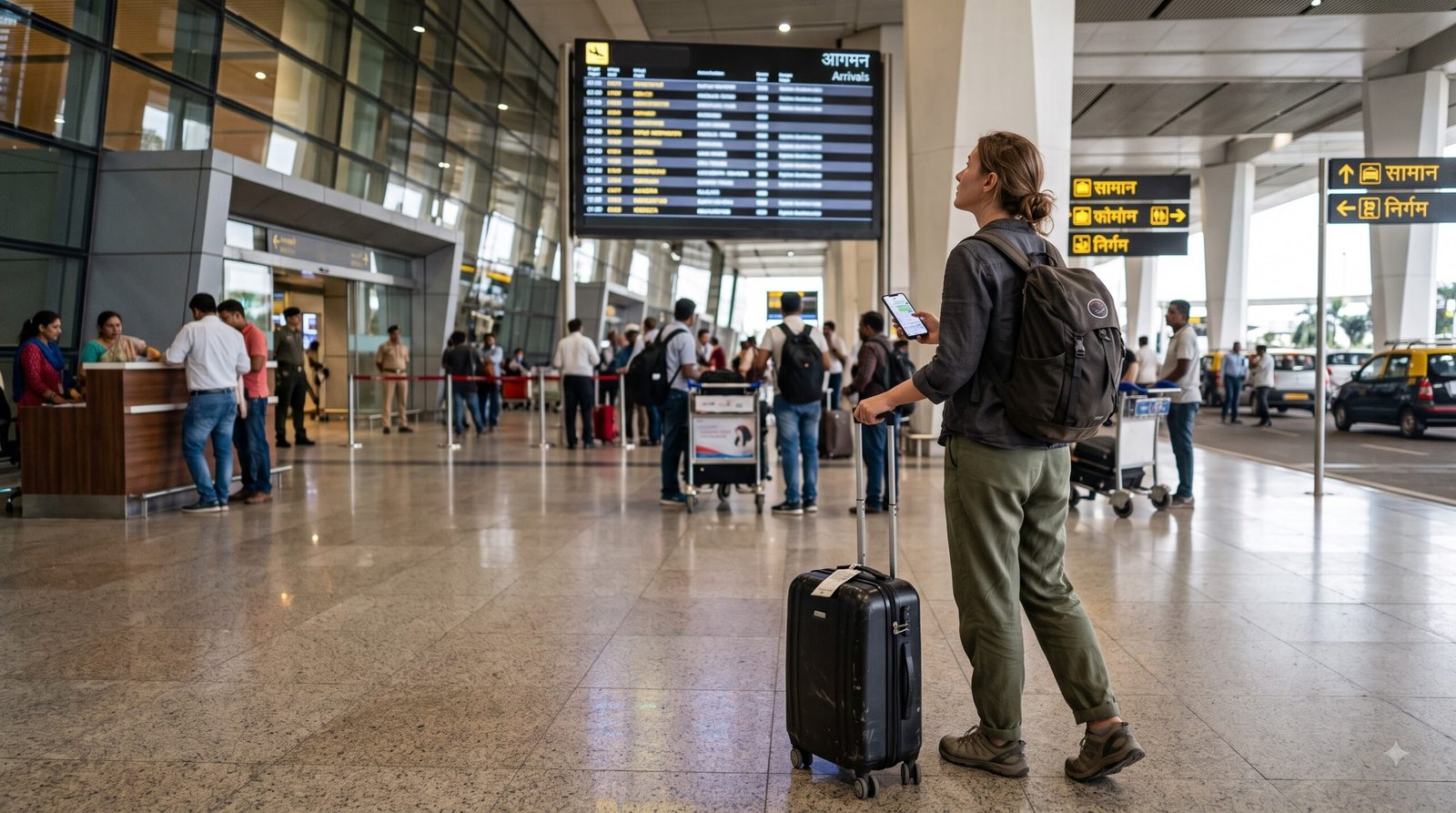
When Should You Actually Go?
October to March is the window most seasoned India travelers point to, and for good reason. The heat backs off, humidity in the north drops, and most of the country becomes genuinely pleasant to walk around in. December and January bring cooler mornings in Delhi and Rajasthan, sometimes surprisingly cold if you’re only packing for “tropical India.” April onward, the north starts heating up fast, and by June you’re looking at serious heat unless you’re heading into the hills.
If your trip includes Delhi, Agra, and Jaipur, the classic Golden Triangle, aim for November through February. You’ll get clear skies for the Taj Mahal, comfortable walking weather in Jaipur’s forts, and food markets that are actually enjoyable to stand in rather than places you’re rushing through to escape the heat.
Visa: What You Actually Need to Do
Most nationalities visiting India for tourism apply for an e-Visa online rather than through an embassy. It’s straightforward, but people leave it too late, so don’t.
- Apply through the official government portal only. Search results are full of third party sites charging extra for the same service.
- Your passport needs at least six months of validity from your date of arrival, plus two blank pages.
- You’ll upload a recent front facing photo with a white background and a scan of your passport’s photo page.
- Processing usually takes a few days, but give yourself a week or more before departure so a delay doesn’t put your trip at risk.
- You’ll need to show a return or onward ticket and proof you can support yourself financially during the stay.
Fees vary by nationality and visa duration, and the government does periodically revise the fee structure, so check current pricing on the official portal rather than relying on a number from an old blog post. One detail that trips people up: if your e-Visa was approved on your old passport but you’re now traveling on a new one, you’re allowed to enter, but you must carry the old passport with you as well.
Money, SIM Cards, and Staying Connected
The Indian Rupee is the only currency you’ll use day to day, and cash still matters here more than in most countries you’ve probably visited. Card acceptance is excellent in hotels, malls, and larger restaurants in Delhi, Agra, and Jaipur, but smaller vendors, street food stalls, and local markets often expect cash or UPI, which international visitors generally can’t access.
A few things worth knowing before you land.
- Withdraw cash from ATMs inside the airport or at bank branches rather than random standalone machines. When the ATM asks if you want it to do the currency conversion, decline it. Let your own bank handle the conversion, it’s almost always cheaper.
- Carry a mix of large and small denomination notes. Vendors running a food stall rarely have change for a 2000 rupee note.
- An eSIM or a local SIM bought at the airport will save you a lot of friction. Airtel, Jio, and Vodafone Idea are the major players, and airport counters, while slightly pricier than city stores, are the fastest way to get connected on arrival.
- Foreign tourists who enter on an e-Visa have in some cases been able to access a pre loaded SIM facility on arrival, though availability depends on the airport and current arrangements, so treat this as a bonus rather than something to plan around.
Is India Safe for First Time Travelers?
This is the question we get most, and the honest answer is: yes, with the same awareness you’d bring to any large, crowded, unfamiliar country. Millions of tourists travel through India every year without incident. The risks that exist are mostly petty, not violent, scams over safety threats in the physical sense.
A few patterns worth knowing before you’re standing in the middle of one.
- “Your hotel is closed” or “that temple is closed today” from a stranger who conveniently knows a better option nearby. It’s almost always a commission scam. Politely ignore it and keep walking.
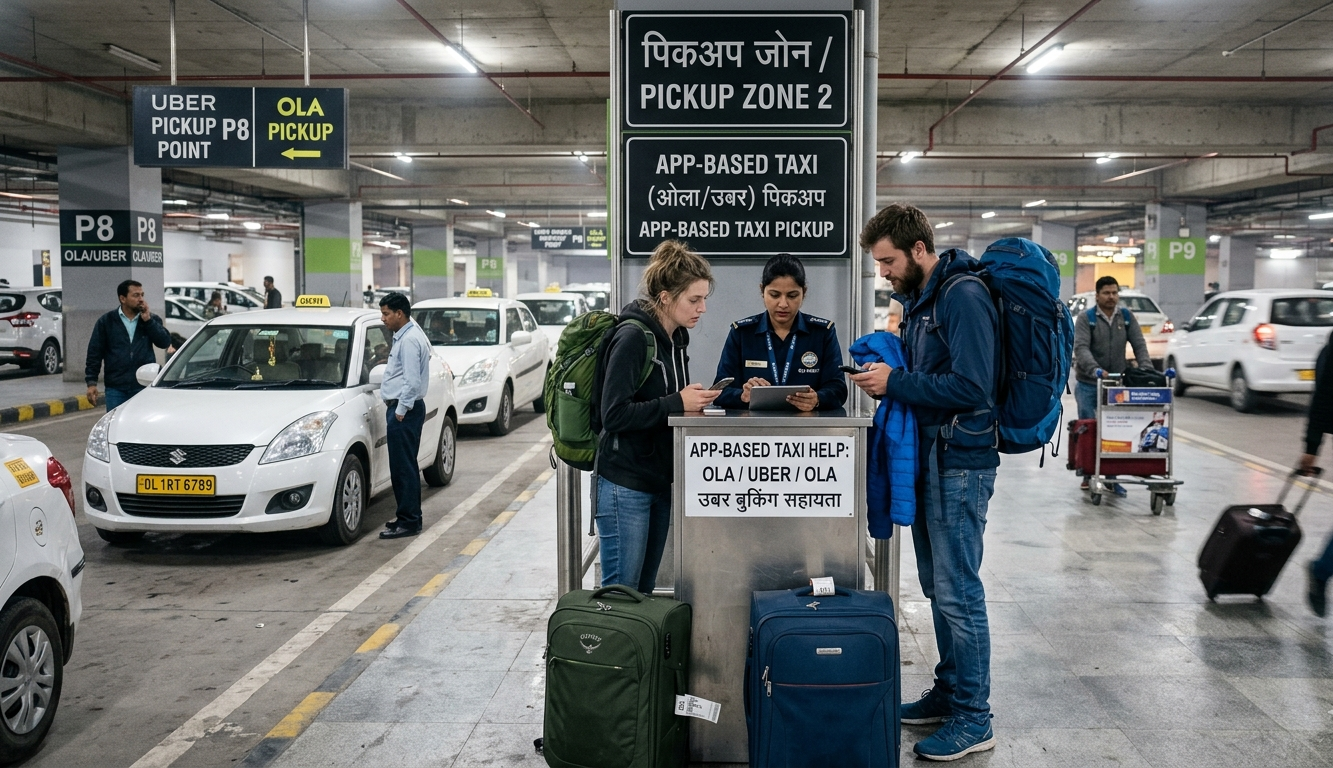
- Unofficial taxi touts at airports quoting inflated fares. Use the prepaid taxi counter inside the airport, or book Ola or Uber from the designated pickup zone rather than accepting help from someone who approaches you first.
- Overpriced “government emporiums” that aren’t actually government run. If a shopping stop feels engineered, it probably is.
For women traveling solo, India is entirely manageable with some baseline precautions: dress a bit more conservatively in smaller towns and religious sites, avoid empty streets late at night, and use trusted transport apps rather than hailing random vehicles. Confidence and a clear sense of where you’re headed goes a long way here, the same as it would in any unfamiliar city.
What to Pack
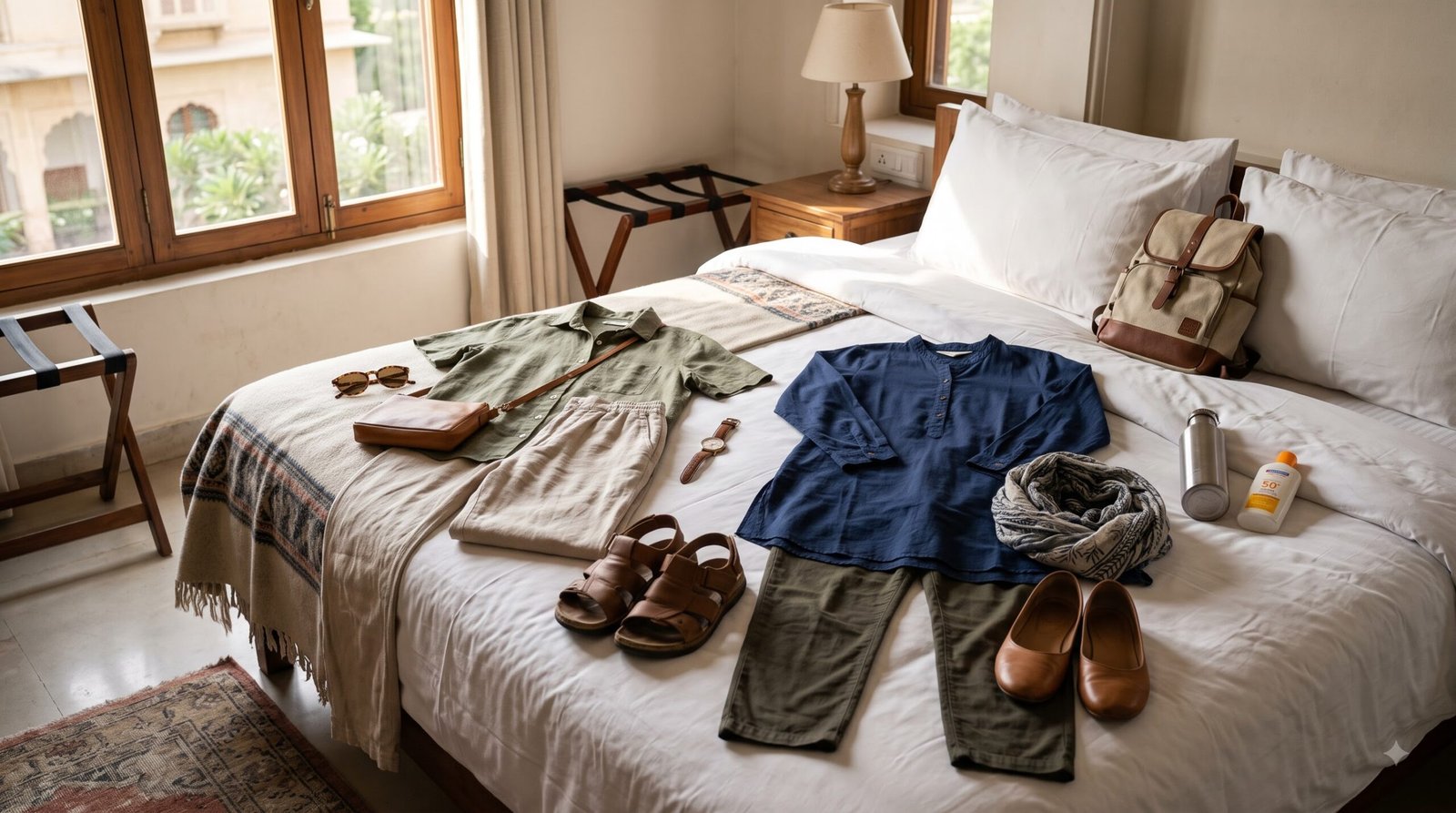
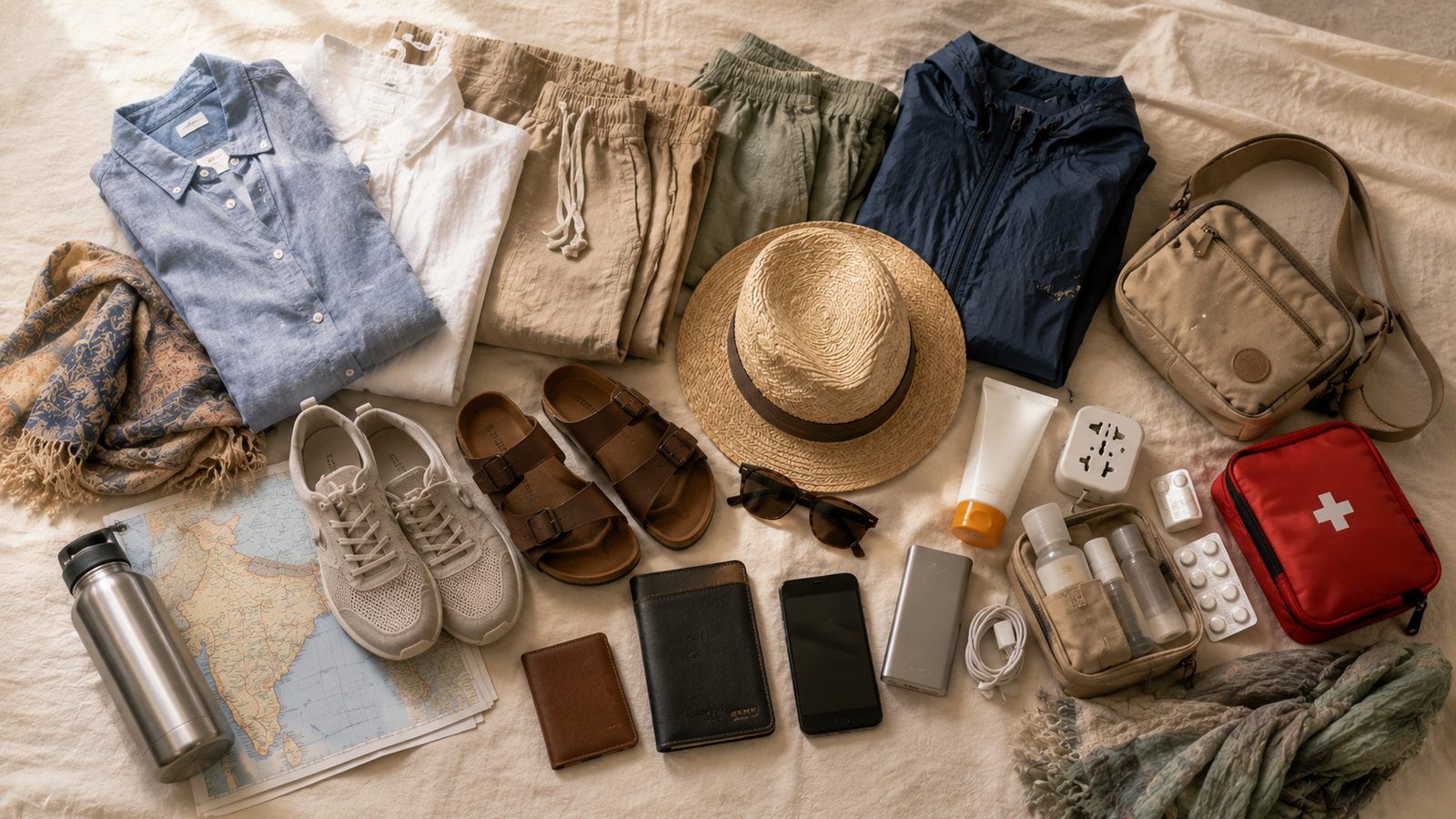
Packing for India depends heavily on season and region, but a few things hold true almost year round. Lightweight, breathable fabrics work better than anything synthetic, especially if you’re visiting between March and October. Layers matter more in winter than people expect, Delhi mornings in December and January can dip close to single digits Celsius.
- Modest clothing that covers shoulders and knees, useful for temples, mosques, and gurdwaras where it’s often required.
- Comfortable closed shoes for walking tours, plus something slip on for temples where you’ll remove footwear frequently.
- A light scarf or shawl, genuinely one of the most useful things you can carry, for covering your head at religious sites or shielding from sun and dust.
- Hand sanitizer, a reusable water bottle with a filter if you want to cut down on plastic, and basic stomach medication just in case.
- A universal adapter. India uses Type C, D, and M sockets, mostly running at 230V.
Food: What to Expect and How to Approach It
Food is where a lot of first time travelers get either overly cautious or overly reckless, and both lead to problems. The reality sits in the middle. Street food in India can be some of the best eating of your entire trip, but where and how you eat matters more than whether you eat street food at all.
Look for stalls with high turnover, food cooked fresh in front of you, and a visible local crowd. A stall with a line of Delhi office workers at lunchtime is usually safer than an empty one aimed purely at tourists. Ease into it rather than diving straight into the spiciest chaat on your first afternoon, your gut needs a day or two to adjust regardless of how careful you are.
If you’d rather have someone guide you through it the first time, that’s exactly what a food walk is for. Our Old Delhi street food tasting and our Delhi street food beyond Old Delhi tour both cover well vetted stalls, so you get the real flavors without the guesswork on your first day.
A Realistic First Timer Itinerary
Seven to fourteen days is the sweet spot most first time visitors land on. Long enough to actually settle into the rhythm of the country, short enough that it doesn’t feel rushed on either end.
A structure that works well for most people:
- Days 1 to 3, Delhi. Arrive, adjust, and use the first day gently. Old Delhi’s Chandni Chowk area, a cooking class, and a chai session in a local home are a good way to ease in without overloading yourself with monuments on day one.
- Day 4, Agra. A day trip to see the Taj Mahal at sunrise before the crowds and heat build up.
- Days 5 to 6, Jaipur. Forts, palaces, and the Pink City’s markets round out the classic Golden Triangle.
- Days 7 onward, extend into Ranthambore for a tiger safari, or head south or into the hills if you have more time.
If you’d rather not stitch this together yourself, our seven day Golden Triangle with Ranthambore itinerary follows almost exactly this arc. For shorter trips, the Delhi to Taj Mahal day trip and the same day Jaipur tour from Delhi both work well if you’re tight on days but still want to see the highlights.
Getting Your Bearings in the First 24 Hours
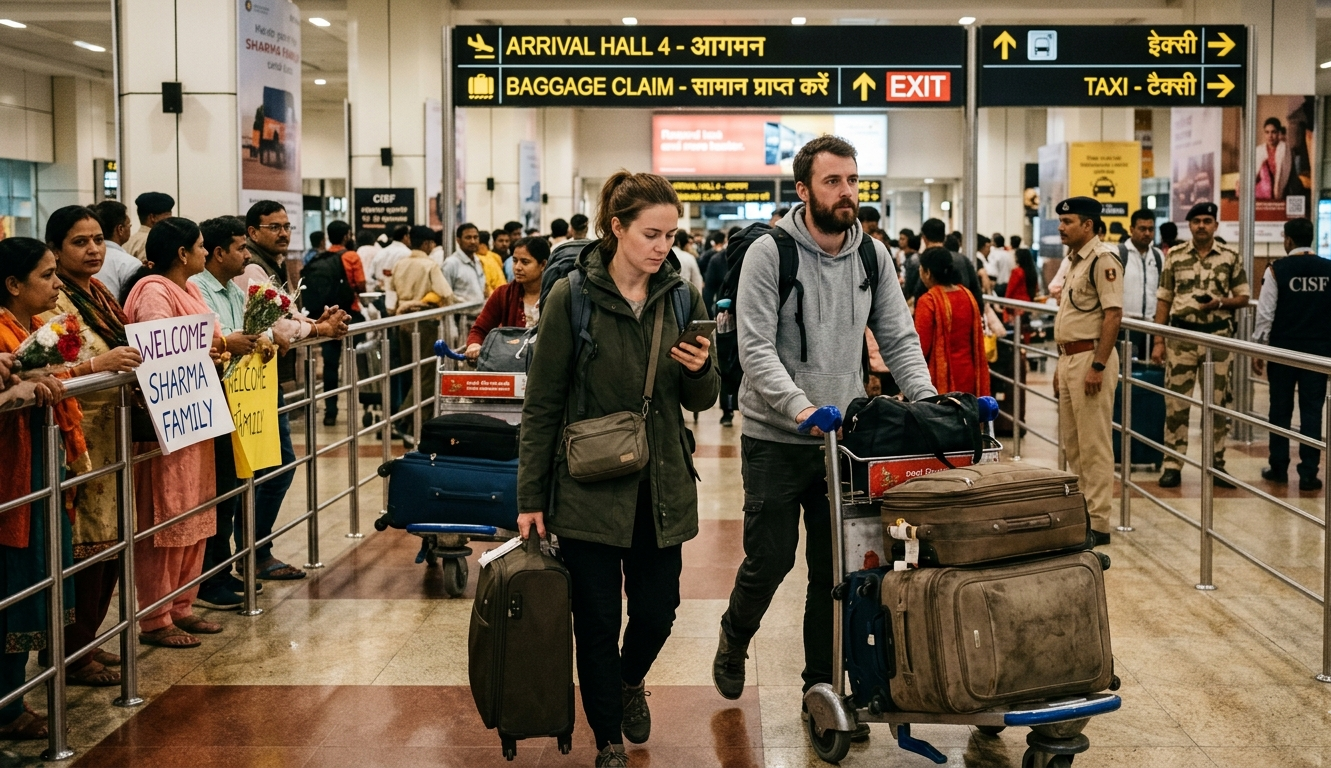
The first day matters more than people think. Land, get to your hotel, and resist the urge to immediately sightsee for eight hours straight. Jet lag plus sensory overload is a rough combination. A short walk, a simple meal, an early night, that’s usually the better call.
From the airport, use the prepaid taxi booth or the designated Ola and Uber pickup zone rather than accepting offers from drivers who approach you inside the terminal. It’s a small thing, but it sets the tone for how confidently you move through the rest of the trip.
A Quick Note on Etiquette
Remove your shoes before entering temples, gurdwaras, and most homes. Use your right hand for eating and handing over money, the left is traditionally considered unclean for these purposes. Public displays of affection are uncommon and best kept minimal. None of this is difficult, it just helps you move through spaces without feeling like you’re constantly guessing.
Practical tip: Book your first food or cooking experience for day one or two of your trip, not the last day. It gives you a working vocabulary of flavors, ingredients, and dining customs that makes the rest of your trip easier to navigate on your own.
Ready to Plan the Details?
If you want the food and culture side of your trip handled by people who actually live and eat in Delhi, our Indian cooking class covering six dishes and our chai master class in a local family home are both built specifically for first time visitors who want context, not just a meal.
Frequently Asked Questions
Do I need a visa to visit India as a first time tourist?
Yes, most nationalities need a visa. The e-Visa, applied for online through the official government portal, covers tourism purposes for most visitors and is the simplest route. Apply at least a week before departure.
What is the best time of year for a first trip to India?
October through March is generally considered the best window, with cooler, drier weather across most of the country. December and January can get genuinely cold in Delhi and Rajasthan, so pack layers.
Is street food in India safe for first time visitors?
Yes, if you choose stalls with high turnover and visible local crowds. Ease into spicier dishes gradually, and consider a guided food walk on your first day to learn which stalls are reliable.
How many days should a first time India itinerary be?
Seven to fourteen days works well for most first time visitors, enough time to cover Delhi, Agra, and Jaipur without feeling rushed, with room to extend into a tiger safari or another region if time allows.
Is India safe for solo women travelers?
Yes, with the same precautions you’d use in any large, unfamiliar country. Dress modestly in smaller towns and religious sites, use trusted transport apps, and avoid isolated areas after dark.
What should I pack for a trip to India?
Lightweight breathable clothing, something to cover shoulders and knees for religious sites, comfortable walking shoes, a scarf or shawl, basic stomach medication, and a universal power adapter for Type C, D, or M sockets.